Short direct answer
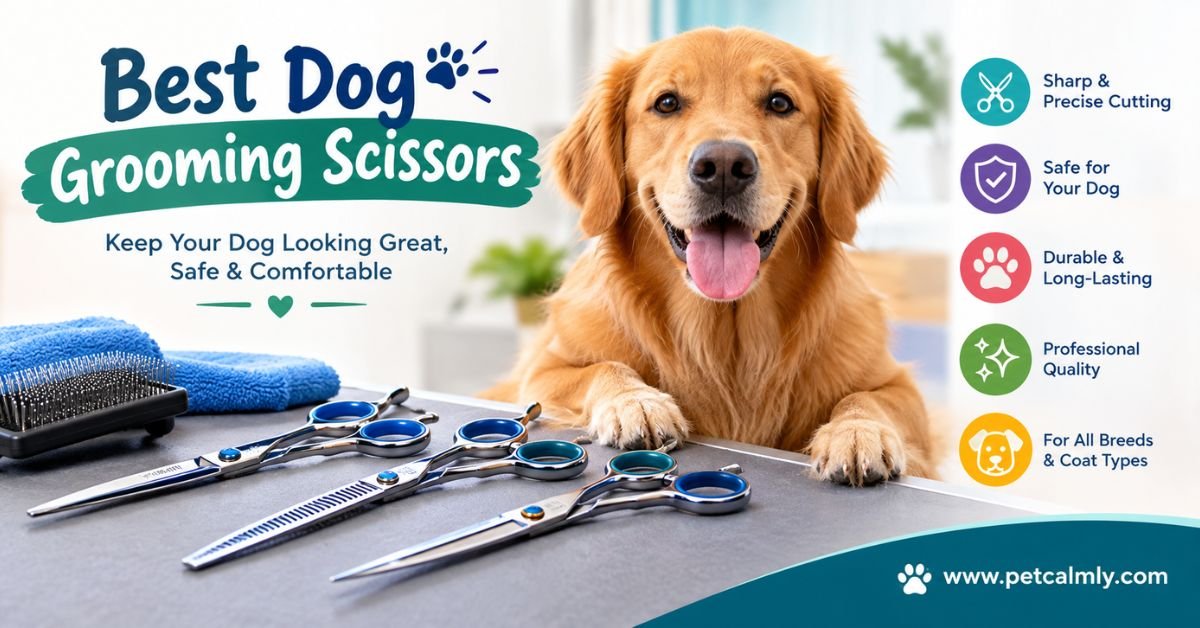
The best dog grooming scissors are professional-grade stainless steel shears with safety-rounded tips, ergonomic handles, and appropriate blade length for your dog’s coat type. Quality matters significantly curved or thinning shears with smooth cutting action prevent matting, reduce strain on your hands, and keep your dog safe. Most pet owners benefit from a combination set that includes straight shears for general grooming and thinning shears for texture and blend work.
Why the Right Grooming Scissors Matter
If you’ve ever watched your dog shake their head in discomfort while you’re trying to trim their face fur with dull kitchen scissors, you’ve learned the hard way that grooming tool quality isn’t optional. The right grooming scissors make grooming faster, safer, and genuinely more enjoyable for both you and your dog.
There’s a real difference between budget scissors and professional-grade shears. Beyond comfort, it’s about your dog’s safety and coat health. Dull blades tear hair rather than cut it cleanly, leading to split ends, matting, and honestly an uncomfortable experience for your dog. When scissors don’t cut smoothly, you’re more likely to accidentally nick skin or pull hair, especially around sensitive areas like the eyes, ears, and paws.
This guide walks you through everything you need to know about selecting, using, and maintaining dog grooming scissors so you can confidently groom your dog at home without frustration or worry.
Understanding Different Types of Dog Grooming Scissors
Not all grooming scissors do the same job. Knowing what each type is designed for helps you choose the right tool and avoid buying scissors you’ll never actually use.
Straight Shears: Your All-Purpose Grooming Workhorse
Straight scissors are the foundation of any grooming kit. These are exactly what they sound like—flat, parallel blades that cut straight across. They’re ideal for general body coat work, trimming around the face (with caution), and removing longer sections of hair.
Straight shears work best on dogs with shorter coats or when you’re removing bulk length. If your dog has a Labrador, Beagle, or similar short-haired coat, straight shears are often all you need. Most professionals keep several sizes of straight shears on hand because the blade length affects precision and control.
When to use them: General body trimming, shortening coat length, detail work on the face and paws, cleaning up your dog’s overall appearance.
Curved Shears: Precision for Contour and Detail
Curved scissors follow the natural contours of your dog’s body, making them perfect for detail work around the head, neck, armpits, and hindquarters. The curved blade gives you more control and reduces the risk of accidentally clipping skin.
Dogs with curly, fluffy, or double coats often benefit from curved shears because they help you follow the body’s natural shape while maintaining a neat appearance. The curve also makes it easier to work around sensitive areas where your dog might suddenly move.
When to use them: Face and ear shaping, working around the neck and chest, detail work in tight areas, grooming curly or fluffy coats.
Thinning Shears: The Secret to Professional-Looking Results
Thinning shears (also called blending shears or texturizing shears) look different because one blade has teeth and one is flat. Rather than cutting all the way through, they remove some hairs while leaving others, which is how professionals create texture and blend different coat lengths seamlessly.
If you’ve ever wondered how professional grooming looks so polished and natural, thinning shears are part of the answer. They’re especially valuable for double-coated breeds (Golden Retrievers, German Shepherds, Corgis) where you want to maintain the coat’s natural texture while removing bulk.
The learning curve is gentler than you’d think. Because thinning shears don’t cut every hair, they’re actually forgiving for beginners you can go over an area multiple times without creating obvious bald spots like you might with straight shears.
When to use them: Blending different coat lengths, removing undercoat bulk, creating texture in curly coats, maintaining professional-looking appearance, softening harsh lines from straight scissors.
Safety-Rounded Scissors: Non-Negotiable for Face and Ear Work
Safety-rounded scissors have rounded, blunt tips instead of sharp points. These are essential if you’re trimming around your dog’s face, ears, or anywhere near sensitive areas.
Sharp-tipped scissors are a genuine safety risk, especially with a squirming dog. It only takes one sudden head turn to create an injury. Professional groomers use safety scissors by default around delicate areas and if you’re grooming at home, you should too.
Key Features That Matter in Quality Grooming Scissors
When you’re comparing grooming scissors, these features directly affect your experience and your dog’s safety.
Blade Length and What It Means for Control
Grooming scissors come in lengths ranging from about 4 inches to 7 inches. Smaller blades (4-4.5 inches) offer better control and precision for detail work around the face and feet. Larger blades (5.5-7 inches) work faster for general body trimming and longer coat sections.
Most home groomers find a 5.5 to 6-inch straight shear and a 5.5-inch curved shear to be the sweet spot. They’re large enough to work efficiently but small enough to maneuver around your dog’s body without awkwardness.
The blade length also affects the leverage and cutting power. Longer blades create more mechanical advantage, meaning you need less finger pressure to make the cut which reduces hand fatigue during longer grooming sessions.
Handle Design and Ergonomics
Your hands need to stay comfortable during grooming, and a poorly designed handle will tire your hands within 10-15 minutes. Quality grooming scissors have either offset handles (where your hand holds one position while fingers move) or crane handles (where the handles form a gentle curve).
Look for handles with textured, non-slip grip material—especially if your hands sweat or your dog’s coat is wet. Some high-end shears feature ergonomic finger holes that reduce strain and give you better control.
Personally, offset handles tend to be more comfortable for longer grooming sessions because they reduce hand fatigue and give better cutting control.
Material Quality and Sharpness
Professional-grade grooming scissors are typically made from stainless steel, Japanese steel, or German steel. The steel type affects durability, edge retention, and cost.
Stainless steel is resistant to rust and corrosion, which matters if you’re washing the shears frequently or they’re exposed to moisture. However, stainless steel is slightly less sharp initially compared to high-carbon steel. Japanese and German steel formulations often hold an edge longer and start sharper but they can rust if not properly maintained.
The quality of the edge matters significantly. A well-sharpened blade should cut a single dog hair cleanly when held at a slight angle. If your scissors require pressure to cut or are leaving torn or split ends, they need sharpening.
Convex vs. Beveled Blades
Convex blades (curved edges that meet at a fine point) are what you find on professional-quality scissors. They create a superior cutting edge, stay sharp longer, and require less cutting pressure.
Beveled blades (angled flat surfaces) are common on mid-range and budget scissors. They’re less sharp and require more pressure to cut, which increases hand fatigue.
Choosing Scissors Based on Your Dog’s Coat Type
The best grooming scissors for your dog depend entirely on their coat type. Using the wrong shears for your dog’s coat is frustrating and won’t give you good results.
Short-Coated Breeds (Labs, Beagles, Boxers, Pit Bulls)
Short-coated dogs need minimal scissors work usually just cleanup and shaping. Straight shears in a 5.5 to 6-inch length with safety-rounded tips are all you really need.
These scissors should cut cleanly without much pressure. Your goal is to maintain a neat appearance and remove any stray longer hairs, not to dramatically change the coat.
Double-Coated Breeds (Golden Retrievers, German Shepherds, Corgis, Huskies)
Double-coated breeds can be challenging because they have a thick undercoat and longer guard hairs. Using straight shears alone will leave visible lines and often leads to matting. This is where thinning shears become your best friend.
For these breeds, invest in quality straight shears AND thinning shears. Use the thinning shears to blend, remove undercoat bulk, and create natural-looking texture. Straight shears work best for final cleanup and definition.
Many owners of double-coated breeds find that professional grooming twice yearly, combined with at-home maintenance grooming, gives the best results.
Curly and Wavy Coats (Poodles, Doodle Mixes, Bichons)
Curly-coated dogs need curved shears for precision and thinning shears for texture work. The curved blade helps you follow the coat’s natural wave and prevents harsh lines.
These coats are prone to matting, so you’re likely grooming more frequently. Quality scissors that don’t require excessive pressure will make regular grooming much more tolerable for your hands.
Wiry and Harsh Coats (Schnauzers, Terriers, Wire Fox Terriers)
Wiry coats require sharp, quality blades because the hair is genuinely tough. Budget scissors will struggle and may tear the hair rather than cut cleanly.
Straight and curved shears should both be sharp and well-maintained. Some groomers prefer Japanese or German steel for these coats because the superior edge retention is worth the maintenance.
How to Safely Groom Your Dog With Scissors: Step-by-Step
Having quality scissors is half the battle. Knowing how to use them safely and effectively is the other half. These steps help prevent injuries and get better-looking results.
Preparation: Start With a Healthy Coat
Before you even pick up scissors, your dog’s coat needs to be in the right condition. Mat-free, clean, and properly dried is ideal.
If your dog has matting, work through it gently with a mat splitter or dematting comb before using scissors. Trying to cut through mats with scissors can trap hair and pull, which is painful for your dog. Sometimes mats are too tight or close to the skin, and attempting to remove them risks skin damage.
A clean, dry coat is easier to work with than wet or damp fur. Wet coats can be slippery, and damp coats don’t show your actual cutting progress clearly. Most groomers prefer working on slightly damp, freshly brushed coats, but completely dry works fine too.
Positioning and Handling
Position your dog so you can see clearly and work comfortably. Don’t twist their body into unnatural positions. If your dog is small, a grooming table helps tremendously it brings them to a comfortable height and reduces back strain for you.
Keep one hand on your dog (not the scissors hand) to provide reassurance and control. A calm, confident touch helps your dog stay still. If your dog is anxious about grooming, take breaks. Pushing through anxiety creates negative associations that make future grooming harder.
Safe Scissor Technique
Hold the scissors naturally, with your thumb in the smaller hole and your ring finger in the larger hole. Your index and middle fingers rest on the blade for stability and control.
Keep the scissors flat and parallel to the body most of the time. Angle them slightly when working around curves and contours. Never scissor toward sensitive areas like eyes and ears always scissor parallel to them, then clean up afterward if needed.
Use smooth, controlled cutting motions. Jerky or aggressive cutting increases injury risk and creates uneven results. Most of the movement should come from your fingers and hand, not your arm.
Around the Face and Ears: Extra Caution Required
The face is where most grooming injuries happen, so slow down here. Use safety-rounded scissors without exception.
For the eyes, trim carefully around but never directly toward the eye. If hair is actually in your dog’s eyes, trim it gradually from the sides and corners. Some groomers use small scissors with extra-rounded tips for this area.
For the ears, work from underneath and the outer edges. Ear canals are sensitive—never insert scissors into the ear itself. If your dog has ear hair that needs removal, use thinning shears to gradually reduce it rather than trying to cut it out completely.
The muzzle area requires patience. Trim along the length of the muzzle rather than across it, and keep your non-cutting hand steady on their chin so they can’t suddenly jerk away.
Know When to Stop
If your dog is moving too much, getting anxious, or showing signs of stress, stop. A frightened or struggling dog is a safety risk for both of you. It’s better to do shorter, more frequent grooming sessions than to force a longer session and create negative associations.
Never try to groom a wet dog who just got a fright or is overstimulated. Their coat is harder to work with anyway, and they’re more likely to move suddenly.
Maintenance and Care: Keep Your Scissors in Top Condition
The investment in quality scissors pays off only if you maintain them properly. Dull scissors are frustrating, less safe, and won’t give good grooming results.
Regular Cleaning
Wipe your scissors with a soft cloth after each use to remove hair and dander. If they’ve been in contact with water or dog shampoo, rinse them gently and dry completely.
Once weekly, use a slightly damp cloth to clean the entire blade and handle. This prevents buildup that can affect the pivot and cutting action. For stubborn residue, a soft-bristled brush (like an old toothbrush) works well.
Never submerge scissors in water unless absolutely necessary, and never put them in the dishwasher. Water can seep into the pivot point and cause rust or corrosion over time.
Storing Properly
Store scissors in a dry place, ideally in a protective case or blade guard. Many quality scissors come with sheaths—use them. They protect both the blades and keep the sharp edges from accidentally cutting you.
Don’t store scissors loose in a drawer where they can roll around or bump against other tools. Damaged blades can’t be properly sharpened and may not cut safely.
Sharpening: When and How
A quality pair of scissors should stay reasonably sharp for 6-12 months with regular use. When you notice they’re requiring more pressure to cut or leaving split ends, it’s time to sharpen.
Professional sharpening is honestly the best option. A professional sharpener understands the specific angle needed for your scissors’ blade type and will restore the edge without damaging the blade. Expect to pay $15-30 per pair.
Some people try to sharpen at home using sharpening stones, but it’s easy to damage the blade if you don’t know the correct angle. Unless you’ve sharpened professional scissors before, professional sharpening is worth the cost.
Never use scissors that pull or require excessive pressure. Dull scissors cause you to use more force, which increases the risk of slipping and injuring your dog.
Professional vs. DIY Grooming: What Should You Actually Do?
This is an important question because not every dog owner should regularly groom their dog at home, and that’s okay.
When At-Home Grooming Makes Sense
If your dog has a short coat that doesn’t require regular trimming, at-home grooming is straightforward. Regular brushing, occasional cleanup around the paws and face, and dealing with mats is totally manageable.
Dogs with low-maintenance coats that don’t mat easily are good candidates for owner grooming. Beagles, Boxers, Labs, and similar breeds rarely need professional grooming if you stay on top of brushing and basic cleanup.
If you enjoy the process and your dog is cooperative, at-home maintenance grooming helps you bond and keep your dog comfortable between professional visits. Even owners of high-maintenance breeds often do some at-home grooming between professional appointments.
When Professional Grooming Is Worth It
Professional grooming is genuinely worth the investment for several situations:
Double-coated breeds like Golden Retrievers and German Shepherds benefit from professional grooming because the skill and time required is significant. A professional can remove undercoat, maintain the coat’s texture, and create professional-looking results.
Curly-coated dogs like Poodles need grooming every 4-8 weeks to prevent matting and maintain appearance. Unless you enjoy detailed grooming work and have time for it, professional grooming is practical and cost-effective.
Dogs that dislike grooming sometimes behave better for professionals, especially if they’re anxious. A professional groomer’s calm confidence and experience can help anxious dogs relax.
Your own time and physical ability matter. If you have shoulder pain, arthritis, or limited mobility, expecting yourself to groom a large dog at home isn’t realistic. Professional groomers have the setup, tools, and physical capability to do this safely.
Complex styling or coat preparation for show dogs or special events definitely requires a professional. This isn’t something you learn from an article.
Most veterinarians and experienced dog owners recommend a hybrid approach: professional grooming for full cuts and blade work, with owner maintenance grooming for brushing, mat prevention, and spot cleanup between appointments.
5 Common Grooming Mistakes That Hurt Your Dog
Learning from others’ mistakes helps you avoid frustration and keeps your dog safe.
1: Using Dull or Budget Scissors
The most common mistake is trying to save money with cheap scissors. Within a few grooming sessions, you’ll understand why professional scissors cost more. Dull scissors require excessive pressure, which increases injury risk and makes grooming take twice as long.
If you’re going to invest time in grooming your dog, spend the money on quality scissors. A good pair lasts years and makes grooming genuinely easier.
2: Forcing Grooming on a Stressed Dog
Some owners push through their dog’s anxiety or resistance, which creates lasting negative associations with grooming. Your dog learns to fear scissors, bathing, and handling making future grooming (whether at home or professional) stressful for everyone.
If your dog is showing signs of stress pulling away, trying to hide, trembling, or snapping—stop and take a break. Do shorter, more frequent grooming sessions. Reward calm behavior. If anxiety is severe, ask your vet about anxiety management options or work with a professional groomer who specializes in anxious dogs.
3: Grooming Matted Coats With Scissors
Matted hair is tight against the skin, and trying to cut through mats risks cutting skin. Use a mat splitter, dematting comb, or slicker brush to work through mats first.
If mats are extremely tight or close to the skin, professional help is safer. A groomer has specialized tools and experience to remove mats without skin damage.
4: Scissoring Toward Sensitive Areas
Never scissor toward your dog’s eyes, ears, or genitals. Always scissor parallel to these areas, then clean up afterward. Sensitive areas move unpredictably, and pointing scissors at them is an injury waiting to happen.
5: Ignoring Signs That Your Dog Is Done
If your dog is showing clear signals that they’re done with grooming pulling away repeatedly, trying to leave, shaking, or becoming snappy stop. Pushing through teaches your dog to dread grooming and can lead to behavior problems during other handling situations.
It’s absolutely okay to finish grooming in multiple sessions.
When to See a Professional Groomer
Some situations clearly warrant professional help. Knowing the difference between regular maintenance and specialized grooming saves money and keeps your dog safe.
Professional Help Is Important If:
Your dog has severe matting. Matting close to the skin requires careful professional removal. Mats that form in 24-48 hours might indicate skin issues that your vet should evaluate.
Your dog shows signs of skin problems. If you notice redness, scaling, sores, or unusual odor during grooming, stop grooming and call your vet. These can indicate allergies, infections, or other medical issues that need veterinary attention.
Your dog is showing anxiety or aggressive behavior during grooming. Professional groomers are trained to handle anxious or reactive dogs safely. Some groomers specialize in nervous or senior dogs. Trying to force grooming at home can escalate behavior problems.
You don’t have proper equipment or space. Grooming a large dog on a regular bathtub edge is unsafe for both you and your dog. Professional facilities have proper tables, lighting, and drainage.
Your dog has breed-specific grooming requirements that you’re not trained to do. Show preparation, hand-stripping for terrier coats, or complex styling should be done by someone trained in that specific technique.
You’re injured or physically unable to groom. There’s no shame in this. Professional grooming is a service, not a luxury. Your dog’s needs don’t disappear because you’re temporarily unable to handle the physical work.
When to Contact Your Vet During Grooming
Stop grooming and contact your vet if you notice:
- Bleeding that doesn’t stop within a few minutes
- Signs of infection (swelling, redness, discharge)
- Your dog showing extreme pain or distress
- Any skin condition that looks unusual or infected
- Hair loss beyond normal shedding
- Your dog refusing to put weight on a limb after grooming
Minor nicks and small bleeds are part of grooming sometimes, even for professionals. Apply gentle pressure with a clean cloth, and most stop within a few minutes. But anything that seems abnormal deserves veterinary evaluation.
Frequently Asked Questions
1: How much should I spend on quality grooming scissors?
A good pair of professional-grade grooming scissors costs $30-75 per pair for home use. Professional grooming facilities sometimes use scissors in the $100-200 range, but that’s overkill for occasional home grooming. Expect to buy at least two pairs (straight and curved or straight and thinning) to have an effective setup. Budget scissors ($5-15) often require replacement within months and won’t give good cutting results.
2: Can I use regular scissors or hair scissors on my dog?
Technically, you can use regular scissors, but you probably shouldn’t. Hair and grooming scissors are designed for different purposes. Regular scissors are too small for most dogs, require excessive pressure, and often have unsafe sharp tips. Your dog’s safety and grooming quality are worth investing in proper scissors.
3: How often should I sharpen my grooming scissors?
With regular use, quality scissors need sharpening every 6-12 months. If you groom frequently (multiple times per week), sharpening might be needed every 2-3 months. When you notice they’re requiring more pressure or leaving split ends, it’s time to sharpen. Professional sharpening costs $15-30 but extends scissor life significantly.
4: What’s the best blade length for someone just starting out?
A 5.5 to 6-inch blade is a good starting point for most home groomers. It’s large enough to work efficiently but small enough to control comfortably. Curved scissors in this size are excellent for precision work around the face and ears without the steep learning curve of very short blades.
5: Are safety-rounded scissors really necessary, or is that overcautious?
Safety-rounded scissors are genuinely important when working around your dog’s face, eyes, and ears. One sudden head turn with sharp-tipped scissors can cause injury. Professional groomers use safety scissors around sensitive areas by default. If you’re only grooming the body, regular scissors are fine—but for face work, safety-rounded tips are smart.
6: How do I know if my dog’s coat needs professional grooming vs. at-home maintenance?
If your dog needs to be groomed every 4-8 weeks to prevent matting or maintain appearance, professional grooming is probably worth it. If your dog just needs occasional cleanup and brushing between coat blowouts, at-home maintenance works fine. Most owners find a hybrid approach works best professional grooming for full cuts, at-home maintenance for brushing and spot cleanup.
More Information About Pets, Please Visit Our Website: How to Remove Matted Dog Hair Without Cutting
How to Remove Matted Dog Hair Without Cutting
How to Trim Dog Nails
Dog Brushes for Long Hair
Cat Nail Care Products
Are Dog Nail Clippers Bad for Dogs?
How Often Should I Bathe My Dog?
Professional Dog Grooming Techniques
Conclusion
The best dog grooming scissors aren’t necessarily the most expensive pair they’re the ones that match your dog’s coat type, fit your hands comfortably, and stay sharp enough to cut cleanly without excessive pressure.
Quality scissors make grooming faster, safer, and genuinely more enjoyable. You’ll notice the difference immediately when you pick up a well-made pair of professional shears versus budget scissors. The cutting action is smoother, the scissors feel balanced in your hand, and you’re done in half the time.
Whether you’re grooming your dog between professional appointments or taking on more comprehensive at-home grooming, choosing the right scissors is the foundation of safe, effective grooming. Pair them with proper technique, patience, and realistic expectations about what you can accomplish at home and you’ll keep your dog looking good and feeling comfortable.