Short direct answer
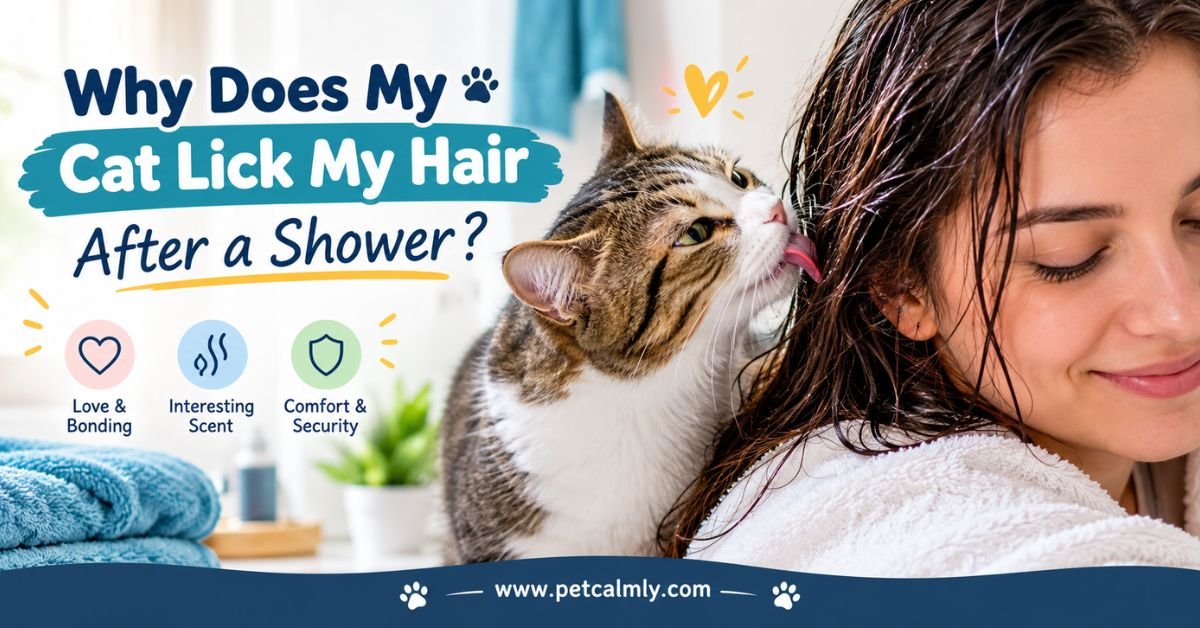
If you’re wondering why does my cat lick my hair after a shower, the most likely reason is that you smell different, and wet hair holds scent, taste, and warmth. Your cat may be grooming you the way cats groom family members they trust. It’s usually normal and affectionate. It becomes a concern only if it turns frantic, compulsive, or involves your hair products, which can be unsafe for cats to swallow.
You step out of the bathroom, towel on your head, and your cat appears out of nowhere. Before you can reach for the hairdryer, a rough little tongue is working through your wet hair like it’s the most interesting thing in the house.
It’s funny, a little ticklish, and sometimes a bit confusing. You might also wonder if it’s okay to let it happen, especially after you’ve just used shampoo, conditioner, or something stronger.
This guide explains what’s going on in your cat’s head, what they’re smelling and tasting, and which products can be risky. It also covers how to redirect the habit gently and which signs mean it’s time to call your vet.
Why Does My Cat Lick My Hair After a Shower? 7 Common Reasons
Most cats don’t have just one reason. Several things tend to stack together, which is why the behavior often shows up right after you shower and not at other times.
1. Your cat is grooming you like family
Cats groom each other as a social behavior, often called allogrooming. Cats that live together and feel secure usually lick each other’s heads and necks, the areas they can’t easily reach themselves.
When your cat licks your hair, they may be treating you as part of their social group. This is especially common in cats that bonded closely with their owner or were raised with a lot of human contact. It’s a quiet compliment, even if it feels slightly damp.
2. You smell completely different
Your scent is a big part of how your cat recognizes you. Then you shower, and that familiar smell gets rinsed away and replaced with shampoo, soap, and steam.
Cats rely heavily on smell to understand their world, and their sense of smell is far more sensitive than ours. A freshly washed person can seem a little like a stranger wearing a familiar face. Licking is one way your cat investigates the change.
3. Your cat may be restoring the “family scent”
Cats use scent to create a shared smell within their group. Rubbing against you, head-bumping, and licking all help blend your scent with theirs.
After a shower strips your smell away, your cat may be trying to put it back. Think of it as your cat redecorating a room you just cleaned.
4. Wet hair feels and tastes interesting
Wet hair is a very different texture from dry hair. It’s cool, damp, and a little slippery. Water droplets can also attract cats, since many cats love licking water off surfaces, fingers, and faucets.
Shampoo and conditioner leave behind scent and sometimes a faint taste. Some cats are drawn to that, even when you can barely smell it yourself.
5. You’re warm, calm, and available
After a shower you’re usually relaxed. You may sit down, move slowly, and stay in one spot while you dry off. That’s an ideal moment for a cat who wants close contact.
Cats read body language well. A still, relaxed person near their head makes grooming easier and less risky from the cat’s point of view.
6. Your cat has learned it gets attention
If you laugh, talk to your cat, or gently pet them while they lick, you may be rewarding the behavior without meaning to. Cats repeat what works.
If the licking always earns a reaction, your cat may start coming to you right as you leave the bathroom. Over time, this can turn a casual habit into a routine.
7. It can be a comfort habit
Some cats lick, knead, or suckle on soft things when they feel content or a bit unsure. This often traces back to kittenhood and nursing, when licking and kneading meant safety and warmth.
Warm, damp hair against your cat’s face can trigger some of those old comfort patterns. You might notice purring, slow blinking, or kneading at the same time.
What Is Your Cat Actually Smelling and Tasting?
To a cat, your wet hair is a rich mix of information. Understanding this makes the behavior feel less random.
Cats have a standard sense of smell and an additional scent-detecting structure in the roof of the mouth, called the vomeronasal (or Jacobson’s) organ. It helps them analyze chemical signals more closely. That’s why a cat sometimes sniffs something and then opens their mouth slightly with a funny, frozen expression. This is called the flehmen response.
When your cat approaches your wet hair, they may pick up several things at once:
- The fragrance in your shampoo, conditioner, or body wash
- The smell of your skin and scalp, which is stronger when warm and damp
- Moisture and humidity, which carry scent more easily
- Traces of styling or leave-in products
Hot water releases scent molecules into the air, so your hair smells stronger to your cat for a short time. That’s one reason the behavior seems to fade once your hair is fully dry.
Is It Normal for a Cat to Lick Wet Hair After a Shower?
Yes. In most homes, a cat licking hair after a shower is normal, harmless, and a sign of comfort around you.
The key is how your cat behaves, not just the licking itself. Here’s a simple way to tell friendly grooming from something that deserves attention.
| What you see | Usually normal | Worth watching |
|---|---|---|
| Licking style | Slow, gentle, relaxed | Fast, intense, hard to interrupt |
| Body language | Soft eyes, purring, loose body | Tense, wide eyes, twitching tail |
| Timing | Mostly after showers or cuddles | All day, on many objects or people |
| Response to redirection | Easily distracted by a toy or treat | Returns immediately, seems distressed |
| Other habits | Normal eating, sleeping, play | Changes in appetite, hiding, drooling |
If your cat falls into the first column, you can relax. If you’re seeing several items from the last column, jump ahead to the section on when to worry.
Why Does My Cat Only Lick My Hair After I Shower?
This question comes up a lot, and the answer is usually timing.
Your cat probably notices your hair every day, but wet hair is far more interesting than dry hair. Dry hair carries little scent and has a flat texture. Wet hair, by contrast, is cool, scented, and unusual.
Your routine also plays a role. A shower often means you’re sitting on the bed, wrapped in a towel, and holding still. A cat that struggles to find you calm and reachable at other times may take the opportunity now.
Some cats also connect showers with attention. If you spend a few quiet minutes with your cat afterward, they may start to expect it. Cats are creatures of routine, and they learn patterns quickly.
Is It Safe When My Cat Licks Your Hair After a Shower?
The licking is rarely the problem. What’s on your hair is the part to think about.
Cats groom themselves and others constantly, so anything on your skin or hair can end up in their mouth. Most mild shampoos and conditioners cause little trouble in tiny amounts. Still, some products are risky enough that it’s worth acting on them.
Hair products that can be harmful to cats
Be especially careful with these:
- Essential oils and highly scented products. Cats process certain compounds differently than people do. Oils such as tea tree and peppermint are well-known concerns for cats, and tea tree is sometimes found in “natural” shampoos.
- Medicated shampoos. Dandruff or anti-fungal formulas may contain ingredients that aren’t meant to be swallowed by a pet.
- Hair-growth treatments such as minoxidil. Veterinary toxicology sources warn that minoxidil can be seriously dangerous to cats, even in small amounts. If you use it, keep your cat away from your head and hands until the product is fully dry, and ask your vet for specific advice.
- Dry shampoo, sprays, and gels. These can contain alcohol, propellants, or fragrance that irritate a cat’s mouth or stomach.
- Hair dye and bleach. Don’t let your cat near your hair or the product while you’re coloring.
If you ever suspect your cat swallowed something harmful, call your veterinarian, an emergency clinic, or a poison helpline right away. Don’t wait for symptoms to show up.
What about swallowed hair?
Cats swallow hair every day during normal grooming, and a few human strands usually pass through without trouble. A cat that keeps licking and chewing at your hair may swallow more than usual, though.
Long hair can twist into a hairball, and hair ties, clips, or thread-like items can cause blockages. Keep accessories out of reach, and don’t let your cat chew on braids, extensions, or anything tied into your hair.
Real-Life Scenarios: What This Looks Like at Home
Every household is different, but these common situations might feel familiar.
The cuddler who “washes” you. A cat jumps on the bed as soon as you sit down with wet hair, purrs loudly, and licks in slow, careful strokes along your hairline. This cat is likely showing affection and bonding. Nothing needs fixing here, as long as your products are cat-safe.
The curious investigator. A cat sniffs your head, licks once, makes a face, and walks away. This cat was probably checking out the new smell and decided it wasn’t to their taste.
The attention seeker. A cat waits outside the bathroom door. When you come out, they lick your hair, nudge your hand, and meow if you ignore them. This cat has learned that showers lead to attention.
The anxious licker. A cat that is newly adopted, recently moved, or going through a household change may lick more often than usual and become harder to distract. This cat may be using licking to calm down. It often settles as life becomes more predictable, but a vet check is wise if it doesn’t.
These aren’t medical categories, just patterns many owners notice. Your own cat may mix a few of them.
How to Redirect Your Cat Gently
You don’t have to stop the behavior entirely. If you enjoy it and your products are safe, there’s no rule against it. But if you’d rather not get licked, or you’re worried about product exposure, a calm approach works best.
- Check your products first. Switch to cat-safe options if you can, or at least avoid strongly scented ones and anything with essential oils.
- Rinse well. Residue is part of what attracts your cat, and it’s also what you don’t want them swallowing.
- Dry your hair before you settle on the couch or bed. If you wrap your hair in a towel for a few minutes, the scent and moisture are less accessible.
- Offer something better. Keep a lick mat, a treat, or a favorite toy ready for when you leave the bathroom. Present it before your cat starts licking.
- Give a short, planned bonding session. Ten minutes of play or brushing a bit later in the day can reduce the need for post-shower attention.
- Stay calm and neutral. If you push your cat away dramatically, some cats treat it like a game. Simply stand up, step back, and redirect.
- Reward calm behavior. When your cat chooses a toy or sits quietly nearby, give praise or a small treat.
Consistency matters more than any single trick. Most cats adjust within a couple of weeks when the routine stays the same.
6 Common Mistakes Cat Owners Make
Small habits can make this behavior harder to manage than it needs to be.
- Punishing the cat. Yelling or spraying water can damage trust and make your cat anxious, which may increase licking.
- Using strong fragrance products. Heavy scent attracts cats more and raises safety concerns.
- Ignoring product safety because it “seems fine.” Even small exposures to certain ingredients can be a problem.
- Giving attention only when the cat licks. This teaches your cat that licking is the way to get you.
- Assuming it’s always cute. Occasional licking is fine, but sudden, intense, or constant licking can signal stress or a medical issue.
- Leaving hair accessories lying around. Hair ties and clips are tempting and risky to swallow.
When Should You Worry About Your Cat Licking Hair?
Most of the time, there’s nothing to worry about. Still, you know your cat best, and a change in behavior is worth noticing.
Contact your veterinarian if you see any of the following:
- Licking that becomes constant, frantic, or hard to interrupt
- Licking or chewing on many non-food items, such as fabric, plastic, or blankets
- Drooling, lip-smacking, gagging, or repeated swallowing
- Vomiting, loss of appetite, or diarrhea
- Hiding, aggression, or other sudden personality changes
- Overgrooming that causes bald patches or irritated skin on your cat
- A sudden new habit in an older cat
Excessive licking can have many causes, including stress, dental pain, nausea, skin problems, and other health conditions. A vet can sort out which one applies. They can also help you tell the difference between a medical issue and a behavior issue, which call for very different solutions.
Treat these as emergencies: If you think your cat swallowed hair dye, minoxidil, a medicated shampoo, essential oils, or a large amount of hair or thread, call an emergency vet or poison control line immediately. Don’t wait to see what happens, and don’t try to make your cat vomit unless a professional tells you to.
What Should Cat Owners Do Next? A Simple Checklist
Use this as a quick routine you can follow without overthinking.
- Read the ingredient list on your hair products and avoid essential oils
- Keep hair-growth treatments, dyes, and medicated shampoos well away from your cat
- Let products dry fully before your cat gets close
- Put hair ties and clips somewhere your cat can’t reach
- Keep a treat or lick mat ready for after your shower
- Add short daily play and affection sessions
- Watch for stress signs or sudden changes in behavior
- Book a vet visit if licking becomes obsessive or other symptoms appear
If you’re unsure about a specific product, your vet or a poison helpline can tell you whether it’s a concern.
Is Your Cat Telling You Something? Reading the Bigger Picture
Cats rarely do anything for only one reason. Your cat licking your hair after a shower may be about scent, comfort, curiosity, and routine all at once.
It helps to look at the whole day. Is your cat getting enough play, climbing space, and quiet time? Are there new pets, visitors, or changes at home? Cats cope with stress in many ways, and licking is one of the most common.
A cat that feels safe, stimulated, and bonded to you usually shows it in relaxed ways: soft blinking, slow tail movements, and purring. If your cat looks that way while licking your hair, you’re most likely seeing trust, and that’s something to enjoy.
Conclusion
A cat licking your hair after a shower is almost always a mix of affection, curiosity, and scent. Your cat is noticing that you smell different, and they’re responding the way cats naturally do: by grooming someone they care about.
Your main job is safety. Choose gentle, cat-friendly products, keep risky treatments away from your cat, and watch for signs that the licking has become obsessive or linked to health problems. If you’d rather not be groomed, calm redirection with a treat, toy, or routine usually works without hurting your bond.
And if you simply enjoy it, that’s fine too. Just rinse well, keep an eye on what’s on your hair, and let your cat have their moment.
More Information About Pets, Please Visit Our Website: How to Keep a Cat Happy Indoors
Why Does My Cat Follow Me Everywhere?
Why Does My Cat Sleep on Me?
How to Keep a Cat Happy Indoors
How Often Should You Groom a Long Haired Cat
How to Bathe a Cat Safely at Home
Cat Diarrhea Treatment at Home
Frequently Asked Questions
1: Why does my cat lick my wet hair?
Wet hair smells stronger, feels different, and carries the scent of your shampoo. Your cat may be investigating the change, grooming you as a social partner, or restoring your familiar smell. It’s normally harmless unless your hair products are unsafe for cats.
2: Is it bad if my cat licks my hair after a shower?
Usually not. The main concerns are what’s on your hair and how much your cat swallows. Avoid letting your cat lick hair with essential oils, medicated shampoo, minoxidil, dye, or styling products. If your cat licks excessively, check with your vet.
3: Why does my cat lick my hair and then bite me?
Some cats give gentle “love bites” during grooming, which can be a normal part of affection. It can also mean overstimulation or a request to stop. Watch for flattened ears, a twitching tail, or tense muscles, and give your cat space when you see them.
4: Can I stop my cat from licking my hair?
Yes. Dry your hair before sitting down, offer a treat or lick mat, and redirect to play. Stay consistent and avoid punishment. Most cats adapt within a couple of weeks, though some will always enjoy a little post-shower grooming.
5: Is shampoo toxic to cats if they lick it?
It depends on the product. Mild shampoos usually cause only stomach upset in small amounts, but some ingredients, such as essential oils like tea tree, are more concerning. If your cat swallows something questionable, call your vet or a pet poison helpline right away.
6: Why does my cat lick me more when I smell like something new?
Cats use smell to identify people and to build a shared group scent. A new scent can make you seem unfamiliar, so your cat investigates and tries to restore the familiar smell through licking and head rubbing.