Short direct answer
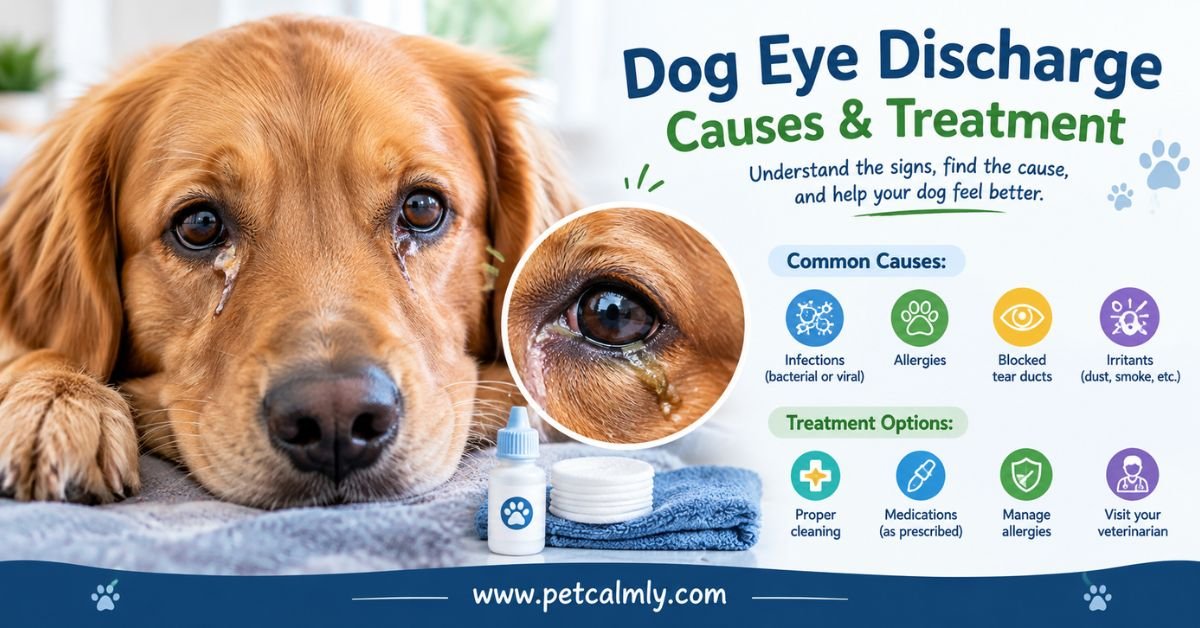
Dog eye discharge causes treatment options vary widely, because the goo in your dog’s eye can come from something harmless, like sleep crust, or something serious, like a corneal ulcer. Clear, light, or small amounts of discharge are often normal or allergy-related. Yellow, green, bloody, or heavy discharge, squinting, or redness usually means infection or injury. Gently wipe away light discharge with sterile saline. Call your vet the same day if the discharge is thick, colored, or comes with pain.
Why Dog Eye Discharge Worries So Many Owners
You notice it first thing in the morning. Your dog looks up at you, and there is a crust in the corner of one eye, or a wet streak running down the fur. Your stomach drops a little.
That reaction makes sense. Eyes feel fragile, and dogs can’t tell us what hurts. Most owners wonder the same things: Is this normal? Did I miss something? Can I wait, or do I need to go now?
This guide answers those questions in plain language. You’ll learn what normal discharge looks like and what each color suggests. You’ll also learn what vets usually do, what you can safely do at home, and which signs mean you should stop reading and call your clinic.
One honest note first. Eyes can go downhill fast, and an article can’t examine your dog. Use this as a guide for decisions, not a diagnosis.
What Is Normal Dog Eye Discharge?
Healthy eyes make tears all day. Tears wash away dust, keep the surface moist, and drain through tiny ducts into the nose. A small amount of leftover debris is a normal part of that process.
The “Sleep Crust” Most Dogs Get
Many dogs wake up with a small, dry or slightly sticky bit of material in the inner corner of the eye. It is often clear, tan, or light brown. It wipes away easily, and the eye underneath looks bright and comfortable.
Vets often describe this kind of small, occasional buildup as normal. It happens for the same reason people get “sleep” in their eyes. Tears and oils dry out overnight.
Normal vs. Concerning at a Glance
| What you see | Usually normal | Worth a vet visit |
|---|---|---|
| Amount | A small crumb, once in a while | Constant, increasing, or wet streaming |
| Color | Clear, light tan, or light brown | Yellow, green, gray, or bloody |
| Texture | Dry or slightly sticky | Thick, stringy, or like pus |
| Eye appearance | White, bright, open | Red, cloudy, swollen, or squinting |
| Dog’s behavior | Normal and playful | Pawing, rubbing, hiding, or dull |
If your dog’s eye ticks every box in the left column, keep an eye on it. If even one box falls in the right column, take it seriously.
Dog Eye Discharge Causes: Why Your Dog’s Eyes Are Leaking
Many different problems can cause discharge. Some are minor and some are emergencies. The cause often shows up in the details, like which eye is affected, how fast it started, and how your dog is acting.
Allergies
Dogs get allergies just like we do. Pollen, dust, mold, and some foods can trigger itchy, watery eyes. Allergy discharge is usually clear and thin. It often affects both eyes, and your dog may also scratch their ears, lick their paws, or sneeze.
Spring and fall are common peak times. If the watering comes and goes with the seasons, allergies move higher on the list.
Conjunctivitis (Pink Eye)
Conjunctivitis means inflammation of the thin pink tissue around the eye. In dogs, it can come from allergies, bacteria, viruses, irritants, or other eye problems underneath.
The eye often looks red or pink, and the discharge can be watery at first. It may turn thick and yellow-green later. Because conjunctivitis can be a symptom of something else, guessing at home often fails.
Foreign Material and Scratches
Grass seeds, dirt, hair, and sand can get stuck under an eyelid. A dog may also scratch the eye while playing or running through brush.
A scratched eye usually hurts. You’ll often see sudden squinting, a tightly closed eye, and heavy tearing. This is one of the most common reasons for an urgent vet visit.
Dry Eye (Keratoconjunctivitis Sicca)
It sounds backwards, but dry eye often causes thick, sticky discharge. When the eye doesn’t make enough watery tears, it produces more mucus to compensate. The result is gooey, yellowish strings.
Dry eye is common in some breeds, including Cocker Spaniels, Shih Tzus, and Bulldogs. It needs long-term veterinary management because untreated dryness can damage the cornea.
Blocked Tear Ducts
Tears normally drain through small channels near the inner corner of the eye. If a duct is blocked or too narrow, tears spill over onto the face instead.
You’ll see constant wetness and often reddish-brown stains beneath the eye. Small and flat-faced breeds are especially prone to this.
Eyelid and Eyelash Problems
Some dogs have eyelids that roll inward (entropion) or extra lashes that rub the eye surface. That constant friction irritates the eye and produces ongoing discharge.
Pugs, Bulldogs, Shar-Peis, and many other breeds are known for eyelid structure issues. These conditions usually need a vet’s evaluation, and sometimes surgery.
Corneal Ulcers
An ulcer is a sore on the clear front surface of the eye. It can start from a scratch, dryness, or infection. Dogs with ulcers often squint, paw at the eye, and produce a lot of tears or discharge.
Ulcers can worsen quickly. Don’t wait and watch.
Glaucoma and Uveitis
Glaucoma is high pressure inside the eye. Uveitis is inflammation inside the eye. Both are painful, and both can threaten vision.
Signs may include a red eye, a cloudy or bluish look, a pupil that looks different from the other one, and obvious discomfort. These are emergencies.
Breed Traits That Raise the Risk
Some dogs are simply more likely to have messy eyes:
- Flat-faced breeds: Pugs, Bulldogs, Boston Terriers, and Shih Tzus have shallow eye sockets and prominent eyes.
- Long-haired and drop-eared breeds: Hair near the eyes can irritate the surface.
- Small white dogs: Maltese and Poodles often show tear staining more visibly.
Knowing your breed’s tendencies helps you spot what’s normal for your dog and what’s new.
What Dog Eye Discharge Color Really Means
Color gives useful clues, but it doesn’t give a diagnosis. Treat it as one piece of the puzzle.
| Discharge type | Possible meaning | Suggested action |
|---|---|---|
| Clear and watery | Allergies, irritation, a blocked duct, early eye injury | Monitor for 24 hours. Call the vet if it continues or the eye looks uncomfortable. |
| White or gray, mucus-like | Dry eye or irritation | Book a vet visit soon. Dry eye needs testing. |
| Yellow or green, thick | Bacterial infection or a secondary infection | See a vet within a day. |
| Reddish-brown stains | Tear staining from excess tears | Usually cosmetic. Still rule out causes with your vet. |
| Bloody or pink-tinged | Injury, ulcer, or serious inflammation | Call the vet right away. |
| Cloudy or milky eye with discharge | Possible ulcer, glaucoma, or other serious problem | Treat as an emergency. |
What About Brown Tear Stains?
Many owners worry about brown or rust-colored fur under the eyes. These stains come from pigments in tears called porphyrins. They darken when tears sit on the fur and are exposed to air.
Staining is often harmless. Still, if the staining is new, or comes with redness or pain, ask your vet to check for an underlying problem like blocked ducts.
Symptoms That Often Appear With Eye Discharge
Discharge rarely comes alone. Other signs help you judge how urgent things are.
Watch for these:
- Squinting or holding the eye shut
- Pawing or rubbing the face on furniture or carpet
- Redness in the white of the eye or around the lids
- Swelling of the eyelids
- Cloudiness, a bluish haze, or a visible spot on the eye
- Sensitivity to light
- Bumping into things
- Lethargy, low appetite, or hiding
Squinting is the one to take most seriously. Dogs squint when the eye hurts. A painful eye can mean an ulcer, a foreign object, or high pressure, and these all benefit from quick treatment.
Dog Eye Discharge Treatment: What Your Vet Will Do
The right treatment depends on the cause. That’s why the exam matters more than the medicine bottle.
What Happens at the Appointment
Your vet will ask when the discharge started, how it looks, and whether your dog has other symptoms. Then they’ll look closely at the eye and eyelids.
Common tests include:
- Fluorescein stain: A harmless dye that shows scratches or ulcers on the cornea.
- Schirmer tear test: A thin paper strip that measures tear production and checks for dry eye.
- Eye pressure check: Called tonometry, it looks for glaucoma.
- Tear duct flush: Checks whether the duct drains properly.
None of these tests are usually painful, though the vet may use numbing drops.
Common Treatments
Treatment follows the diagnosis. Possibilities include:
- Antibiotic drops or ointment for bacterial infection
- Anti-inflammatory medication for certain types of irritation
- Artificial tears or tear-stimulating medication for dry eye
- Allergy management, which may include antihistamines or other treatments your vet recommends
- Flushing and cleaning to remove debris or open a blocked duct
- Surgery for eyelid problems, certain tumors, or severe ulcers
Why You Shouldn’t Use Leftover Medication
It’s tempting to use old eye drops from a previous infection, or your own. Please don’t. Some drops, especially those with steroids, can make an ulcer much worse. A drop that helped one problem can harm another.
Finish the Whole Course
If your vet prescribes drops, follow the schedule even if the eye looks better after two days. Stopping early lets infections return. If giving drops is hard, ask the clinic staff to show you their technique.
Safe Home Care for Dog Eye Discharge
Home care is for gentle cleaning and comfort. It doesn’t replace a diagnosis. Use it when the discharge is mild, your dog is acting normal, and you don’t see red-flag signs.
How to Clean Your Dog’s Eyes Step by Step
- Wash your hands so you don’t carry germs to the eye.
- Gather supplies. You need sterile saline eyewash (made for eyes) and clean cotton pads or a soft, lint-free cloth.
- Soften crusts first. Hold a pad soaked in warm (not hot) water or saline against the crust for 20 to 30 seconds.
- Wipe gently from the inner corner outward, away from the nose.
- Use a fresh pad for each wipe and a separate pad for each eye.
- Reward your dog with a small treat so cleaning becomes a calm routine.
Go slowly. If your dog pulls away or cries out, stop. Pain during cleaning is a sign to call your vet.
What to Avoid Putting Near Your Dog’s Eyes
Skip these:
- Human eye drops or “redness relievers”
- Tea bags, vinegar, or other home remedies
- Hydrogen peroxide
- Essential oils
- Cotton balls that shed fibers into the eye
- Any leftover pet medication
Natural doesn’t mean safe near the eye. The eye surface is delicate, and the wrong substance can burn or scratch it.
Trim the Hair Around the Eyes
Long fur near the eyes can poke the surface and wick tears onto the face. Ask your groomer to keep the hair around the eyes short. Never trim near your dog’s eyes with sharp scissors on your own unless you’ve been shown how.
6 Common Mistakes Owners Make With Eye Discharge
Most mistakes come from good intentions. These are the ones vets see often.
Waiting too long on a squinting eye. Mild discharge can wait a day. Squinting shouldn’t.
Treating every case as allergies. Allergies are common, but a scratched eye can look similar at first.
Using human products. What soothes your eye can injure your dog’s.
Wiping too often. Over-cleaning irritates the skin around the eye. Clean once or twice a day when needed, not every hour.
Ignoring one-sided symptoms. Discharge from only one eye often points to a local problem, like a foreign body, a scratch, or a blocked duct.
Skipping follow-up visits. Conditions like dry eye need ongoing management. A single visit may not be the end of the story.
Real-Life Situations Owners Often Describe
These are common scenarios, written as examples to help you recognize patterns. They aren’t individual case studies.
The seasonal weeper. A dog’s eyes water every spring. Discharge is clear, both eyes are affected, and the dog also licks his paws. This pattern often points toward allergies, and a vet can help build a management plan.
The sudden squinter. A dog comes in from the yard with one eye shut and tears running down her face. Nothing is stuck in sight. This pattern fits a scratch or foreign object. It needs a prompt exam.
The goopy flat-faced pup. A Pug has sticky yellow strings in both eyes every morning. Dry eye is a common suspect in this pattern, and a tear test can confirm it.
The stained Maltese. A small white dog has reddish-brown streaks under both eyes. The eyes look clear and comfortable. Often this is cosmetic staining, though a vet can check for blocked ducts.
When Should You Worry About Dog Eye Discharge?
Some situations can’t wait. Here is a clear way to sort them.
Go to the Vet or Emergency Clinic Immediately If You See
- Your dog is squinting hard or keeps the eye closed
- The eye is bulging, cloudy, bluish, or looks different in size
- There is blood in or around the eye
- A visible object is stuck in the eye
- The eye was hit, scratched, or injured
- Your dog seems to have lost vision suddenly
- The discharge comes with vomiting, lethargy, or severe pain
Call Your Vet the Same Day or Next Day If
- The discharge is yellow, green, or thick
- The eye is red or the eyelids are swollen
- Discharge has continued for more than 24 to 48 hours
- Your puppy or senior dog has symptoms
- Your dog keeps pawing or rubbing the eye
Safe to Monitor at Home If
- The discharge is small, clear, and occasional
- Both eyes look bright and white
- Your dog is playful and comfortable
- You’ve cleaned the area, and it hasn’t returned heavy
When in doubt, call. Clinics would rather answer a quick question than treat an advanced injury later.
What Should Pet Owners Do Right Now?
If you’re looking at your dog’s eye as you read this, here is a simple plan.
- Look closely in good light. Note the color, thickness, and which eye is affected.
- Check your dog’s behavior. Are they squinting, rubbing, or acting dull?
- Take a photo. It helps your vet see changes and compare later.
- Clean gently with sterile saline if the discharge is mild and your dog is comfortable.
- Stop your dog from rubbing. A soft cone (e-collar) can prevent scratching if your vet advises it.
- Decide on timing using the red-flag lists above.
- Write down details to share, such as when it started, any new foods, products, or outdoor exposure.
If you have to guess between waiting and calling, call.
How to Prevent Dog Eye Discharge
You can’t prevent every eye problem. You can lower the odds and catch issues early.
Daily and Weekly Habits
- Check your dog’s eyes during cuddle time so changes stand out.
- Wipe away light crust gently using sterile saline when needed.
- Keep hair around the eyes trimmed short.
- Wash bedding regularly to cut down on dust and allergens.
- Keep your dog’s face out of car windows, where debris can blow into the eyes.
Protect Against Irritants
Smoke, strong cleaning sprays, and perfumes can irritate eyes. Be careful with shampoo during baths, and keep it away from the face. Rinse well if soap gets near the eyes.
Keep Up With Vet Care
Regular exams let your vet notice early eye changes. Breeds prone to dry eye or eyelid problems may benefit from extra attention. Ask your vet how often to check your particular dog.
Frequently Asked Questions
Is dog eye discharge normal?
A small amount of clear or light brown crust, especially after sleep, is normal for many dogs. Heavy, colored, bloody, or constant discharge isn’t normal and deserves a vet’s attention.
Can I use human eye drops on my dog?
No. Human drops, especially redness relievers, can irritate or harm a dog’s eyes. Only use sterile saline made for eye rinsing, or the medication your vet prescribes for your dog.
Why does my dog have green eye discharge?
Green or yellow discharge often suggests bacterial infection, though it can also appear when another eye problem lets bacteria grow. Because the cause varies, a vet visit is the safest next step.
Will dog eye discharge go away on its own?
Mild discharge from irritation or allergies sometimes clears in a day or two. If it lasts longer, worsens, or appears with squinting or redness, it likely needs treatment. Waiting can turn a small problem into a bigger one.
How much does it cost to treat dog eye discharge?
Costs vary by region, clinic, and diagnosis. A simple exam and drops cost less than treating ulcers, dry eye long term, or surgery. Ask your vet for an estimate before treatment so you can plan.
Should I worry if only one eye has discharge?
One-sided discharge often points to a local cause, like a scratch, foreign object, or blocked tear duct. It’s worth a vet check, especially if your dog squints or paws at that eye.
More Information About Pets, Please Visit Our Website: How to Stop Reverse Sneezing in Dogs
Dog Allergy Symptoms Eyes
How to Clean Dog Eyes Crust at Home
Dog Shaking Head Constantly Meaning
How to Treat Dog Ear Infection Without Vet
Why Does My Dog Keep Sneezing?
Conclusion
Dog eye discharge ranges from a harmless morning crumb to a true emergency. What matters is noticing the details: the color, the amount, whether one or both eyes are affected, and how your dog is acting.
Mild, clear discharge in a comfortable dog can often be managed with gentle cleaning and watchful eyes. Colored discharge, redness, cloudiness, or squinting calls for a veterinarian. The sooner the eye is examined, the better the outcome tends to be.
You know your dog best. If something looks off, trust that feeling and make the call.