Short direct answer
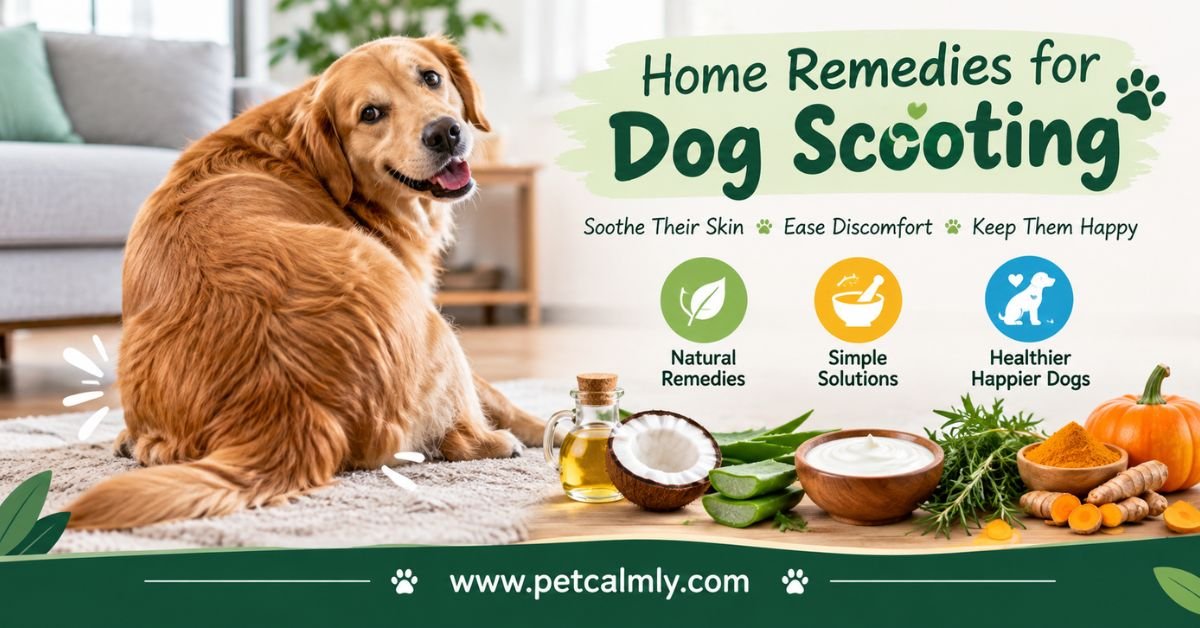
The safest home remedies for dog scooting are gentle cleaning with warm water, a warm compress, more fiber (like plain canned pumpkin), extra water, and trimming messy hair around the rear. These help when scooting comes from mild irritation or soft stools. They will not fix worms, infections, or impacted glands. If your dog keeps scooting past two or three days, or you see swelling, blood, or pain, book a vet visit.
Why Your Dog’s Scooting Isn’t Just a Funny Habit
Most of us have seen it. Your dog is happily sitting on the living room rug, then suddenly drags their bottom across the floor like they’re racing someone. It looks silly. Guests laugh. But your dog is almost never doing it for fun.
Scooting is how dogs try to relieve itching, pressure, or pain near the anus. The good news is that many cases are mild and easy to ease at home. The honest news is that scooting is a symptom, not a diagnosis. The right fix depends on what is causing it.
That is why this guide does two things. First, it walks you through home remedies for dog scooting that are safe and sensible. Second, it helps you spot the situations where home care is the wrong move and a vet needs to look.
If you’re a first-time dog owner and you’re a little worried right now, take a breath. You’re in the right place.
What Causes Dog Scooting?
Before you try any remedy, it helps to understand what is going on back there. A remedy that suits one cause can do nothing for another. Here are the most common reasons dogs scoot.
1: Full or Impacted Anal Glands
This is the number one suspect. Dogs have two small sacs, called anal sacs or anal glands, on either side of the anus. They hold a smelly fluid that dogs use for scent marking. Normally, the sacs empty a little each time your dog poops.
Sometimes they don’t empty well. The fluid builds up, thickens, and starts to feel uncomfortable. Your dog scoots to try to squeeze it out. According to the Merck Veterinary Manual, anal sac problems are common in dogs, and they can range from simple fullness to impaction, infection, and abscess.
A fishy odor is a classic clue. So is licking or biting at the tail base.
2: Loose Stools and Poor Stool Quality
Firm, bulky stool presses against the anal sacs as it passes. That pressure helps empty them. Soft or very small stools don’t do this job well. Dogs with frequent soft stools often have gland trouble as a side effect.
Soft stool can also leave residue around the anus. That residue itches, so your dog scoots to clean up.
3: Intestinal Worms and Tapeworms
Parasites are a very common cause, especially in puppies. Tapeworm segments can crawl near the anus and cause itching. They look like small grains of rice stuck to the fur or sitting near your dog’s bottom. Tapeworms usually come from swallowing infected fleas.
Home remedies will not clear this up. Your dog needs a proper dewormer from your vet.
4: Allergies and Skin Irritation
Food allergies and environmental allergies can make the skin around the rear red and itchy. Some dogs with allergies also get recurring anal gland trouble. If your dog scoots a lot and also licks their paws, scratches their ears, or gets repeated ear infections, allergies may be part of the picture.
5: Matted Fur, Fleas, and Hygiene Problems
Long-haired dogs can get feces stuck in the fur around the rear. Dried bits tug at the skin and itch. Fleas can cause similar irritation near the tail base. Dogs with skin folds, like bulldogs, can also get sore, moist skin that triggers scooting.
6: Less Common but More Serious Causes
Sometimes scooting points to something that needs medical care. These include anal sac infection or abscess, rectal or perianal growths, perianal fistulas, and injuries. They are less common, but they are the reason a vet check matters when scooting does not settle quickly.
Safe Home Remedies for Dog Scooting You Can Try Today
Now the part you came for. These steps are gentle, low-risk, and widely used in general pet care. Go in order. Step one matters most, because it tells you whether home care is even appropriate.
Step 1: Take a Calm Look at the Area First
Before you do anything, look. Lift your dog’s tail gently while they stand and check the skin around the anus. Use good light. Reward them with a treat so they stay relaxed.
You’re looking for:
- Redness or rawness
- Swelling on one or both sides of the anus
- Blood, pus, or discharge
- Stuck feces or matted fur
- Small white rice-like segments
- Fleas or flea dirt (tiny black specks)
If you see swelling, blood, pus, or your dog yelps when you touch the area, stop. Skip the home remedies and call your vet. We’ll cover this more in the warning signs section below.
If everything looks mildly red or just a bit dirty, you can move on.
Step 2: Clean the Area Gently With Warm Water
This is the simplest of all home remedies for dog scooting, and it often helps more than people expect. Dried residue and irritation keep the cycle going.
Use a soft cloth and warm water. Pat gently. Don’t scrub. If your dog has long fur, work slowly and tease out any stuck bits rather than pulling.
If you prefer wipes, choose unscented, alcohol-free ones made for dogs. Fragrance and alcohol can sting irritated skin. Pat the area dry afterward, because lingering moisture can make irritation worse.
Step 3: Use a Warm Compress to Soothe Discomfort
A warm compress is one of the most common comfort measures vets mention for mildly swollen or sore areas near the anal glands. The warmth can ease soreness and may help softened fluid move out on its own.
Here is how to do it:
- Soak a clean washcloth in warm water. It should feel comfortable on your inner wrist, never hot.
- Wring it out well.
- Hold it gently against the area for five to ten minutes.
- Repeat once or twice a day for a day or two.
Keep your dog calm with treats or a lick mat. If they resist, pull away, or seem to be in pain, stop. Pain means a vet should look.
Step 4: Add Fiber With Plain Canned Pumpkin
Fiber makes stool bulkier and firmer, and firmer stool helps the anal glands empty naturally. That is why plain canned pumpkin is one of the best-known home remedies for dog scooting.
A few important details:
- Use 100% plain pumpkin, not pumpkin pie filling. Pie filling has sugar and spices, and some products may contain ingredients that are unsafe for dogs.
- Start small. Many owners begin with about a teaspoon for small dogs, a tablespoon for medium dogs, and a bit more for large dogs, mixed into a meal.
- Give it once a day at first, then adjust based on stool quality.
Too much fiber can cause gas or loose stools, which defeats the purpose. If your dog has diabetes, pancreatitis, or a sensitive stomach, ask your vet before changing their diet.
Other fiber options include plain cooked sweet potato in small amounts, or a vet-recommended fiber supplement. Don’t hand out random supplements without checking in first.
Step 5: Make Sure Your Dog Is Drinking Enough Water
Fiber without water can backfire. Dehydrated dogs produce harder stool, which is just as unhelpful as soft stool.
Simple ways to encourage drinking:
- Refresh the water bowl twice a day
- Add a splash of water to kibble
- Mix in a spoonful of wet food
- Add more bowls around the house
- Try a pet fountain if your dog likes moving water
Step 6: Trim the Hair Around the Rear
For fluffy breeds like Shih Tzus, Poodles, and Golden Retrievers, a tidy rear end makes a real difference. Trim the fur around the anus with blunt-tipped scissors or ask your groomer for a sanitary trim.
Do not use sharp scissors if your dog squirms. Skin there is delicate. If you’re nervous, a groomer can do it in a minute or two.
Step 7: Stop the Licking and Biting
Frantic licking makes irritation worse. If your dog won’t leave the area alone, a soft recovery cone or inflatable collar can give the skin a break. Use it only while you supervise, and remove it for meals and bathroom breaks.
Home Remedies for Dog Scooting by Cause
Different causes call for different responses. This table gives you a quick map.
| Likely cause | What you may notice | What can help at home | Needs a vet? |
|---|---|---|---|
| Mild irritation or dirty fur | Redness, stuck feces, scooting after bathroom trips | Gentle cleaning, sanitary trim | Only if it persists |
| Soft stools | Frequent loose poop, mild scooting | Fiber, steady diet, water | Yes, if diarrhea lasts more than a day or two |
| Full anal glands | Fishy smell, licking tail base, scooting | Warm compress, fiber, hydration | Often, if it doesn’t clear quickly |
| Tapeworms or other worms | Rice-like segments, itchy bottom | None that work | Yes, needs dewormer |
| Fleas | Scratching near tail base, flea dirt | Flea comb, but treat with vet-approved flea control | Usually yes |
| Allergies | Itchy paws, ears, skin | Gentle cleaning, avoid new foods | Yes, for diagnosis |
| Infection or abscess | Swelling, pain, pus, blood | None | Yes, same day |
Use the table as a guide, not a diagnosis. Dogs can have more than one problem at the same time.
Home Remedies for Dog Scooting That Aren’t Safe ( 5 Common Mistakes )
Search online and you’ll find a long list of folk remedies. Some are harmless but useless. Some can do real harm. Here are the ones to be careful with.
1: Human Creams and Ointments
Diaper rash creams often contain zinc oxide, which can be harmful if swallowed. Dogs lick the area constantly, so anything you put there ends up in their mouth. Steroid creams made for people can also thin or irritate skin when used wrongly. Only use a topical product your vet has recommended.
2: Essential Oils and Tea Tree Oil
Tea tree oil and many other essential oils are toxic to dogs, even in small amounts. Skip them entirely, no matter how natural they sound.
3: Apple Cider Vinegar, Garlic, and Diatomaceous Earth
Apple cider vinegar can sting raw skin. Garlic is not a safe dewormer for dogs, and larger amounts can harm red blood cells. Diatomaceous earth and other kitchen dewormers don’t reliably treat tapeworms. If you suspect worms, you need a vet-prescribed medication, not a pantry experiment.
4: Waiting Too Long
This one catches loving owners out. They try pumpkin, wait a week, then another week. Meanwhile, a full gland becomes an infected gland. Home care is a short trial, not a long project.
5: Squeezing the Area at Random
Which brings us to the next question.
Should You Express Your Dog’s Anal Glands at Home?
Short answer: only if a professional has shown you how, and only if your dog genuinely needs it.
Expressing glands means gently squeezing the sacs to empty them. Groomers and vets do it all the time. Done correctly, it can bring relief. Done incorrectly, it can bruise tissue, cause inflammation, and make the glands worse. Dogs with healthy glands don’t need it at all.
If your dog has recurring gland problems, ask your vet to demonstrate the technique so you understand what normal looks like. Don’t learn from a video and a nervous dog.
Expect it to be messy and quite smelly. Wear gloves and have towels ready. If you ever feel resistance, see blood, or your dog cries out, stop.
When to Worry: Signs Your Dog Needs a Vet
Home remedies are for mild, short-lived scooting. Contact your vet if you notice any of the following:
- Swelling or a lump beside the anus
- Skin that looks red, hot, or broken
- Blood or pus near the anus or in the stool
- A strong, sudden odor that doesn’t wash away
- Straining to poop, or crying while pooping
- Diarrhea lasting more than a day or two
- Visible worms or rice-like segments
- Lethargy, fever, or loss of appetite
- Scooting that continues for more than two or three days despite gentle care
- Scooting that keeps coming back every few weeks
Be especially careful with older dogs. A new lump near the anus or changes in stool shape deserve a prompt exam. Not every growth is cancer, but it is better to know early.
Trust your instincts too. You know your dog. If something feels off, that is reason enough to call.
Real-Life Example: When Home Care Was Enough
Imagine a three-year-old Labrador who started scooting after a week of soft stools following a new treat. The owner checked the area, found mild redness and no swelling, cleaned gently, and skipped the treats. A spoonful of plain pumpkin went into dinner. Within two days, stools firmed up and the scooting stopped.
That is the kind of case where home remedies for dog scooting do their job. The cause was simple, the signs were mild, and the dog felt better quickly.
Real-Life Example: When It Wasn’t
Now picture a small terrier who scoots for four days. The owner tries a warm compress, but the dog cries and snaps. One side of the bottom looks puffy and darker than the other. Here, continuing home care would be a mistake. That pattern is typical of an infected or abscessed gland, which needs a vet right away.
The difference is not the scooting. It is everything that comes with it.
What Your Vet Will Do to Find the Cause
Knowing what to expect can make the visit feel less scary. A typical exam may include:
- A physical check of the rear end, including the anal sacs
- Gland expression, if needed
- A stool test to look for worms or other parasites
- A review of diet, flea control, and any skin or allergy history
- Medication, such as antibiotics or anti-inflammatories, if there’s infection or inflammation
For dogs with repeated problems, vets may recommend a higher-fiber diet, a food trial for allergies, weight loss, or in rare cases, surgery to remove the anal sacs. Your vet will tell you what makes sense for your dog.
What Should You Do Right Now? A Simple Action Plan
If your dog is scooting as you read this, here is a calm, practical plan.
- Look first. Check for swelling, blood, pus, worms, or fleas.
- Decide. Any red-flag sign means calling your vet today. No red flags means you can try home care.
- Clean gently. Use warm water and a soft cloth.
- Try a warm compress. Five to ten minutes, once or twice a day.
- Add fiber and water. Plain pumpkin in small amounts and plenty of fresh water.
- Limit licking. Use a soft cone if needed.
- Set a deadline. If there’s no clear improvement in two or three days, see your vet.
- Check parasite protection. If your dog is behind on flea or worm prevention, bring it up at the visit.
Write down what you notice, including when the scooting happens and what your dog ate recently. Vets love that kind of detail.
How to Prevent Dog Scooting Naturally
Once you’ve solved the problem, you’ll want to keep it from returning. Prevention is mostly about consistency.
Keep Stools Firm and Regular
A steady, balanced diet with enough fiber is the best long-term protection. Change foods slowly over seven to ten days. Avoid frequent table scraps and surprise treats, which often upset digestion.
Keep Your Dog at a Healthy Weight
Extra weight can make it harder for dogs to empty their glands well. A healthy body weight also means more movement, which supports good digestion.
Stay on Top of Flea and Worm Control
Regular vet-approved parasite prevention protects against tapeworms and flea-related itching. This is far more effective than reacting after your dog starts scooting.
Groom Regularly
Keep the rear tidy, especially for long-coated breeds. Wash and dry skin folds if your dog has them.
Exercise Daily
Walks encourage regular bowel movements. Regular bowel movements keep glands working as they should.
Watch for Patterns
If scooting returns every month or two, don’t treat each episode as a one-off. Ask your vet to look for an underlying cause, such as food allergies or chronic gland trouble.
Frequently Asked Questions
1: What is the fastest home remedy for dog scooting?
There isn’t one magic fix, but gentle cleaning with warm water and a warm compress give the quickest comfort. Adding plain pumpkin helps over a few days. If the scooting doesn’t ease within two or three days, call your vet.
2: Can I use pumpkin as a home remedy for dog scooting every day?
Small amounts of plain canned pumpkin are generally safe for many healthy dogs. Start with a teaspoon to a tablespoon depending on size, and watch their stool. Too much can cause loose stools. If your dog has a health condition, ask your vet first.
3: Why is my dog dragging their butt on the floor?
The most common reasons are full anal glands, irritation from loose stool, worms, allergies, or dirty fur. Dogs scoot to scratch an itch or relieve pressure. Occasional scooting can be harmless, but frequent or painful scooting needs a vet check.
4: How long is too long for a dog to scoot?
One or two scoots after a messy poop is usually nothing. If it continues for more than two or three days, returns often, or comes with swelling, odor, blood, or pain, schedule a vet visit.
5: Can dog scooting go away on its own?
Sometimes, yes. Mild irritation or a temporary soft stool can clear up without help. But anal gland problems and parasites don’t always resolve alone, and they can get worse. Don’t wait more than a few days.
6: Is scooting an emergency?
Usually not. It becomes urgent when you see significant swelling, bleeding, pus, severe pain, fever, or your dog won’t eat. Those signs can point to an infection or abscess that should be treated quickly.
More Information About Pets, Please Visit Our Website: How to Tell if Your Dog Has Worms or Parasites
Dog Constipation
Early Signs of Worms in Dogs
Why Does My Cat Smell So Bad?
What Kills Fleas on Dogs Instantly Naturally
Does a Dog Miss Its Owner When Rehomed?
How Many Puppies Does a Dog Give Birth To?
Conclusion
Scooting looks comical, but it’s your dog’s way of telling you something is bothering them. For mild cases, home remedies for dog scooting such as gentle cleaning, warm compresses, more fiber, extra water, and a tidy rear can bring real relief. They work best when you start early and keep expectations realistic.
The key is knowing where home care ends. Swelling, blood, strong pain, worms, or scooting that drags on are all signs that your dog needs a professional. There’s no shame in calling the vet. It’s usually a quick visit, and the relief your dog feels is worth it.