Short direct answer
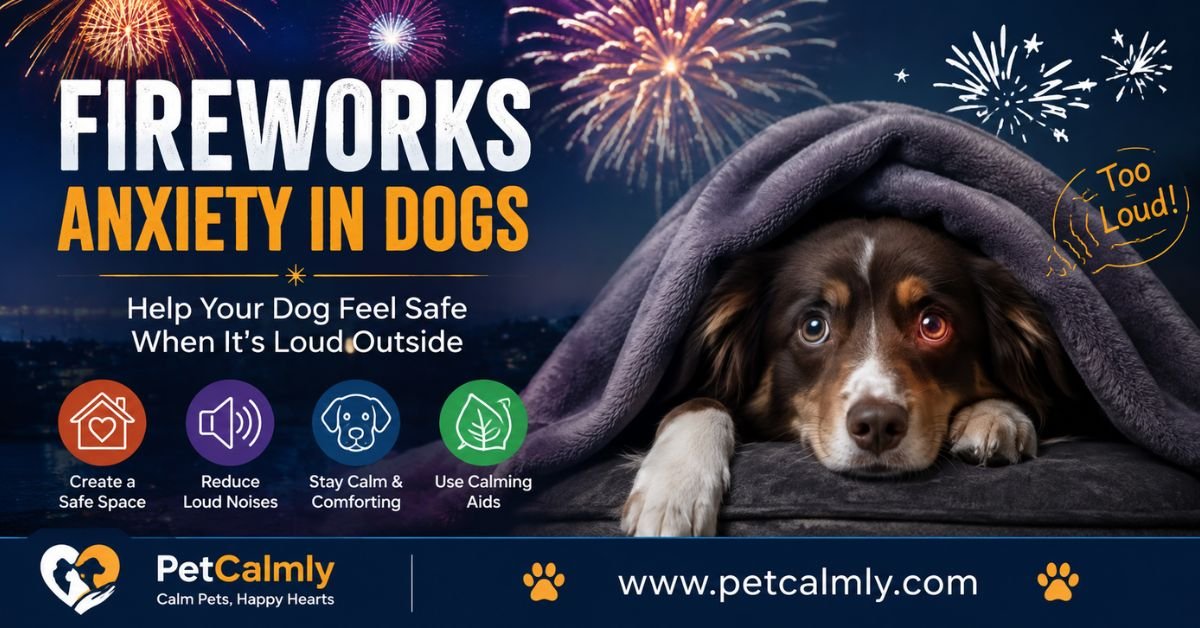
Fireworks anxiety in dogs happens because their hearing is four times more sensitive than ours, making loud noises frightening and disorienting. The best approach combines prevention (creating a safe space), comfort techniques (staying calm yourself), and gradual desensitization. For severe cases, your vet can recommend anti-anxiety medication. Most dogs benefit from a combination strategy rather than any single solution working alone.
Why Your Dog’s Fear is Real (And Not Your Fault)
If your dog becomes a shaking, panting mess when fireworks start, you’re not alone. Thousands of pet owners dread July 4th, New Year’s Eve, and other celebration dates because of their dog’s anxiety response. And if you’ve felt guilty about it thinking maybe you didn’t socialize them enough or train them properly let’s address that first: fireworks anxiety isn’t a character flaw or a training failure.
Your dog’s fear response is rooted in basic biology. A dog’s hearing is approximately four times more sensitive than human hearing, which means the sound of fireworks isn’t just loud to them it’s intensely, overwhelmingly loud. Adding to this sensitivity, fireworks don’t follow a predictable pattern. They’re sudden, they’re jarring, and they come with low-frequency vibrations that your dog’s body literally feels.
This guide is designed to help you understand why your dog reacts the way they do, what signs to watch for, and most importantly, practical strategies you can implement now to reduce their suffering during fireworks season. We’ll cover everything from immediate calming techniques to longer-term desensitization approaches, plus when it’s time to involve your veterinarian.
Fireworks Anxiety in Dogs: What’s Actually Happening
Why Do Dogs Fear Fireworks?
Fireworks trigger what’s called the startle reflex combined with a genuine fear response. Here’s what’s happening in your dog’s body:
The Sensory Overload Your dog hears the initial crack at a volume and pitch that’s genuinely distressing to their ears. Dogs have hearing sensitivity between 40 Hz and 60,000 Hz, compared to humans at 20 Hz to 20,000 Hz. This means they’re picking up ultrasonic frequencies we simply cannot perceive. A firework explosion isn’t just loud—it contains layers of sound that feel aggressive to their system.
The Unpredictability Factor Unlike other loud noises your dog might have learned to tolerate (the vacuum, the garbage truck), fireworks are erratic. They happen without warning, at irregular intervals, and with no discernible pattern. This unpredictability activates your dog’s threat-detection system and keeps them in a heightened state of alert.
The Physiological Stress Response When your dog hears fireworks, their sympathetic nervous system (the “fight or flight” system) kicks into overdrive. Their body floods with cortisol and adrenaline. Their heart rate increases, their breathing becomes rapid and shallow, and their muscles tense. This isn’t dramatic overreacting it’s a genuine stress cascade.
The Difference Between Normal Caution and Anxiety Disorder
Not all nervousness about fireworks is equal. A dog who startles at loud noises but then settles down is having a normal startle response. A dog with fireworks anxiety shows sustained fear even when the immediate noise has stopped, exhibits avoidance behaviors, and sometimes even shows signs of panic or escape attempts.
The distinction matters because it determines your approach. Mild startle responses often improve with simple comfort measures and environmental modifications. Genuine anxiety disorder might benefit from professional training support or veterinary intervention.
Recognizing Fireworks Anxiety: Symptoms Beyond Shaking
Your dog might show anxiety in ways you haven’t connected to fireworks. Here are the physical and behavioral signs:
Obvious Physical Signs
- Trembling or full-body shaking
- Panting (rapid, shallow breathing even when cool)
- Drooling more than usual
- Dilated pupils
- Tucked tail
- Excessive yawning
Behavioral Warning Signs
- Hiding in closets, bathrooms, or under beds
- Destructive chewing or scratching at doors/windows
- Pacing or inability to settle
- Loss of appetite
- Excessive barking or whining
- Attempts to escape (breaking through screens, jumping fences)
- Clinginess or refusing to leave your side
- Sudden accidents indoors despite being housetrained
The Escape Risk Here’s something many owners don’t anticipate: dogs with severe fireworks anxiety become escape artists. More dogs go missing on July 4th than any other day of the year. A terrified dog may bolt through an open door, jump a fence they normally respect, or break a leash. This is panic, not disobedience.
Creating a Safe Space: Your First Line of Defense
The moment fireworks season approaches, start preparing a dedicated safe space in your home. This space should feel secure, somewhat soundproofed, and familiar.
Where to Set Up the Safe Space
Choose an interior room away from windows and exterior walls. Basements are excellent if they’re finished and comfortable. Interior bathrooms or closets work well because they typically have fewer external walls and windows. Even a large closet or laundry room can serve this purpose if that’s what you have.
The key is reducing external noise penetration. Interior rooms naturally block more sound than rooms with exterior walls. Some owners drape heavy blankets or towels over windows in the safe space for additional sound reduction and to block flashes of light from fireworks.
What Goes Inside the Safe Space
Essential Elements:
- A comfortable bed or crate (if your dog is crate-trained)
- Fresh water in a non-spill bowl
- A worn piece of your clothing (your scent is calming)
- Familiar toys (nothing that requires supervision)
- Pee pads if there’s any chance of accidents under stress
Optional but Helpful Additions:
- A white noise machine or calming music playlist
- A covered crate (the enclosed feeling helps some dogs)
- Anxiety wraps or thundershirts
Familiarizing Your Dog With the Space Before Fireworks Start
Don’t wait until fireworks night to introduce this space. Starting weeks in advance, make it positive and rewarding. Toss treats in the area. Feed some meals there. Spend quiet time playing with your dog while they’re in the space. The goal is for your dog to already see this as a comfortable retreat, not a strange new place you’re forcing them into during a crisis.
Immediate Calming Techniques for Fireworks Night
When the fireworks actually start, your job is to remain as calm as possible (your dog reads your tension) while offering practical comfort.
Stay Calm and Don’t Over-Comfort
This is counterintuitive, but here’s the behavioral reality: excessive coddling during anxiety can actually reinforce the fear response. Your dog learns that anxiety gets attention, which paradoxically increases anxious behavior.
This doesn’t mean ignore your dog. It means:
- Stay present but calm
- Use a normal voice tone
- Don’t make a big fuss over their anxiety
- Offer comfort matter-of-factly, not emotionally
- Redirect to calming activities rather than just petting while they panic
If your dog seeks your lap, that’s fine—allow it. But maintain your own calm energy. Your dog can sense your heart rate and tension. If you’re anxious about their anxiety, they’ll intensify their response.
Practical Comfort Measures
White Noise or Calming Music Soft background noise or specially designed dog-calming music (like Through a Dog’s Ear series) can mask the peaks of fireworks sounds. It won’t eliminate the noise entirely, but it reduces the contrast and can help your dog stay calmer.
Anxiety Wraps (Thundershirt or Similar) Anxiety wraps apply gentle, sustained pressure that mimics swaddling. Studies show mixed results, but many owners report they help. They’re worth trying, especially if introduced before anxiety sets in. Your dog shouldn’t be forced into an anxiety wrap during acute panic that can backfire.
Distraction Techniques Engaging your dog’s brain can redirect attention away from fear:
- Puzzle toys stuffed with high-value treats
- Long-lasting chews (bully sticks, Kongs)
- Sniffing games (hide treats around the safe space)
- Training (yes, teaching a sit-stay can refocus anxious energy)
The goal isn’t to completely distract from the noise but to give your dog’s mind something constructive to do alongside the fear.
Temperature and Hydration Anxious dogs sometimes overheat. Ensure your safe space is cool and your dog has access to fresh water. Some dogs are soothed by cool surfaces tile floors, cooling mats, or even a cool (not cold) washcloth draped over their back.
When to Consider Anti-Anxiety Medication
For dogs with severe fireworks anxiety, medication can be genuinely life-changing. This isn’t about making your dog a zombie modern anti-anxiety medications are designed to take the edge off fear while keeping your dog functional.
Common Medication Options
Trazodone An antidepressant sometimes prescribed off-label for situational anxiety. It’s often used for specific events like fireworks or thunderstorms. Works relatively quickly (30-60 minutes) and is considered low-risk.
Alprazolam (Xanax) A benzodiazepine that reduces anxiety. It works quickly but isn’t typically recommended for long-term use. Sometimes reserved for severe acute cases.
Fluoxetine or Sertraline SSRIs that are used for ongoing anxiety issues. These require consistent dosing over time and work better for chronic anxiety patterns than single events.
Dexmedetomidine (Sileo) Specifically approved for noise aversion in dogs. It’s administered as an oral gel and works within 30-60 minutes. It’s designed exactly for fireworks anxiety and thunderstorm anxiety.
Having the Medication Conversation With Your Vet
Don’t wait until fireworks season is at its peak. Talk to your vet about your dog’s anxiety during a regular visit. Discuss:
- The severity of your dog’s response
- Whether it’s affecting their health or your home safety
- Your dog’s medical history
- What medication might be appropriate
- Timing and dosing protocols
Your vet might recommend a trial before the actual event so you understand how your dog responds.
Long-Term Solution: Desensitization and Counterconditioning
If fireworks anxiety has become an annual problem, gradual exposure and retraining can help over time. This isn’t a quick fix it takes months but many dogs show significant improvement.
How Desensitization Works
The principle is simple: gradually expose your dog to the fear trigger at volumes low enough that they don’t panic, then slowly increase exposure while rewarding calm behavior.
Step-by-Step Desensitization Protocol:
Week 1-2: Audio Introduction Download fireworks sounds from YouTube or apps like “Thunderstorm and Rain Sounds.” Play them at very low volume (barely audible) during positive experiences. Feed meals, give treats, play all while the sound plays softly in the background. The goal is zero fear response.
Week 3-4: Gradual Volume Increase Slowly increase volume over multiple sessions, but only if your dog remains calm. If anxiety appears, you’ve gone too fast. Back up to a lower volume. This is about small, imperceptible progress—not pushing your dog.
Week 5-8: Varied Scenarios Play fireworks sounds at moderate volumes during different times of day, in different rooms, during play, during meals. Make the sound part of normal life.
Month 3+: Real-World Exposure (If Possible) If you have friends with fireworks or access to small, controlled fireworks displays in the distance, this can help bridge to real exposure.
Pairing With Positive Associations
The key to desensitization working is that fireworks sounds come to mean something positive. Before playing the sound:
- Have high-value treats ready
- Plan a game or training session
- Start a favorite activity
Eventually, your dog’s brain begins to predict: “Fireworks sound = treats and fun are coming.” Over time, this can genuinely shift their emotional response.
When to Involve a Professional Trainer
If your dog shows panic responses (destructive behavior, escape attempts, extreme distress), working with a certified professional dog trainer or veterinary behaviorist can accelerate progress. They can:
- Design a customized desensitization plan
- Teach additional calming techniques
- Rule out other anxiety sources
- Adjust protocol based on your dog’s responses
This investment often saves money on property damage and emergency vet visits caused by escape attempts.
5 Common Mistakes That Make Fireworks Anxiety Worse
Understanding what doesn’t work can be as important as knowing what does.
1: Punishment for Anxiety Responses
Yelling at your dog for being afraid, crate-training as punishment, or using corrective collars during fireworks season will increase anxiety, not reduce it. Punishment doesn’t address the fear it adds fear on top of fear.
2: Forcing Exposure Without Gradual Conditioning
Taking a terrified dog to a fireworks display or forcing them outside during loud fireworks with the idea that they’ll “get over it” can actually create or worsen phobias. This is how dogs develop long-term anxiety disorders.
3: Isolating Your Dog
While a safe space is essential, complete isolation can sometimes worsen anxiety. Some dogs do better with the comfort of your presence. Read your individual dog’s signals.
4: Ignoring Escape Attempts
If your dog is actively trying to escape (scratching at doors, jumping at windows, bolting out doors), this is a serious safety issue. It’s not something to ignore or wait out. This is a sign you need to either modify your approach significantly or consult with a vet.
5: Skipping the Vet Conversation
Some owners feel like they should be able to handle this without medication or professional help. That’s understandable but sometimes impractical. Severe anxiety isn’t a failure of training it’s an anxiety disorder that may require veterinary support.
Practical Prevention for Next Year
Start Training Early (Ideally Year-Round)
The best time to prepare for fireworks anxiety is months before fireworks season:
- Expose puppies to various sounds during their critical socialization period (3-14 weeks)
- Continue sound conditioning into adulthood
- Teach your dog that unusual noises mean positive things happen
- Build overall confidence through training and positive experiences
Track Your Dog’s Responses
Keep notes on how your dog responds each year. What helped? What didn’t? Did medication work? Did the safe space reduce panic? This log helps your vet help you better and lets you refine your approach annually.
Plan for Multiple Events
Fireworks don’t happen on just one day. Plan for:
- July 4th (biggest event)
- New Year’s Eve
- Local fireworks displays
- Neighborhood celebrations
- Professional fireworks during other holidays
Each year, implement your safety plan starting weeks in advance, not hours before the event.
Consider Your Neighborhood Dynamics
Some neighborhoods have people setting off fireworks randomly for weeks. If this is your situation:
- Plan your desensitization earlier
- Consider staying somewhere quieter during peak times if possible
- Build extra buffer into your timeline
- Communicate with neighbors about timing (they might adjust schedules)
When You Need Professional Help (Vet or Behaviorist)
Signs You Should Contact Your Vet
- Your dog shows panic (destructive behavior, inability to eat/drink, extreme distress)
- Your dog has attempted to escape successfully
- Anxiety is worsening year over year
- Your dog isn’t responding to environmental modifications
- You’re considering medication
- Your dog shows signs of injury from panic (broken nails, bloody nose, mouth injuries from escape attempts)
Signs You Need a Professional Trainer or Behaviorist
- Your dog’s anxiety is affecting their general behavior (not just during fireworks)
- You’ve tried desensitization without improvement
- You need guidance customizing a plan for your specific dog
- Your dog shows aggression alongside anxiety (redirected fear)
Finding Qualified Help
Look for:
- Certified Professional Dog Trainers (CPDT-KA certification)
- Certified Applied Animal Behaviorists (CAAB)
- Fear-based training methods (not dominance-based)
- Veterinary behaviorists (DVM with behavior specialization)
Avoid trainers who recommend punishment, alpha theories, or “flooding” (forcing exposure to the fear trigger).
More Information About Pets, Please Visit Our Website: Why Dogs Lick You So Much
What Are Signs That Your Dog Has Separation Anxiety?
Best Dog Anxiety Medication Over the Counter
Are Calming Collars Safe for Dogs?
What to Feed Dogs With Gastrointestinal Problems?
What causes sudden anxiety in dogs?
Dog calming spray for anxiety
Frequently Asked Questions
1: Can fireworks anxiety be completely cured?
Not always, but it can be significantly improved. Some dogs will always startle at loud noises that’s normal. But the panic-level response can often be reduced to manageable anxiety or even mild caution with the right combination of desensitization, environmental management, and sometimes medication. Think of it like managing a chronic condition rather than curing it.
2: Is my dog’s shaking a sign of a serious medical problem?
Shaking from anxiety is your dog’s stress response, not usually a sign of injury or illness. However, shaking combined with other symptoms (refusing to eat for more than 24 hours, extreme panting, inability to urinate) warrants a vet check. If your dog injures themselves during panic, see your vet immediately.
3: How much does anti-anxiety medication cost?
Most anti-anxiety medications used for fireworks anxiety are affordable. Trazodone and alprazolam are inexpensive generic drugs. Sileo (specifically for noise aversion) is pricier at around $50-100 per dose, but you only need it a few times per year. Your vet can discuss costs upfront.
4: Will anti-anxiety medication make my dog sleepy or change their personality?
Modern anti-anxiety medications, when dosed appropriately, reduce anxiety without creating a “zombie” effect. Your dog should be calmer but still responsive and aware. Some dogs are slightly drowsy, which some owners see as a benefit. Personality changes aren’t typical at therapeutic doses, though your dog will behave less frantically.
5: What’s the fastest way to help my anxious dog right now?
If fireworks are happening today: create the safe space, stay calm, offer distraction with puzzle toys or chews, use white noise, and consider keeping your dog indoors entirely. If there’s time before fireworks season, call your vet about medication options. Long-term improvement comes from desensitization starting weeks in advance.
6: Can CBD or other supplements help with fireworks anxiety?
CBD products exist for pet anxiety, but evidence is limited. Some dogs seem to benefit; others show no response. Supplements like L-theanine, valerian root, or ashwagandha have some research support but aren’t as reliable as prescription options. Talk to your vet about what might be worth trying. Never use human anxiety products or dosages.
Conclusion
If your dog has fireworks anxiety, it doesn’t mean they’re broken, you failed at training, or that they’re destined to suffer every July 4th. It means your dog has a sensitive hearing system and a particular trigger that needs management just like some humans are deeply triggered by certain sounds or situations.
With planning, the right combination of environmental management (safe space, sound masking), behavioral techniques (desensitization, comfort measures), and sometimes medication, most dogs can experience significantly less suffering during fireworks season.
Start your preparation weeks in advance. Create that safe space. Have the conversation with your vet. Implement your plan consistently. And give yourself grace if you can’t eliminate the anxiety entirely significant improvement is a win.
Your dog’s safety and wellbeing matter. Seeking help isn’t a failure; it’s taking them seriously.