Short direct answer
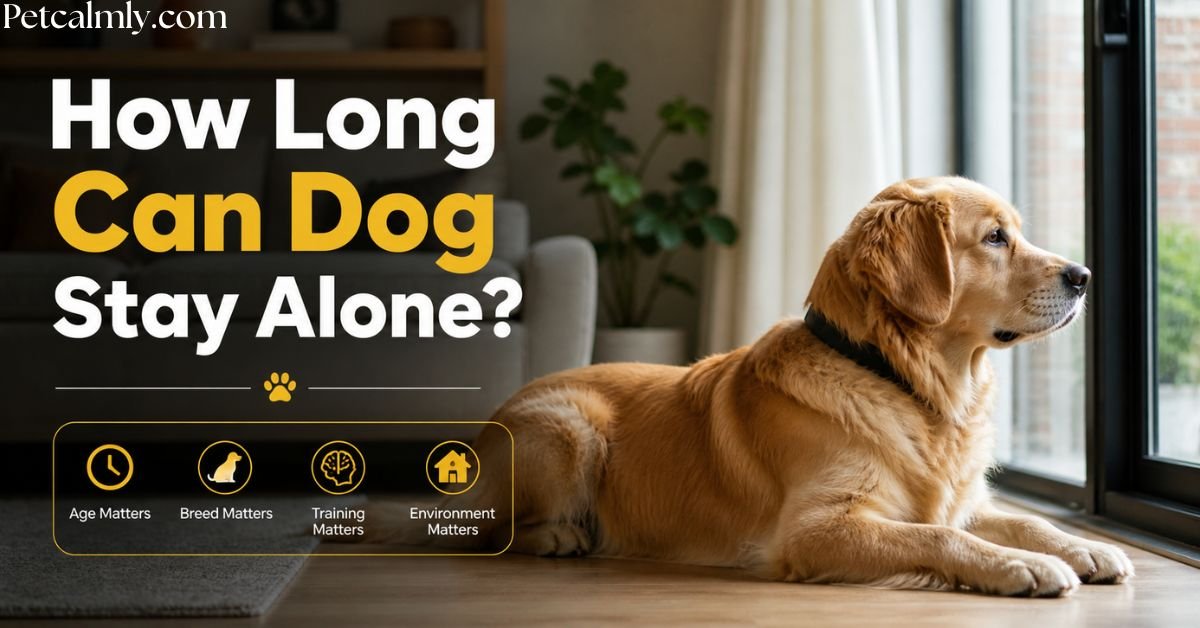
Most adult dogs can stay alone at home for 4 to 6 hours at a time. Some well-trained dogs manage up to 8 hours occasionally, but this is the upper limit not the goal. Puppies, senior dogs, and anxious breeds need much shorter periods. Leaving a dog alone too long, too often, leads to stress, destructive behavior, and health issues.
Why This Question Matters More Than You Think
You leave for work in the morning. You grab your keys, say goodbye to your dog, and close the door. But the moment you’re gone, what happens?
For millions of dog owners, this is a daily reality. And most of us wonder is my dog okay? Am I leaving him alone for too long?
The truth is, there’s no single perfect answer. It depends on your dog’s age, breed, temperament, training, and overall health. But there are clear guidelines, warning signs, and practical solutions that every dog owner should know.
This guide covers all of it clearly, honestly, and with real-world advice you can act on today.
How Long Can a Dog Really Stay Alone? A Breakdown by Age
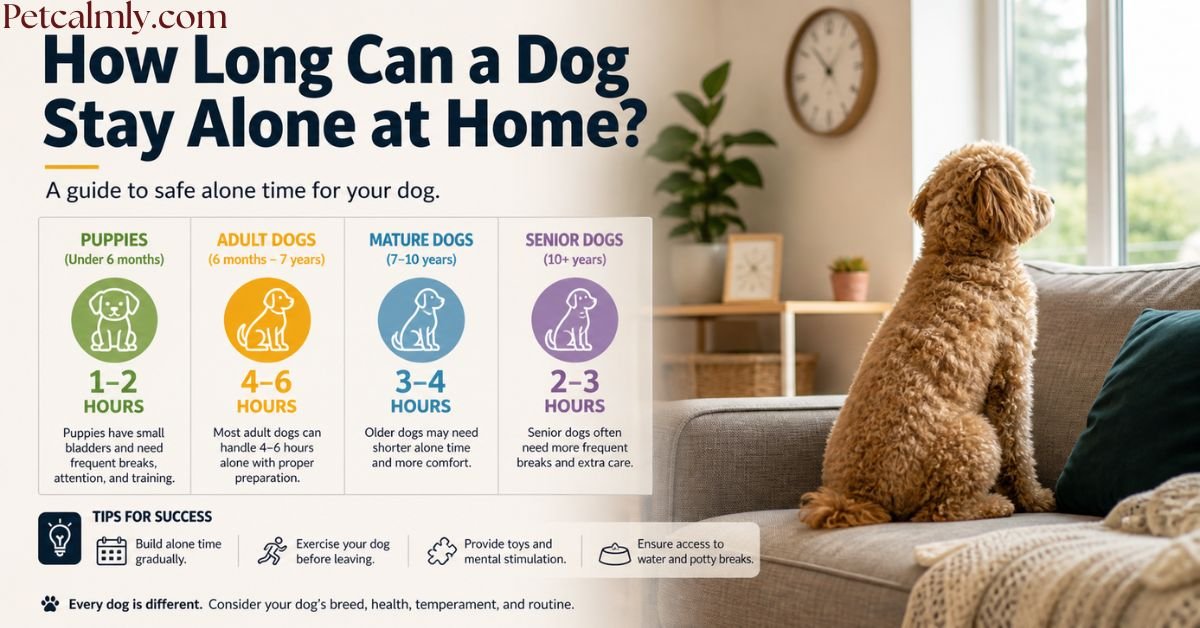
Adult Dogs (1–7 Years)
A healthy, well-adjusted adult dog can generally handle 4 to 6 hours alone without major stress. With proper training and enrichment, some dogs manage 7 to 8 hours.
But 8 hours should not become a daily habit. Think of it like skipping lunch one day is fine. Every day? That takes a toll.
Dogs are social animals. They evolved alongside humans over thousands of years. Long stretches of isolation go against their nature.
Puppies (Under 1 Year)
Puppies need much more frequent attention. As a general rule:
- 8–10 weeks old: No more than 1 hour alone
- 3–4 months: Maximum 2 hours
- 5–6 months: Up to 3 hours
- 7–12 months: Up to 4 hours
Puppies also have small bladders. They cannot “hold it” for long. Leaving a 10-week-old puppy alone for 5 hours almost guarantees accidents and stress.
Senior Dogs (7+ Years)
Older dogs may need more bathroom breaks as their bladder control weakens. They also tend to be more anxious and less adaptable than young adults.
A senior dog that tolerated 6 hours alone at age 3 may struggle with 3 hours at age 10. Pay attention to changes in behavior as your dog ages.
Dogs with Anxiety or Health Issues
Some dogs have separation anxiety a real and distressing condition, not just “being clingy.” For these dogs, even 30 minutes alone can feel unbearable.
If your dog has anxiety, joint pain, a medical condition, or is recovering from surgery, their alone-time tolerance is significantly lower. Always consult your vet.
What Actually Happens When You Leave Your Dog Alone
Picture this: you leave home at 8 AM. Your Labrador, Max, watches you go from the window. For the first 30 minutes, he’s alert, a little unsettled. Then he sniffs around, finds a toy, naps. Around hour 3, he wakes up and needs to use the bathroom. He waits. Hour 5, he’s pacing. By hour 7, he’s chewed through a pillow.
That’s not a bad dog. That’s a stressed dog.
Here’s what research and veterinary experience tell us about what dogs experience during extended alone time:
The first hour is often the hardest. Dogs with mild anxiety may whine, pace, or scratch at doors. Most dogs eventually settle into a rest.
Hours 2–4 are usually calmer for emotionally stable dogs. They sleep, rest, and wait.
After 5–6 hours, stress hormones begin to rise. The dog may become restless, destructive, or start having accidents indoors even if house-trained.
Beyond 8 hours is genuinely stressful for most dogs and can contribute to long-term anxiety and behavioral problems.
Signs Your Dog Is Being Left Alone Too Long
Not every dog will chew the furniture. Some suffer quietly. Watch for these behavioral and physical warning signs:
Behavioral signs:
- Destructive chewing (furniture, shoes, baseboards)
- Excessive barking or howling when you leave or return
- House accidents despite being trained
- Clingy or overly excited behavior when you come home
- Trying to escape (digging, scratching at doors/windows)
Subtle emotional signs:
- Decreased appetite
- Lethargy or disinterest in play
- Excessive licking or self-grooming
- Cowering or trembling when you pick up your keys or bag
If you notice several of these signs consistently, your dog is telling you something important. Don’t ignore it.
Breed Matters: Not All Dogs Are Created Equal
Some breeds handle alone time better than others. This doesn’t mean certain dogs can be left for 10 hours but it does mean your dog’s breed plays a role in how they cope.
Breeds That Tolerate Alone Time Better
- Basset Hound
- Shar Pei
- Chow Chow
- Maltese (when properly trained)
- Greyhound (surprisingly calm indoors)
Breeds That Struggle Most With Being Left Alone
- Border Collie (highly intelligent, needs stimulation)
- Vizsla (nicknamed “Velcro dog” extremely attached to owners)
- German Shepherd
- Labrador and Golden Retrievers
- Australian Shepherd
- Bichon Frise
If you have a Vizsla or Border Collie, leaving them for 8 hours daily without any enrichment or mid-day check-in is a recipe for stress and destruction.
When Should You Be Concerned?
Separation Anxiety Is a Real Condition
True separation anxiety isn’t just your dog missing you. It’s a clinical condition where dogs experience intense fear and panic when left alone. Signs include non-stop barking, destructive behavior that starts within minutes of you leaving, self-harm (like scratching paws raw), and accidents even in dogs that are fully house-trained.
If your dog shows these extreme signs, please consult a veterinarian or a certified animal behaviorist. This is not something punishment or stricter training will fix. It often requires a combination of behavioral therapy, desensitization training, and sometimes medication.
Physical Health Concerns
Beyond mental distress, keeping a dog alone too long regularly can lead to:
- Urinary tract infections from holding urine too long
- Bladder stones in dogs that can’t relieve themselves on schedule
- Obesity and joint stiffness from too little movement
- Weakened immune function linked to chronic stress
These aren’t scare tactics they’re documented outcomes from dogs kept in isolation too frequently.
What Can You Do? Practical Solutions for Every Schedule
You don’t need to quit your job to be a good dog owner. But you do need a plan.
1. Hire a Dog Walker or Pet Sitter
If you work long hours, a mid-day dog walker is one of the most effective solutions. Even a 30-minute walk at lunchtime breaks up the long stretch and gives your dog the relief and social contact they need.
Many dog owners treat this as a non-negotiable monthly expense like pet insurance or food. It’s worth it.
2. Use Doggy Daycare
For highly social dogs, a few days a week at doggy daycare provides exercise, mental stimulation, and companionship. Not every dog loves it (some find it overstimulating), but for many dogs it’s genuinely enjoyable.
Do a trial day first to see how your dog responds.
3. Set Up a Dog-Safe Space
When leaving your dog alone, create a comfortable, safe zone. This could be:
- A crate (if your dog is crate-trained and associates it with safety)
- A gated room or “dog room” with their bed, toys, and water
- Access to an enclosed outdoor area or yard
Avoid giving free run of the entire house to dogs that haven’t earned that trust yet. Too much space can actually increase anxiety.
4. Invest in Mental Enrichment
A bored dog is a destructive dog. Before you leave, try:
- Kong toys stuffed with peanut butter or kibble keeps them mentally engaged for 20–40 minutes
- Puzzle feeders — slow the eating and stimulate the brain
- Chew toys — provide comfort and outlet for oral stress
- Sniff mats — scatter treats in a mat; a dog’s nose is their greatest joy
Mental enrichment doesn’t replace human contact, but it does make alone time significantly more manageable.
5. Teach Calm Departures and Arrivals
This one surprises many owners. The way you leave and return matters.
Don’t make a big dramatic goodbye. Don’t say “Okay baby, Mama loves you so much, be good!” for 5 minutes that ritual signals your dog that your departure is a big emotional event. Leave calmly, without fuss.
Similarly, when you come home, wait until your dog is calm before greeting them enthusiastically. Rewarding calm behavior teaches them that departures and arrivals are normal, not crisis moments.
6. Consider a Second Dog (With Caution)
Some owners add a second dog for companionship, and it genuinely helps for the right dogs. But this isn’t a universal solution. Some anxious dogs become more anxious with a second dog present. And two dogs in a home is double the cost, double the responsibility.
Talk to your vet or a behaviorist before getting a second pet solely to fix a behavioral issue.
7. Use a Pet Camera
Pet cameras like Furbo or similar devices let you check in on your dog remotely. Some models even let you speak to your dog or dispense treats. This is useful for understanding your dog’s behavior when alone and for your own peace of mind.
Building Up Alone-Time Tolerance: Training Tips That Work
If you have a puppy or a dog that struggles when left alone, the good news is that this is trainable. Here’s a simple approach:
Start very small. Leave the room for 30 seconds. Come back. No drama. Do this 5–10 times a day.
Gradually increase time. Over days and weeks, extend: 1 minute, 5 minutes, 15 minutes, 30 minutes, 1 hour.
Always return before stress peaks. The goal is to return before the dog panics, not after. If they’re calm when you come back, that’s a win.
Never punish accidents or damage caused by anxiety. Punishment after the fact teaches nothing and increases fear.
Make departures positive. Give a special toy or treat only available when you leave. The dog starts to associate your departure with something good.
This process takes weeks, sometimes months. Be patient. It works.
Conclusion
Dogs are not designed for long isolation. They are social, pack-oriented animals who genuinely need human connection and regular interaction.
The realistic maximum for most adult dogs is 4 to 6 hours alone on a daily basis not 8, and certainly not 10+. If your schedule regularly demands longer than this, it’s not a sign you’re a bad owner. It’s simply a signal that your dog needs additional support: a walker, daycare, enrichment, or a trusted neighbor.
The key takeaway is this: know your individual dog. A 5-year-old Basset Hound and a 1-year-old Border Collie are not the same. Observe your dog’s behavior, watch for stress signals, and adjust.
You don’t need to be home 24/7. But your dog does need to know they won’t be forgotten.
More Information About Pets, Please Visit Our Website: How Long Can Dog Stay Alone?
Frequently Asked Questions
1: Can I leave my dog alone for 8 hours while I’m at work?
Occasionally, yes most healthy adult dogs can manage 8 hours once in a while. But as a daily routine, 8 hours is too long. It raises stress levels, causes bladder discomfort, and can lead to destructive behavior or separation anxiety over time. If your work schedule requires this regularly, a mid-day dog walker is strongly recommended.
2: How long can a puppy be left alone?
Very young puppies (8–10 weeks) should not be left alone for more than 1 hour. As a general guide, puppies can handle roughly 1 hour of alone time per month of age, up to a maximum of 4–5 hours. This is due to limited bladder control and their strong need for socialization and reassurance during early development.
3: Is it okay to leave a dog alone overnight?
For most adult dogs, one overnight alone is manageable if they have water, a safe space, and aren’t prone to anxiety. However, this should not be a regular occurrence. Dogs left alone overnight regularly can develop loneliness and anxiety-related issues. If you travel frequently, a trusted pet sitter or boarding kennel is a much better option.
4: What are signs that a dog is stressed from being alone too much?
Watch for excessive barking, destructive chewing, house accidents, pacing, clingy behavior when you return, reduced appetite, and excessive self-licking. Subtle signs like lethargy or withdrawal are often overlooked but equally important. If multiple signs appear consistently, your dog needs more social time or a professional assessment.
5: Does leaving the TV or radio on help dogs when they are alone?
Yes, for many dogs it does help mildly. Background noise from a TV or radio can reduce startle responses to outside sounds and provide a sense of activity in the home. Classical music and specific audiobooks designed for dogs have shown calming effects in some studies. It’s not a substitute for human company, but it’s a low-cost way to ease mild anxiety.
6: What breed of dog can be left alone the longest?
No dog should be left alone for very long periods regularly, but some breeds tolerate solitude better than others. Basset Hounds, Chow Chows, Greyhounds, and Shar Peis tend to be calmer and more independent. Highly social or working breeds like Border Collies, Vizslas, and Labradors struggle most. Even the calmest breed still needs regular human interaction, bathroom breaks, and exercise.