Short direct answer
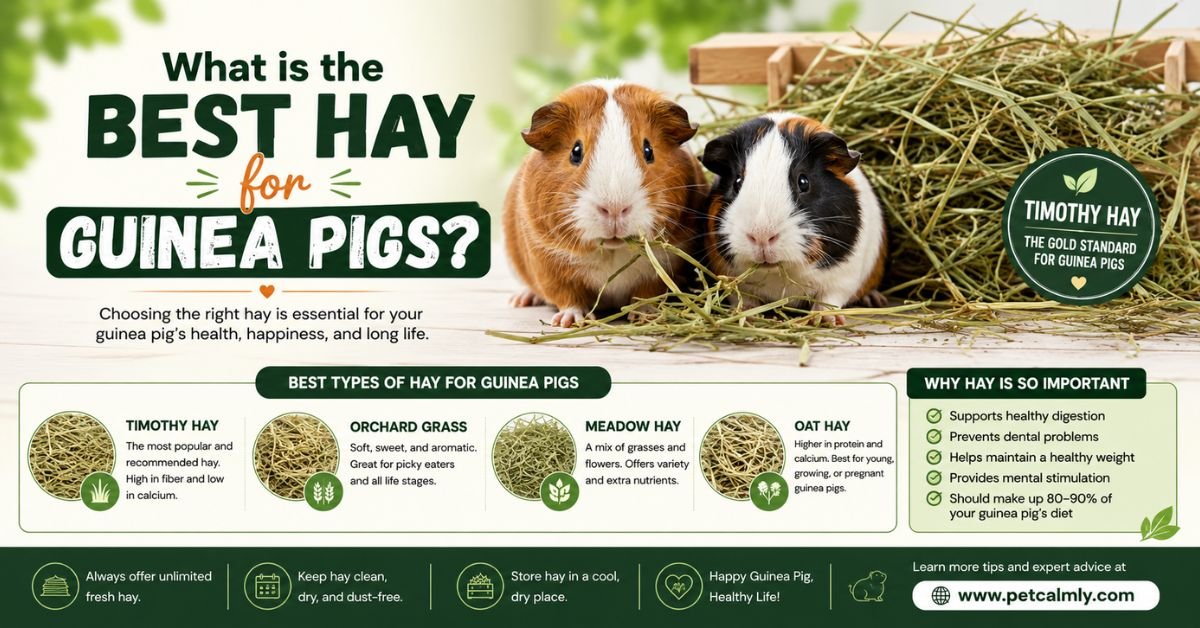
The best hay for guinea pigs is high-quality Timothy hay because it provides the ideal balance of fiber and nutrients needed for healthy digestion and naturally worn-down teeth. Adult guinea pigs should have unlimited access to fresh Timothy hay every day. Young, pregnant, or nursing guinea pigs may benefit from alfalfa hay because it contains more calcium and protein, but it isn’t suitable as the main hay for healthy adults. Other excellent options, such as orchard grass, meadow hay, and oat hay, can add variety while still supporting good health.
Introduction
If you’ve recently welcomed a guinea pig into your home, you’ve probably noticed one piece of advice comes up again and again: always provide plenty of hay.
That isn’t an exaggeration. Hay isn’t just another item on your guinea pig’s menu—it should make up around 80–90% of their daily diet. Without enough hay, guinea pigs are far more likely to develop painful dental problems, digestive issues, and unhealthy weight changes.
Many new owners become overwhelmed when they see shelves filled with different hay types. Timothy hay, orchard grass, meadow hay, oat hay, botanical hay, and alfalfa all look similar at first glance. Which one is actually best? Can they be mixed? Does your guinea pig’s age matter? And what if your pet simply refuses to eat it?
This guide answers all of those questions in simple language. You’ll learn:
- Which hay is best for different life stages
- Why hay is more important than pellets
- The differences between popular hay varieties
- How to recognize fresh, high-quality hay
- Common mistakes that many first-time owners make
By the end, you’ll know exactly which hay to buy and how to keep your guinea pig healthy for years to come.
Why Hay Is So Important for Guinea Pigs
Hay isn’t just food it’s the foundation of a guinea pig’s health.
Unlike many other pets, guinea pigs have digestive systems designed to process large amounts of fibrous plants throughout the day. They naturally graze for hours, constantly chewing grasses and hay.
Removing or limiting hay can quickly lead to serious health problems.
Hay Supports Healthy Digestion
A guinea pig’s digestive system depends on a steady flow of fiber.
Long-stem fiber helps food move through the intestines at the proper pace. Without enough fiber, digestion slows, increasing the risk of:
- Digestive discomfort
- Reduced appetite
- Soft stools
- Gastrointestinal stasis
- Harmful bacterial imbalance
Unlimited hay keeps the digestive tract active and functioning as nature intended.
Hay Naturally Wears Down Teeth
Many new owners don’t realize that guinea pig teeth never stop growing.
Their front and back teeth continue growing throughout life.
Chewing tough hay for several hours every day naturally files these teeth down. If guinea pigs don’t chew enough hay, their teeth may become overgrown, leading to:
- Difficulty eating
- Drooling
- Weight loss
- Mouth injuries
- Painful dental disease
Dental issues are among the most common reasons guinea pigs need veterinary care.
Hay Prevents Boredom
Eating hay isn’t just about nutrition.
Wild guinea pigs spend much of the day searching for food. Domestic guinea pigs still have that instinct.
Having fresh hay available encourages:
- Natural foraging
- Exploration
- Mental stimulation
- Healthy chewing habits
- Reduced destructive behaviors
Some owners even hide small vegetable pieces inside piles of hay to encourage natural searching behaviors.
Hay Helps Maintain a Healthy Weight
Pellets are more calorie-dense than hay.
If guinea pigs fill up on pellets instead of hay, they may consume more calories while getting less fiber.
Unlimited grass hay helps them:
- Feel satisfied
- Maintain healthy digestion
- Avoid overeating concentrated foods
- Stay at a healthier weight
What Is the Best Hay for Guinea Pigs?
For most healthy adult guinea pigs, Timothy hay is the best overall choice.
It offers the right combination of:
- High fiber
- Moderate protein
- Moderate calcium
- Excellent chewing texture
- Good digestive support
Veterinarians and experienced guinea pig owners commonly recommend Timothy hay as the everyday staple because it closely matches the nutritional balance adult guinea pigs need.
However, Timothy hay isn’t the only good option.
Different grass hays provide slightly different textures, flavors, and nutritional profiles. Offering variety can encourage picky eaters while still keeping their diet healthy.
Best Hay Types at a Glance
| Hay Type | Best For | Fiber | Calcium | Protein |
|---|---|---|---|---|
| Timothy Hay | Healthy adult guinea pigs | Excellent | Moderate | Moderate |
| Orchard Grass | Picky eaters and hay allergies | Excellent | Low | Moderate |
| Meadow Hay | Variety and enrichment | Excellent | Moderate | Moderate |
| Oat Hay | Extra chewing texture | Good | Moderate | Moderate |
| Alfalfa Hay | Babies, pregnant, nursing guinea pigs | Good | High | High |
Timothy Hay: The Best Everyday Hay for Adult Guinea Pigs
If you only buy one type of hay, make it Timothy hay.
It has become the gold standard because it supports nearly every aspect of guinea pig health.
Benefits of Timothy Hay
Timothy hay provides:
- Excellent fiber for digestion
- Natural tooth wear
- Healthy gut bacteria
- Balanced nutrition
- Long chewing time
- Lower calcium than alfalfa
These qualities make it suitable for daily feeding throughout adulthood.
First, Second, and Third Cut Timothy Hay
You may notice Timothy hay labeled as first cut, second cut, or third cut.
These labels refer to when the grass was harvested.
First Cut Timothy Hay
Characteristics:
- Thick stems
- More seed heads
- Highest fiber
- Tough texture
Best for:
- Strong chewers
- Guinea pigs needing extra tooth wear
Second Cut Timothy Hay
Characteristics:
- Softer leaves
- Balanced stems
- Sweet aroma
- Excellent nutrition
Many guinea pig owners consider second-cut Timothy hay the best balance between softness and fiber.
It works well for most healthy adults.
Third Cut Timothy Hay
Characteristics:
- Very soft
- Mostly leafy
- Few stems
- Less coarse texture
Some picky guinea pigs enjoy third-cut hay because it’s softer, although it provides less chewing resistance.
Orchard Grass Hay: A Great Alternative
Not every guinea pig falls in love with Timothy hay.
Some prefer orchard grass because it has:
- Softer blades
- Pleasant smell
- Less dust
- Slightly sweeter taste
It’s also popular among owners with grass allergies since orchard grass often produces less airborne dust during feeding.
Benefits of Orchard Grass
Orchard grass offers:
- Excellent fiber
- Healthy digestion
- Good dental wear
- Softer texture
- High acceptance among picky eaters
Many owners rotate orchard grass with Timothy hay to provide variety without changing the nutritional balance dramatically.
Meadow Hay: A Natural Mix of Grasses
Meadow hay is harvested from natural grass fields rather than a single grass species.
As a result, every batch may contain slightly different:
- Grasses
- Seed heads
- Soft leaves
- Wild plants
That variety encourages natural foraging.
Many guinea pigs enjoy exploring different textures throughout the pile.
Advantages of Meadow Hay
Meadow hay helps:
- Prevent boredom
- Encourage chewing
- Increase environmental enrichment
- Offer diverse textures
Because the plant mix varies, meadow hay shouldn’t necessarily replace Timothy hay completely, but it can make an excellent supplement.
Oat Hay: Perfect for Extra Chewing
Oat hay is harvested before oat grains fully mature.
It contains sturdy stems and attractive seed heads that many guinea pigs love chewing.
Why Guinea Pigs Like Oat Hay
Oat hay provides:
- Crunchy texture
- Longer chewing sessions
- Mental enrichment
- Additional fiber
The seed heads often become a favorite treat.
Although nutritious, oat hay is generally considered a complementary hay rather than the only hay offered every day.
Mixing it with Timothy hay creates a more interesting feeding experience.
Alfalfa Hay: Best for Growing Guinea Pigs
Alfalfa is different from the other hays discussed so far.
Technically, it isn’t a grass. It’s a legume, making it much richer in protein, calcium, and calories.
That extra nutrition is helpful for certain guinea pigs but inappropriate for others.
Guinea Pigs That Benefit from Alfalfa Hay
Alfalfa is suitable for:
- Babies under six months
- Pregnant females
- Nursing mothers
- Guinea pigs recovering from illness under veterinary guidance
These animals have greater nutritional needs than healthy adults.
Why Adult Guinea Pigs Shouldn’t Eat Alfalfa Every Day
Healthy adult guinea pigs don’t need the extra calcium and protein found in alfalfa.
Feeding it regularly may contribute to:
- Weight gain
- Excess calcium intake
- Increased risk of urinary sludge or bladder stones in susceptible guinea pigs
For most adults, grass hays such as Timothy or orchard grass remain the healthier everyday choice.
Which Hay Is Best for Guinea Pigs at Different Ages?
A guinea pig’s nutritional needs change throughout life. Choosing the right hay based on age helps support healthy growth while avoiding unnecessary health risks.
| Age or Life Stage | Best Hay Choice | Why It Works |
|---|---|---|
| Birth to 6 months | Alfalfa hay with grass hay introduction | Supports rapid growth with extra protein and calcium. |
| 6 months to adulthood | Transition to Timothy hay | Encourages healthy digestion and proper tooth wear while reducing excess calcium. |
| Healthy adult guinea pigs | Timothy hay as the primary hay | Provides the ideal balance of fiber and nutrients for daily health. |
| Senior guinea pigs | Timothy hay or orchard grass | Easier to chew while still supplying the fiber needed for digestion. |
| Pregnant or nursing guinea pigs | Alfalfa hay | Meets higher nutritional demands during pregnancy and nursing. |
Making gradual transitions between hay types is usually easier on a guinea pig’s digestive system than switching all at once. Mixing the old and new hay over one to two weeks helps most guinea pigs adjust without upsetting their appetite.
How to Choose High-Quality Hay
Not all hay is created equal. Even the right variety won’t benefit your guinea pig if it’s old, dusty, or poorly stored.
When shopping for hay, look for these signs of good quality:
Bright Green Color
Fresh hay is usually green rather than yellow or brown. Some natural color variation is normal, but hay that is mostly brown has likely lost much of its nutritional value.
Fresh, Sweet Smell
Quality hay has a pleasant grassy aroma. It should never smell musty, damp, or moldy.
Soft Leaves with Some Stems
A healthy mix of leafy pieces and sturdy stems encourages both nutrition and chewing. Hay that contains only fine, broken pieces may not provide enough dental wear.
Minimal Dust
A small amount of dust is unavoidable, but excessive dust can irritate your guinea pig’s eyes and respiratory system. Shake the bag gently before buying if possible, and avoid hay that creates large clouds of dust.
Free from Mold and Foreign Objects
Inspect the hay for mold, excessive moisture, insects, or sharp debris such as sticks or twine. Fresh hay should feel dry and springy, not damp or clumped together.
How Much Hay Should Guinea Pigs Eat Every Day?
One of the easiest ways to judge whether your guinea pig is getting enough hay is to look at their feeding habits. Healthy guinea pigs should be nibbling on hay almost constantly throughout the day and night.
Unlike dogs or cats, guinea pigs are natural grazers. Their digestive system is designed for a nearly continuous intake of fiber, which is why hay should never run out.
The Simple Rule: Unlimited Hay
The best answer is simple:
Your guinea pig should have unlimited access to fresh grass hay 24 hours a day.
This means:
- Refill hay whenever it starts running low.
- Remove wet or soiled hay daily.
- Offer more than you think they’ll need.
- Keep hay available in multiple areas if you have more than one guinea pig.
A small pile isn’t enough. Your guinea pig should always have plenty to choose from.
What Should a Guinea Pig’s Daily Diet Look Like?
Hay is the foundation, but it isn’t the only food your guinea pig needs.
Here’s a balanced daily diet:
| Food | Approximate Amount | Purpose |
|---|---|---|
| Grass hay | Unlimited | Fiber, digestion, dental health |
| Fresh vegetables | About 1 cup per adult | Vitamin C and hydration |
| Guinea pig pellets | 1/8 cup per adult | Balanced nutrition |
| Fresh water | Unlimited | Hydration |
Pellets and vegetables support your guinea pig’s health, but neither should replace hay.
Why Some Guinea Pigs Stop Eating Hay
If your guinea pig suddenly loses interest in hay, don’t ignore it.
A healthy guinea pig usually spends several hours each day chewing hay. A noticeable decrease in hay consumption often signals that something has changed.
Dental Problems
Overgrown or misaligned teeth are one of the most common reasons guinea pigs stop eating hay.
Signs include:
- Dropping food while eating
- Excessive drooling
- Weight loss
- Wet fur around the mouth
- Choosing soft foods over hay
Because the back teeth aren’t visible without special equipment, dental problems often require a veterinarian’s examination.
Too Many Pellets or Treats
Many owners accidentally encourage picky eating.
If pellets, fruit, or treats are always available, your guinea pig may fill up on easier foods instead of chewing hay.
Limiting pellets to the recommended amount encourages natural grazing behavior.
Poor-Quality Hay
Guinea pigs can be surprisingly selective.
They may refuse hay that is:
- Dusty
- Moldy
- Old
- Brown
- Damp
- Lacking fresh aroma
Switching to a fresher batch or trying another grass hay often solves the problem.
Stress or Illness
Changes in appetite can also happen because of:
- Moving to a new home
- Recent surgery
- Pain
- Illness
- Heat stress
- Social conflict with another guinea pig
If your guinea pig refuses hay for several hours, especially if they also stop eating vegetables, contact an exotic animal veterinarian promptly. Guinea pigs can become seriously ill when they stop eating.
How to Encourage a Picky Guinea Pig to Eat More Hay
Some guinea pigs naturally prefer pellets or vegetables, but there are safe ways to make hay more appealing.
Offer Different Types of Grass Hay
Not every guinea pig enjoys the same texture.
Try rotating between:
- Timothy hay
- Orchard grass
- Meadow hay
- Oat hay
Many guinea pigs appreciate variety, just as people enjoy different foods.
Keep Hay Fresh
Fresh hay smells better and tastes better.
Instead of filling the rack once each morning, try replacing small amounts throughout the day.
Many guinea pigs become excited whenever fresh hay appears.
Use Multiple Feeding Stations
Some guinea pigs enjoy eating from:
- Hay racks
- Floor piles
- Cardboard boxes
- Tunnels
- Paper bags filled with hay (without ink or plastic)
Providing different feeding locations also encourages movement and natural foraging.
Hide Healthy Treats Inside Hay
Make hay more interesting by hiding small pieces of:
- Bell pepper
- Cilantro
- Parsley
- Romaine lettuce
Your guinea pig will naturally search through the hay while looking for vegetables.
Avoid sugary treats for this purpose.
Reduce Pellet Portions
If your guinea pig eats too many pellets, they may simply not feel hungry enough for hay.
Following the recommended pellet amount encourages more hay consumption throughout the day.
Common Hay Feeding Mistakes
Even caring owners sometimes make mistakes that reduce the benefits of hay.
Mistake 1: Feeding Too Little Hay
A small handful isn’t enough.
Hay should always be available, even overnight.
Mistake 2: Choosing Alfalfa for Healthy Adults
Alfalfa has its place, but feeding it as the primary hay for healthy adults can provide more calcium and protein than they need.
Grass hay remains the better everyday choice.
Mistake 3: Leaving Dirty Hay in the Cage
Guinea pigs won’t usually eat hay that’s:
- Wet
- Soiled
- Moldy
Replace dirty hay every day to encourage eating and maintain hygiene.
Mistake 4: Buying Hay Based Only on Price
Cheap hay sometimes contains:
- Excess dust
- Broken stems
- Brown pieces
- Low-quality cuts
Paying a little more for fresher hay often means less waste and better nutrition.
Mistake 5: Offering Hay Only in a Rack
Some guinea pigs love pulling hay from a rack.
Others prefer eating directly from the floor.
Providing both options allows your guinea pig to choose.
How to Store Hay Properly
Fresh hay can stay in excellent condition for several months when stored correctly.
Improper storage, however, can quickly lead to mold or nutrient loss.
Store Hay in a Cool, Dry Place
Avoid:
- Damp garages
- Humid basements
- Outdoor sheds with leaks
Moisture encourages mold growth.
Allow Airflow
Hay needs ventilation.
Instead of airtight plastic bags, use:
- Paper bags
- Fabric storage sacks
- Cardboard boxes
- Breathable hay storage bins
Good airflow helps prevent moisture buildup.
Keep It Away from Direct Sunlight
Sunlight gradually reduces nutritional quality.
Store hay in a shaded indoor area whenever possible.
Buy the Right Amount
Buying in bulk saves money, but only if your guinea pig can finish it while it’s still fresh.
For many owners, purchasing enough hay for one to three months offers a good balance between value and freshness.
Signs Your Guinea Pig Isn’t Eating Enough Hay
Because hay supports both digestion and dental health, reduced hay intake can lead to problems surprisingly quickly.
Watch for these warning signs:
- Eating mostly vegetables
- Ignoring hay
- Smaller droppings
- Fewer droppings than usual
- Weight loss
- Drooling
- Difficulty chewing
- Selective eating
- Reduced activity
- Hunched posture
Monitoring your guinea pig’s weight every week can help you notice problems before they become serious.
When Should You Worry?
Occasional fussiness isn’t always an emergency, but some situations need prompt attention.
Contact a Veterinarian If Your Guinea Pig:
- Stops eating hay completely
- Refuses all food
- Produces very few droppings
- Has swollen cheeks
- Drools continuously
- Loses weight quickly
- Appears weak or lethargic
- Shows signs of pain while chewing
Guinea pigs can deteriorate rapidly when they stop eating, so it’s safest to seek veterinary advice sooner rather than later.
What Should Pet Owners Do?
Providing the best hay is only one part of excellent guinea pig care. Building healthy daily habits makes a lasting difference.
Here’s a practical checklist:
Daily
- ✔ Keep unlimited fresh hay available.
- ✔ Refresh hay if it becomes wet or dirty.
- ✔ Check that your guinea pig is actively eating.
- ✔ Provide fresh water.
- ✔ Feed fresh vegetables rich in vitamin C.
Weekly
- ✔ Weigh your guinea pig.
- ✔ Clean hay storage containers.
- ✔ Inspect the hay for dust or mold.
- ✔ Monitor teeth and eating behavior.
Monthly
- ✔ Replace old hay with a fresh supply if needed.
- ✔ Review your guinea pig’s diet and body condition.
- ✔ Clean feeding racks and accessories thoroughly.
Simple routines like these help prevent many common health problems before they start.
Frequently Asked Questions
1. What is the healthiest hay for guinea pigs?
Timothy hay is considered the healthiest everyday hay for most adult guinea pigs. It’s high in fiber, supports digestion, and helps wear down continuously growing teeth without providing excessive calcium.
2. Can guinea pigs eat only Timothy hay?
No. Although Timothy hay should make up most of their diet, guinea pigs also need fresh vegetables, a small amount of fortified guinea pig pellets, and constant access to clean drinking water. Together, these provide essential nutrients such as vitamin C.
3. Is orchard grass better than Timothy hay?
Neither is universally better. Timothy hay is generally recommended as the primary hay for adult guinea pigs, while orchard grass is an excellent alternative for picky eaters or owners with grass allergies. Many guinea pigs enjoy a combination of both.
4. Can guinea pigs eat alfalfa hay every day?
Only young, pregnant, or nursing guinea pigs should eat alfalfa hay regularly. Healthy adult guinea pigs usually do better on grass hays because alfalfa contains much higher levels of calcium and protein.
5. How do I know if my guinea pig likes its hay?
A guinea pig that enjoys its hay will spend much of the day chewing it, eagerly explore fresh piles, and produce plenty of firm, oval droppings. If your guinea pig consistently ignores hay, it’s worth checking the hay’s quality and monitoring for signs of dental or health issues.
6. How long does hay stay fresh?
When stored in a cool, dry, and well-ventilated place away from direct sunlight, high-quality hay generally stays fresh for several months. Replace hay immediately if it develops a musty smell, becomes damp, or shows signs of mold.
More Information About Pets, Please Visit Our Website: Guinea Pig Care Tips for Beginners
Guinea Pig Heat Stress Signs
Guinea Pig Care Tips
How Long Can Guinea Pigs Stay Alone?
Guinea Pig Pregnancy Signs
Conclusion
If you’re wondering what is the best hay for guinea pigs, the answer is clear for most pets: high-quality Timothy hay is the best everyday choice. Its rich fiber content supports healthy digestion, naturally wears down continuously growing teeth, and encourages the constant grazing behavior that guinea pigs rely on to stay healthy.
That said, no single hay fits every situation. Orchard grass offers a softer alternative for picky eaters, meadow hay provides natural variety, oat hay adds enjoyable texture, and alfalfa hay supplies the extra nutrients growing, pregnant, and nursing guinea pigs need. Understanding these differences allows you to tailor your guinea pig’s diet to their age and life stage.
Remember that hay should never be treated as a side dish. It should always be available in unlimited amounts, kept fresh, and stored properly. Pair it with fresh vegetables, a measured serving of quality guinea pig pellets, clean water, and regular health checks to create a balanced routine that supports long-term well-being.
By choosing the right hay and making it the centerpiece of your guinea pig’s diet, you’re giving your pet one of the greatest gifts possible: a healthier digestive system, stronger teeth, natural enrichment, and a happier, more comfortable life.