Short direct answer
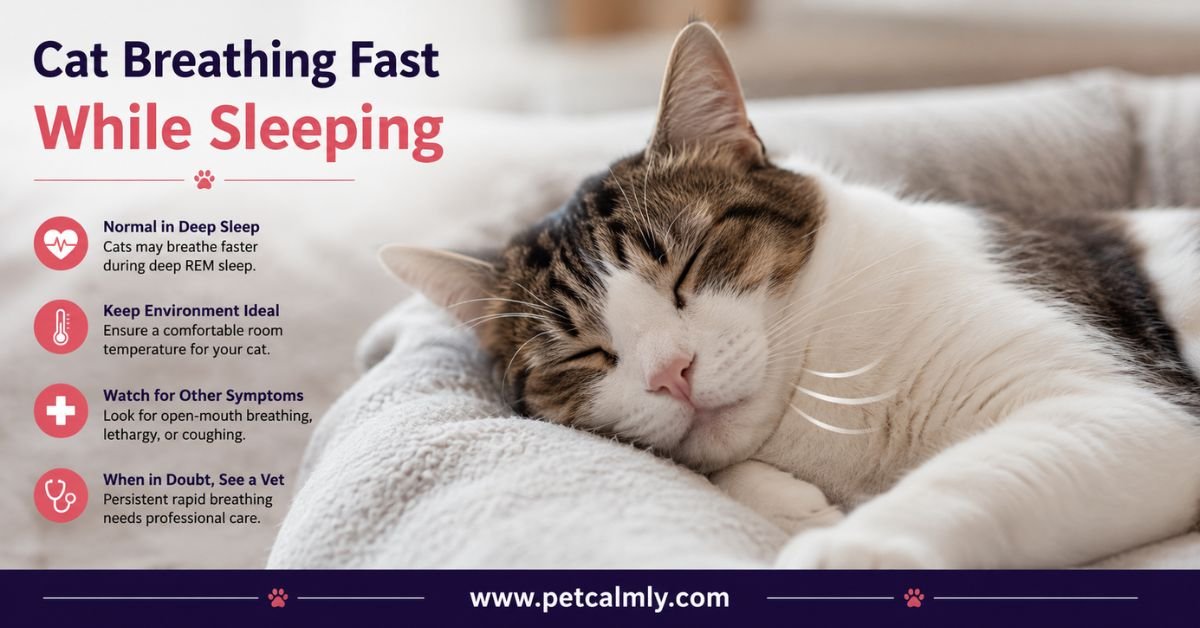
If your cat is breathing fast while sleeping, it may be completely normal during dream sleep, after recent activity, or in a warm environment. However, consistently rapid breathing especially more than 30 breaths per minute while resting can sometimes signal pain, stress, respiratory illness, heart disease, fever, or other medical concerns.
The safest approach is to count your cat’s resting breathing rate, watch for other symptoms, and contact a veterinarian if the fast breathing persists, worsens, or is accompanied by coughing, lethargy, open-mouth breathing, pale gums, or difficulty breathing.
Introduction
Many cat owners experience the same unsettling moment.
Your cat is sleeping peacefully on the couch, but their chest seems to be moving much faster than usual. You start wondering:
- Is this normal?
- Are they dreaming?
- Could they be sick?
- Should I wake them up?
- Do they need emergency care?
The good news is that not every case of fast breathing during sleep is dangerous. Cats naturally go through different sleep stages, and their breathing can temporarily speed up during certain phases.
At the same time, rapid breathing can sometimes be one of the earliest signs that something isn’t right.
Understanding the difference between normal sleeping breathing and a potential health problem can help you make the right decision quickly and confidently.
What Does Fast Breathing in a Sleeping Cat Mean?
Fast breathing while sleeping simply means your cat is taking more breaths per minute than expected during rest.
A healthy resting cat generally breathes:
| Cat Condition | Normal Breaths Per Minute |
|---|---|
| Relaxed and awake | 20–30 |
| Sleeping or resting | 16–30 |
| After play or excitement | May temporarily increase |
Most veterinarians recommend monitoring a sleeping cat’s respiratory rate because it provides the clearest picture of how hard they are working to breathe.
How to Count Your Cat’s Breathing Rate
- Wait until your cat is deeply asleep.
- Watch the chest rise and fall.
- One rise and fall equals one breath.
- Count breaths for 30 seconds.
- Multiply by two.
For example:
- 12 breaths in 30 seconds = 24 breaths per minute
- 20 breaths in 30 seconds = 40 breaths per minute
A sleeping respiratory rate consistently above 30–35 breaths per minute deserves closer attention.
Why Is My Cat Breathing Fast While Sleeping?
There are several possible explanations, ranging from completely harmless to potentially serious.
Dreaming During REM Sleep
One of the most common and harmless reasons is REM (Rapid Eye Movement) sleep.
During this stage, cats may:
- Twitch their whiskers
- Move their paws
- Flick their tails
- Make small noises
- Breathe faster
Many owners notice these changes and worry that something is wrong.
In reality, your cat may simply be dreaming about:
- Hunting
- Playing
- Exploring
- Interacting with other animals
Signs It Is Probably REM Sleep
- Breathing returns to normal after waking
- No coughing
- No wheezing
- No signs of illness
- Cat behaves normally afterward
Warm Temperatures Can Increase Breathing Rate
Cats may breathe faster when trying to cool themselves.
This is more common when:
- The room is hot
- Your cat is lying in direct sunlight
- Humidity is high
- The home lacks airflow
Unlike dogs, cats do not rely heavily on panting for cooling.
Instead, they may show subtle increases in breathing rate before becoming uncomfortable.
What You Can Do
- Move your cat to a cooler room
- Provide fresh water
- Improve ventilation
- Offer shaded resting spots
If breathing returns to normal once your cat cools down, heat was likely the cause.
Recent Exercise or Play
Cats often continue recovering even after they appear relaxed.
For example:
- Zoomies around the house
- Chasing toys
- Climbing cat trees
- Wrestling with another pet
A cat that falls asleep shortly afterward may still have a temporarily elevated breathing rate.
Usually Normal If
- Breathing gradually slows
- Cat appears comfortable
- No additional symptoms are present
Stress and Anxiety Can Affect Sleeping Breathing Patterns
Cats are highly sensitive to changes in their environment.
Possible stress triggers include:
- Moving homes
- New pets
- Visitors
- Loud noises
- Construction sounds
- Changes in routine
Even after falling asleep, stress hormones can remain elevated and influence breathing patterns.
Other Signs of Stress
- Hiding
- Reduced appetite
- Excessive grooming
- Dilated pupils
- Increased vigilance
If stress is the cause, breathing usually normalizes as your cat relaxes.
Respiratory Infections Can Cause Fast Breathing
Upper respiratory infections are common in cats.
They may be caused by viral or bacterial illnesses that affect breathing comfort.
Symptoms Often Include
- Sneezing
- Nasal discharge
- Watery eyes
- Congestion
- Reduced appetite
- Mild fever
A congested cat may breathe faster because airflow through the nose becomes more difficult.
Kittens and senior cats can be particularly vulnerable.
Asthma in Cats
Feline asthma can sometimes cause rapid breathing, including during sleep.
Asthma occurs when airways become inflamed and narrowed.
Common Signs
- Wheezing
- Coughing
- Breathing with effort
- Episodes of respiratory distress
- Fast breathing during rest
Many owners initially mistake asthma coughing for hairball attempts.
If your cat frequently appears to be trying to cough up a hairball but nothing comes out, veterinary evaluation is worthwhile.
Heart Disease Can Cause Rapid Sleeping Breathing
One reason veterinarians pay close attention to sleeping respiratory rates is because heart disease can cause subtle breathing changes before other symptoms become obvious.
When the heart struggles to pump effectively, fluid can sometimes accumulate around or within the lungs.
This may lead to:
- Faster breathing
- Increased breathing effort
- Reduced exercise tolerance
- Sleeping more than usual
Higher-Risk Cats
Some breeds have increased risk of heart conditions, including:
- Maine Coon
- Ragdoll
- Persian
However, heart disease can affect any cat.
Pain Can Make a Cat Breathe Faster
Cats are experts at hiding pain.
A cat may continue eating, sleeping, and acting relatively normal while experiencing significant discomfort.
Pain-related causes may include:
- Injury
- Arthritis
- Dental disease
- Abdominal pain
- Post-surgical recovery
Signs That Suggest Pain
- Hunched posture
- Hiding
- Irritability
- Reluctance to move
- Reduced grooming
- Changes in appetite
Rapid breathing can sometimes be one of the few visible clues.
Fever Can Increase Respiratory Rate
Just like humans, cats often breathe faster when they have a fever.
Common causes include:
- Infections
- Inflammatory conditions
- Immune-related diseases
Other signs may include:
- Warm ears
- Lethargy
- Reduced appetite
- Sleeping more than usual
A veterinary examination is needed to determine the underlying cause.
Obesity and Fast Breathing During Sleep
Excess body weight places additional strain on a cat’s respiratory system.
Overweight cats may:
- Become winded more easily
- Breathe faster after activity
- Show elevated breathing rates during sleep
Weight Management Tips
- Measure food portions
- Avoid excessive treats
- Encourage interactive play
- Use food puzzles
- Schedule routine veterinary weigh-ins
Gradual weight loss often improves breathing comfort.
Anemia and Oxygen Deficiency
When there are not enough healthy red blood cells carrying oxygen, the body compensates by increasing breathing rate.
Possible signs include:
- Pale gums
- Weakness
- Lethargy
- Rapid heartbeat
- Fast breathing
This requires prompt veterinary attention.
How to Tell If Fast Breathing Is an Emergency
Some situations should never be ignored.
Seek Emergency Veterinary Care If Your Cat Has:
- Open-mouth breathing
- Blue gums
- Gray gums
- Pale gums
- Collapse
- Severe lethargy
- Struggling to breathe
- Loud wheezing
- Breathing with neck extended
- Respiratory rate above 40–50 while resting
These symptoms may indicate a serious lack of oxygen and require immediate medical assessment.
Signs Your Cat’s Breathing Is Not Normal
Watch for Increased Effort
Normal breathing should appear smooth and relaxed.
Concerning signs include:
- Belly pushing with each breath
- Pronounced chest movement
- Flared nostrils
- Neck stretching
- Labored breathing
Observe Sleeping Position
Cats experiencing breathing difficulty may avoid normal curled sleeping positions.
Instead, they may:
- Sit upright
- Stretch their neck forward
- Lie with elbows away from the body
These positions can help them breathe more easily.
Cat Breathing Fast While Sleeping: Normal vs Concerning
| Likely Normal | Potentially Serious |
|---|---|
| Dreaming | Heart disease |
| Warm room | Pneumonia |
| Recent play | Asthma |
| Temporary excitement | Fluid around lungs |
| Brief increase in rate | Severe infection |
| No other symptoms | Open-mouth breathing |
The presence of additional symptoms is often more important than the breathing rate alone.
What Should You Do If Your Cat Is Breathing Fast While Sleeping?
Step 1: Stay Calm
Cats can sense owner anxiety.
Avoid immediately waking or disturbing them unless breathing appears severely abnormal.
Step 2: Count Breaths
Record:
- Breaths per minute
- Date and time
- Sleeping or awake status
Tracking trends can help your veterinarian.
Step 3: Look for Additional Symptoms
Check for:
- Coughing
- Sneezing
- Reduced appetite
- Lethargy
- Weight loss
- Difficulty breathing
Step 4: Record a Video
A short phone video can be extremely helpful.
Cats often breathe normally once they arrive at the clinic, making home footage valuable.
Step 5: Contact Your Veterinarian
If fast breathing persists or you notice other symptoms, schedule an examination.
4 Common Mistakes Cat Owners Make
1: Assuming All Fast Breathing Is Normal
Dreaming can cause temporary rapid breathing, but persistent changes should not be dismissed.
2: Waiting Too Long
Many respiratory and heart conditions respond better when identified early.
3: Counting While the Cat Is Awake
Excitement, movement, and purring can alter breathing rate.
Sleeping measurements are usually more accurate.
4: Focusing Only on Numbers
Breathing effort often matters just as much as respiratory rate.
How to Prevent Breathing Problems in Cats
While not every condition can be prevented, good overall care lowers risk.
Maintain Regular Veterinary Visits
Routine exams can detect:
- Heart murmurs
- Weight gain
- Respiratory issues
- Early disease
Keep Vaccinations Current
Vaccinations help reduce the risk of certain respiratory infections.
Maintain a Healthy Weight
Healthy body condition supports:
- Lung function
- Heart health
- Mobility
Reduce Household Stress
Provide:
- Safe hiding places
- Predictable routines
- Vertical climbing areas
- Quiet resting spaces
Avoid Respiratory Irritants
Limit exposure to:
- Cigarette smoke
- Strong cleaners
- Air fresheners
- Scented litter products
A Real-Life Example
Imagine a healthy adult cat that spends ten minutes chasing a feather wand before settling down for a nap.
You notice their breathing is slightly faster than usual. Thirty minutes later, it has returned to normal, and they are behaving exactly as they always do.
That situation is usually far less concerning than a cat that has been sleeping most of the day, refuses food, and consistently breathes 40 breaths per minute while resting.
The context matters.
Looking at the whole picture often provides the best clue about whether fast breathing is harmless or requires veterinary attention.
When Should You Worry About a Cat Breathing Fast While Sleeping?
You should contact a veterinarian if:
- Resting breathing rate consistently exceeds 30–35 breaths per minute
- Fast breathing lasts several hours or days
- Your cat seems unwell
- Appetite decreases
- Energy levels drop
- Coughing develops
- Breathing appears labored
Seek emergency care immediately if breathing difficulty becomes obvious or your cat starts breathing with an open mouth.
Frequently Asked Questions
1: Is it normal for a cat to breathe fast while sleeping?
Yes, sometimes. Dreaming, warm temperatures, and recent activity can temporarily increase breathing rate. Persistent rapid breathing should be monitored.
2: How many breaths per minute is too much for a sleeping cat?
A sleeping respiratory rate consistently above 30–35 breaths per minute deserves attention and may warrant a veterinary consultation.
3: Should I wake my cat if they are breathing fast?
Not necessarily. First observe them quietly and count their breaths. If they appear distressed or struggle to breathe, seek veterinary help immediately.
4: Why is my kitten breathing fast while sleeping?
Kittens often have slightly faster breathing than adult cats. However, respiratory infections, fever, congenital heart issues, and overheating should be ruled out if breathing seems excessive.
5: Can dreaming make my cat breathe rapidly?
Yes. During REM sleep, cats may twitch, move their paws, flick their whiskers, and breathe faster for short periods.
6: When is fast breathing an emergency in cats?
Open-mouth breathing, blue gums, severe lethargy, collapse, or obvious breathing difficulty should be treated as emergencies.
More Information About Pets, Please Visit Our Website: Cat Diarrhea Treatment at Home
Why Do Cats Vomit Hairballs?
Conclusion
Seeing your cat breathing fast while sleeping can be alarming, but it is not always a sign of illness. Many cats experience temporary increases in breathing during dreams, warm weather, or after energetic play sessions.
The key is to observe the whole picture. A healthy cat that wakes up, eats normally, and behaves as usual is often very different from a cat showing persistent rapid breathing, lethargy, coughing, or breathing difficulty.
When in doubt, count your cat’s resting respiratory rate, keep notes, and contact your veterinarian. Early attention to breathing changes can make a significant difference if an underlying health issue is developing.