Short direct answer
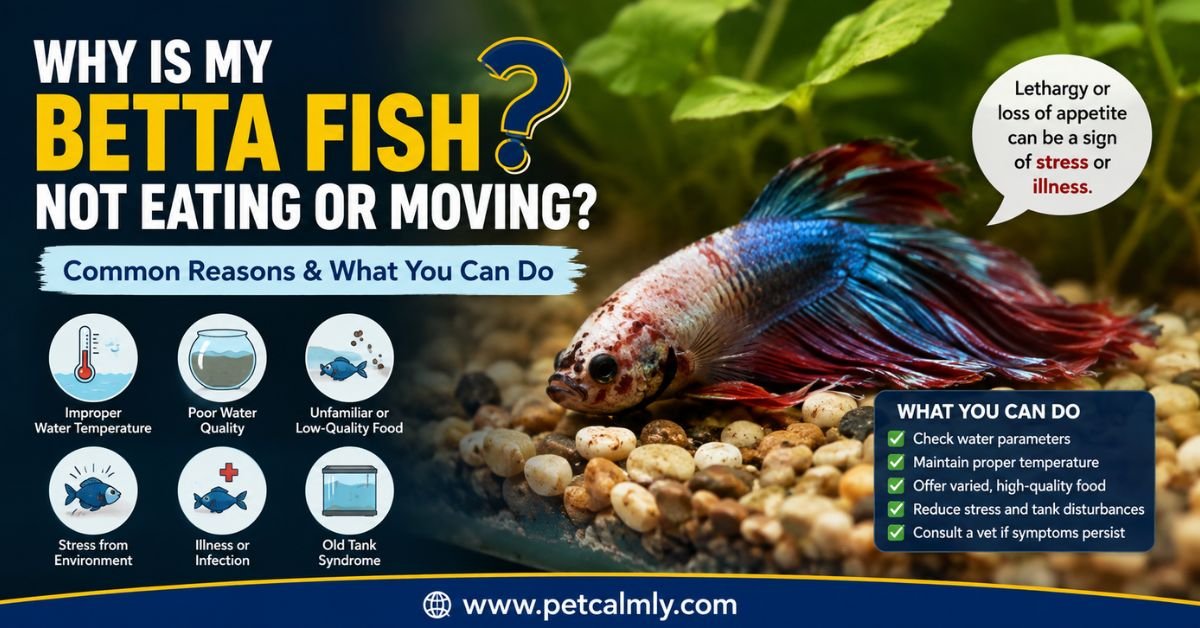
If your betta fish is not eating or moving, the most common causes are stress, poor water conditions, incorrect water temperature, overfeeding in the past, illness, or simply a natural rest period. Bettas are sensitive to sudden changes in their tank, and a drop in temperature or a spike in ammonia can shut down their appetite and energy almost overnight. The good news: most cases are fixable once you know what to check first.
If you’re staring into the tank right now, worried and unsure whether this is an emergency or not, take a breath. You’re not a bad owner for missing early warning signs betta behavior can be subtle, and it’s easy to assume “he’s just sleepy” until it’s been two days. This guide walks you through exactly what to check, in the order that actually matters, so you can figure out what’s wrong and respond calmly.
Why Is My Betta Fish Not Eating or Moving? The Short Answer
A betta that stops eating and moving is almost always reacting to something in its environment or its body. In order of how often this happens, the usual suspects are:
- Water temperature is too low (bettas are tropical fish and slow down dramatically below 76°F)
- Poor water quality (ammonia, nitrite, or nitrate buildup)
- Stress from a new tank, new tankmates, or recent changes
- Constipation from overfeeding or the wrong diet
- Illness or disease, such as fin rot, swim bladder disorder, or parasites
- Natural resting behavior, which is often mistaken for lethargy
Working through this list from top to bottom starting with temperature and water quality resolves the majority of cases without any medication at all.
Normal vs. Concerning Betta Behavior
Before troubleshooting, it helps to know what “normal” looks like for a betta, because owners often panic over behavior that’s completely fine.
Is It Normal for Bettas to Rest or Sleep a Lot?
Yes. Bettas sleep, and they sleep more than many new owners expect. It’s common to find a betta resting near the bottom of the tank, wedged into a plant leaf, or lying sideways on a decoration. This looks alarming the first time you see it, but sideways resting on a solid surface (not gasping at the top or bottom) is often just sleep, especially if the tank light has just turned off or on.
The difference between resting and something being wrong usually comes down to responsiveness. A resting betta will still react a flick of the fin, a shift in position, or a swim toward the glass when you tap gently near the tank or when food hits the water. A betta that shows zero reaction, has clamped fins pinned tightly to its body, or has unusual coloring (blotchy, faded, or darkened patches) is telling you something is off.
Signs That Point to a Real Problem
Watch for these together, not in isolation:
- Fins clamped tightly against the body for extended periods
- Gasping at the surface or staying near the top constantly
- Resting at the bottom without responding to stimuli
- Color that looks faded, darker, or blotchy compared to normal
- Bloating, a curved spine, or difficulty staying upright
- Visible spots, fuzz, or lesions on the body or fins
- Refusing food for more than three days in a row
One symptom alone doesn’t always mean an emergency. Several together usually do.
Top 5 Reasons Your Betta Fish Isn’t Eating or Moving
1. Water Temperature Is Too Cold
Bettas are native to warm, slow-moving waters in Southeast Asia, and they need a heated tank to function properly. Anything below the mid-70s°F (around 24°C) slows their metabolism, which directly reduces appetite and activity. Many owners keep bettas in unheated bowls or small tanks, not realizing that a room that “feels fine” to a human can be far too cold for a tropical fish.
What helps: A reliable aquarium heater keeping the water between 78–80°F (25–27°C), checked with a separate thermometer rather than trusting the heater’s built-in dial alone. Sudden temperature swings are just as harmful as a tank that’s simply too cold, so aim for stability, not just warmth.
2. Poor Water Quality (Ammonia, Nitrite, or Nitrate Buildup)
This is one of the most overlooked causes of a betta going quiet. In a new or under-cycled tank, waste from food and fish produces ammonia, which is toxic even in small amounts. As the tank matures, ammonia converts to nitrite (also toxic), then to nitrate, which is safer but still harmful in high concentrations.
A betta exposed to poor water quality often shows the exact combination people describe as “not eating and not moving” — because the fish is essentially trying to conserve energy while its gills and body deal with chemical stress.
What helps:
- Test the water with a liquid test kit rather than guessing
- Perform a 25–30% water change if ammonia or nitrite is detected
- Avoid full water changes, which can shock the fish further
- Use a dechlorinator every time you add tap water
3. Stress From Environmental Changes
Bettas are more sensitive than their reputation as a “beginner fish” suggests. A recent move to a new tank, a change in decorations, a new tankmate, or even moving the tank to a different room can trigger a stress response that looks a lot like illness — reduced appetite, hiding, faded color, and stillness.
This kind of stress usually resolves within a few days once the betta settles in, especially with a consistent routine and minimal disturbance during the adjustment period.
What helps: Dim lighting for a day or two, minimal tank maintenance beyond the essentials, and resisting the urge to tap the glass or move decorations again while the fish adjusts.
4. Constipation From Overfeeding
Bettas have small stomachs, roughly the size of their eye, yet it’s easy to overfeed them because they’ll often keep begging for food. Overfeeding, especially with dry pellets that expand in the stomach, can cause constipation and bloating, which makes swimming uncomfortable and appetite disappear.
A constipated betta often looks bloated, may struggle to swim in a straight line, and sometimes produces stringy, white waste (a common visual sign owners notice once they know to look for it).
What helps: Skipping food for 24–48 hours, then offering a small piece of blanched, skinned pea (the classic remedy recommended by many aquatics keepers for digestive relief). Going forward, feeding 2–4 small pellets once or twice daily, rather than free-feeding, prevents recurrence.
5. Illness or Disease
If temperature, water quality, and feeding all check out, illness becomes the more likely explanation. Common betta health issues linked to appetite loss and lethargy include:
| Condition | Common Signs | Typical Cause |
|---|---|---|
| Fin rot | Ragged, discolored fin edges | Poor water quality |
| Swim bladder disorder | Floating sideways, trouble swimming upright | Overfeeding, constipation, or infection |
| Ich (white spot disease) | Tiny white dots across body and fins | Parasite, often stress-triggered |
| Velvet disease | Gold or rust-colored dusting on skin | Parasite, usually from poor conditions |
| Dropsy | Severe bloating, raised scales (“pinecone” look) | Advanced internal infection |
Dropsy in particular is a signal to take seriously the Merck Veterinary Manual notes that pinecone-like scale raising is generally associated with advanced internal disease in fish, and outcomes are often poor once it develops. If you notice raised scales or severe bloating, it’s worth researching aquatic veterinary options in your area rather than waiting to see if it resolves on its own.
6. Age-Related Slowing Down
Bettas typically live two to four years, sometimes longer with excellent care. As they age, it’s normal for activity and appetite to decrease gradually. This is different from a sudden change an older betta slowing down over weeks or months is a different situation than a healthy young fish stopping eating overnight.
Step-by-Step: What to Check When Your Betta Stops Eating or Moving
Rather than guessing, work through this checklist in order. Each step rules something out before you move to the next.
- Check the thermometer. Confirm the water is 78–80°F. Adjust the heater if needed and recheck in a few hours.
- Test the water parameters. Ammonia and nitrite should read 0 ppm; nitrate should stay below 20–40 ppm.
- Look at recent changes. Did you add a new tankmate, decoration, or move the tank in the last week?
- Review feeding history. Has your betta been overfed, or fed mostly dry pellets without variety?
- Inspect the body closely. Look for spots, fuzz, discoloration, bloating, or clamped fins under good lighting.
- Watch for three days. If it’s stress or minor water issues, gradual improvement should appear within 48–72 hours of correcting the environment.
- Isolate if illness is suspected. A hospital tank prevents disease spread if you have other fish.
When You Should Actually Worry
Most causes on this list resolve with a temperature fix, a water change, or a short fasting period. But certain signs mean it’s time to stop troubleshooting at home and seek more serious help:
- No eating at all for more than 5–7 days
- Gasping continuously at the water’s surface
- Visible raised scales (pinecone appearance)
- Rapid, labored breathing alongside stillness
- Sores, fuzzy patches, or open wounds
- A betta lying on its side and unable to right itself
General pet-care steps like water changes and temperature correction are appropriate first responses, but persistent or severe symptoms fall outside general care and into the territory of professional evaluation. Not every city has an aquatic veterinarian, but some exotic or fish-experienced vets do treat bettas, and a quick call to a local exotic animal clinic can tell you whether an in-person visit makes sense.
What Pet Owners Should Do Right Now
If you’re mid-crisis and want a clear next action instead of more reading, here’s the short version:
- Check and correct temperature first — this alone resolves a large share of cases
- Test the water, and do a partial water change if ammonia or nitrite is present
- Stop feeding for 24–48 hours if bloating or constipation seems likely
- Reduce disturbance — dim lights, no tapping on the glass, no rearranging the tank
- Observe for 2–3 days after making corrections before assuming the worst
- Escalate to a vet or aquatic specialist if symptoms are severe or don’t improve
Preventing This From Happening Again
A few consistent habits go a long way toward avoiding repeat episodes:
- Keep a reliable heater and a separate thermometer, and check both weekly
- Test water parameters every 1–2 weeks, more often in smaller tanks
- Stick to a measured feeding routine instead of feeding on demand
- Avoid sudden changes to the tank setup when possible
- Quarantine any new tankmates or plants before introducing them
- Keep a simple log of feeding and behavior, so small changes are easier to spot early
Small, boring consistency is what actually keeps bettas healthy far more than any single product or treatment.
Conclusion
A betta that stops eating and moving is unsettling to watch, but in most cases, it’s your fish responding to something fixable: cold water, poor water quality, stress, or a full stomach. Working through temperature, water testing, and recent changes first will resolve the majority of situations within a few days. Reserve real concern for combinations of symptoms bloating, raised scales, continuous gasping, or several days without eating and treat those as your cue to look into professional aquatic care rather than waiting it out.
More Information About Pets, Please Visit Our Website: Cory Catfish Care
Neon Tetra Care Guide
How Often to Feed Goldfish
Why Is My Goldfish Turning Black?
Common Goldfish Tank Size
How Many Babies Do Guppies Have in a Year?
Best Food for Guppy Fish
Betta Fish Water Temperature Range
Frequently Asked Questions
1: Why is my betta fish lying at the bottom of the tank not moving?
This can be normal resting behavior, especially if the fish still reacts to taps on the glass or food hitting the water. If it shows no response, has clamped fins, or the water is cold, check temperature and water quality first before assuming illness.
2: How long can a betta fish go without eating?
A healthy betta can typically go up to 10–14 days without food without serious harm, though this isn’t ideal. If your betta hasn’t eaten in more than 5–7 days alongside other symptoms, it’s worth investigating further rather than waiting the full two weeks.
3: Is my betta dying or just sleeping?
Sleeping bettas usually rest on a solid surface (a leaf, decoration, or substrate) and respond to stimulation. A dying or seriously ill betta often shows additional signs labored breathing, sideways floating, severe bloating, or complete unresponsiveness rather than just stillness alone.
4: Can cold water really stop a betta from eating?
Yes. Bettas are tropical fish, and temperatures below the mid-70s°F noticeably slow their metabolism and appetite. This is one of the most common and most fixable causes of sudden lethargy.
5: Why does my betta fish look bloated and not swimming much?
Bloating combined with reduced movement often points to constipation from overfeeding, or in more serious cases, swim bladder disorder or internal infection. A short fast followed by a small piece of blanched pea is a common first step for suspected constipation.
6: Should I feed my betta if it’s not eating?
Offer a small amount once daily, but don’t force-feed or keep adding food if it’s refused leftover food breaks down and worsens water quality. If your betta hasn’t eaten in several days, focus on fixing temperature and water quality before trying to feed again.