Short direct answer
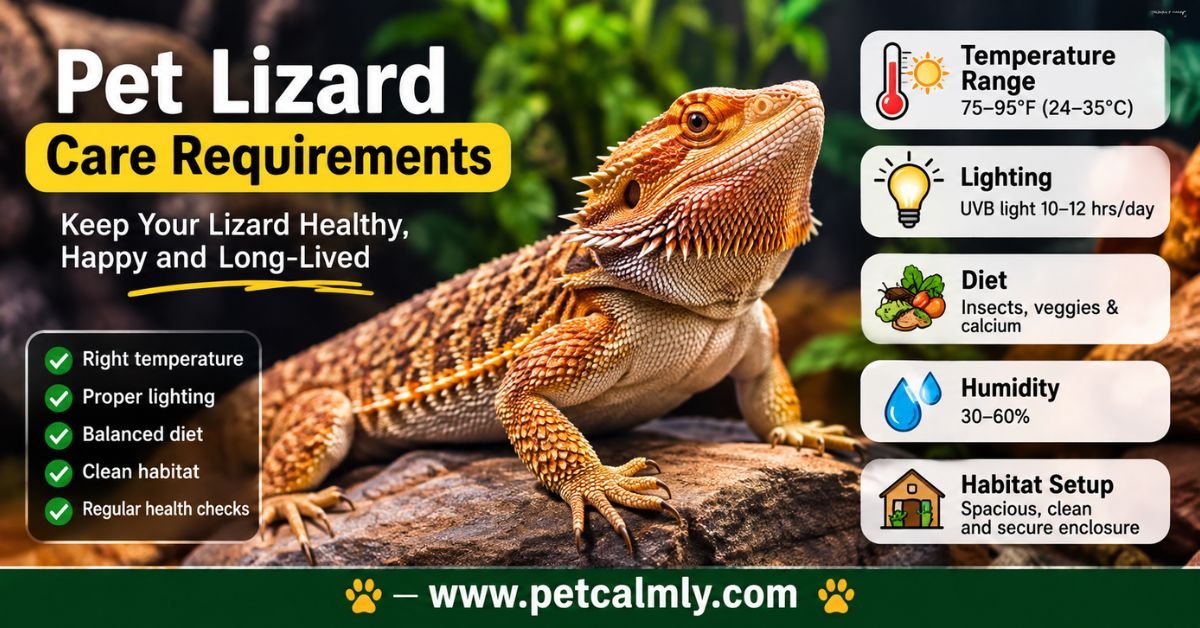
Pet lizard care requirements include a properly sized enclosure with a temperature gradient and UVB lighting, species-appropriate humidity, a balanced diet of live insects or produce (depending on species), calcium and vitamin supplementation, clean water, and regular health monitoring. The exact setup depends heavily on the species you choose a leopard gecko, bearded dragon, and crested gecko each have different heat, light, and dietary needs. Getting the basics right before you bring your lizard home prevents most of the health problems new reptile owners run into.
If you’re standing in a pet store right now, phone in hand, trying to decide whether that bearded dragon or leopard gecko is really as “low maintenance” as the label says you’re not alone. Reptiles get marketed as easy pets, and in some ways they are. But “easy” only holds true once the enclosure is set up correctly. Most of the lizard health problems veterinarians see, like metabolic bone disease or failure to thrive, trace back to the first few weeks of ownership, when a well-meaning owner guessed at temperatures or skipped UVB lighting because the lizard “seemed fine without it.”
This guide walks through what pet lizards actually need, why they need it, and how to tell the difference between a normal adjustment period and a real problem.
What Do Pet Lizards Need to Survive and Thrive?
Every pet lizard, regardless of species, needs five things in place before day one: a secure enclosure sized for their adult length, a thermal gradient with a basking spot, appropriate lighting (usually including UVB), controlled humidity, and a diet matched to whether they’re insectivorous, omnivorous, or herbivorous.
Where owners get tripped up is assuming these needs are interchangeable across species. A crested gecko’s humidity requirements would be dangerously dry for a green anole and unnecessarily damp for a leopard gecko. Before buying any equipment, it’s worth researching the exact species you’re getting rather than following generic “lizard care” advice from a single source.
Choosing the Right Enclosure Size and Setup
How Big Should a Lizard Tank Be?
A good starting rule is that the enclosure floor space should be at least two to three times the lizard’s total adult body length, with height factored in separately for arboreal species that climb. A single adult leopard gecko typically does well in a 20-gallon long tank, while a bearded dragon usually needs 40 gallons or more once fully grown, and larger monitor species can require custom enclosures the size of furniture.
Buying the adult-size enclosure from the start, rather than upgrading later, tends to save money and reduces stress on the animal from repeated moves. It also gives you room to build a proper thermal gradient, which is nearly impossible in a tank that’s too small.
Substrate: What Should Go on the Bottom of the Tank?
Substrate choice depends on the species and its natural habitat:
- Desert species (leopard geckos, bearded dragons): reptile carpet, tile, or a bioactive sand-clay mix designed for burrowing species
- Tropical species (crested geckos, some anoles): coconut fiber or organic topsoil blends that hold humidity
- Loose sand for adult animals only, and only species adapted to it, since impaction risk is a real concern for juveniles or species without a natural sand-digging behavior
Avoid loose calcium-sand products marketed as “safe if eaten” for young or insectivorous lizards that hunt by striking at prey, since accidental ingestion during feeding is common and has been linked to intestinal blockages.
Temperature and Lighting: The Part Owners Get Wrong Most Often
Why Do Lizards Need a Temperature Gradient?
Lizards are ectothermic, meaning they rely on external heat to regulate their body temperature and digest food properly. A tank with a single uniform temperature doesn’t let them do this. Instead, you need a gradient — a warm basking side and a cooler side so the lizard can move back and forth to self-regulate throughout the day.
A practical way to think about it: if your lizard is constantly pressed against the glass near the heat source, the tank is probably too cold overall. If it’s avoiding the basking area entirely, it may be too hot.
Does My Pet Lizard Need UVB Lighting?
Most day-active lizard species — bearded dragons, uromastyx, many day geckos, and most monitors — require UVB lighting to synthesize vitamin D3, which their bodies need to absorb calcium. Without it, even a calcium-rich diet won’t be properly used, and the animal can develop metabolic bone disease over time. This is one of the most common preventable health issues in captive reptiles, according to veterinary reptile specialists.
Some nocturnal or crepuscular species, like leopard geckos and crested geckos, have historically been kept without UVB, but current guidance from reptile veterinarians increasingly recommends low-level UVB for these species too, since natural sun exposure isn’t fully replaced by supplements alone. If you’re unsure what your specific species needs, a reptile-experienced veterinarian or a care sheet from an accredited zoo or herpetological society is a more reliable source than a general pet forum.
Bulbs should be replaced on the schedule the manufacturer recommends, typically every 6 to 12 months, since UVB output degrades well before the bulb stops producing visible light.
Humidity: Getting the Balance Right
Humidity needs vary more between species than almost any other requirement. A crested gecko from humid tropical forests may need humidity in the 60–80% range with daily misting, while a leopard gecko from arid regions does better between 30–40%, with a humid hide available for shedding.
Signs your humidity is off in either direction:
- Too low: retained shed, especially around toes and eye caps; lethargy; dry, flaky skin
- Too high: respiratory issues, mold or fungus growth in the enclosure, skin infections
A digital hygrometer is worth the small investment — guessing humidity by feel is unreliable, especially for beginners.
Feeding Your Lizard: What, How Much, and How Often
What Do Pet Lizards Eat?
Diet depends entirely on species type:
- Insectivorous (leopard geckos, crested geckos as juveniles, many small geckos): crickets, dubia roaches, mealworms, and other feeder insects, ideally gut-loaded with nutritious food before feeding
- Omnivorous (bearded dragons, blue-tongued skinks): a mix of insects and vegetables, with the ratio shifting toward more plant matter as the animal reaches adulthood
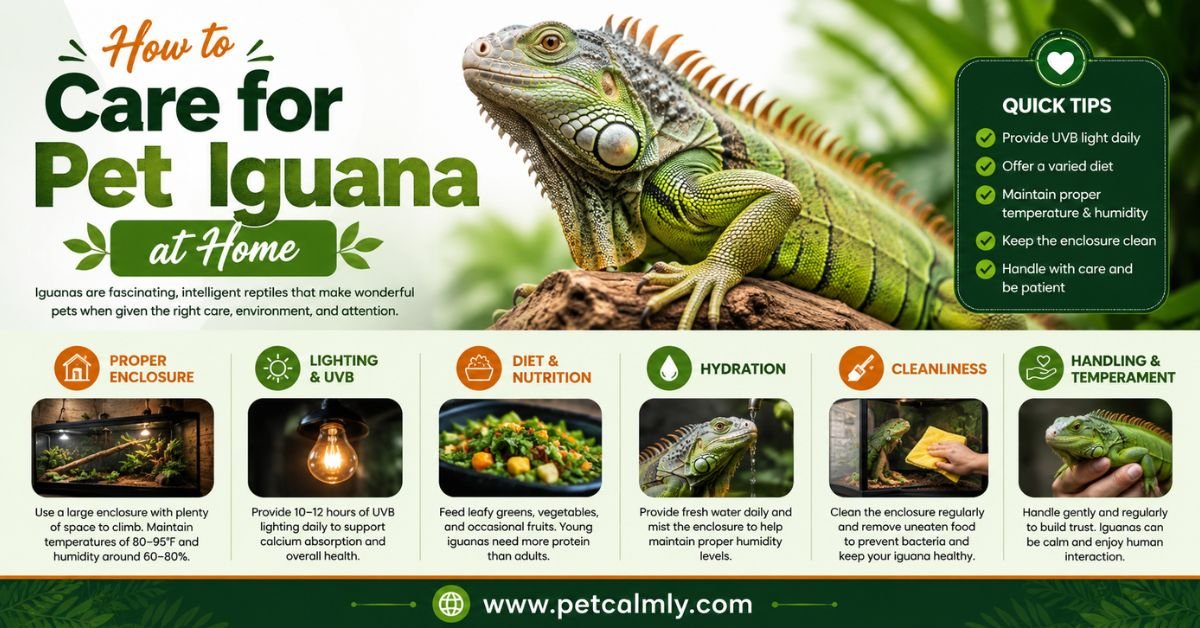
- Herbivorous (some uromastyx, green iguanas): leafy greens, vegetables, and occasional fruit, with insects generally unnecessary or even harmful in large amounts
Calcium and Vitamin Supplementation
Feeder insects should typically be dusted with a calcium supplement before feeding, with a multivitamin used on a rotating schedule (commonly a few times a week rather than daily, though this varies by product and species — following the label or a vet’s guidance is safest). This step is easy to forget once a lizard settles into a routine, but it’s one of the most important pieces of long-term bone and organ health.
How Often Should You Feed a Pet Lizard?
Juvenile insectivorous lizards often eat daily, since they’re growing quickly, while adults of the same species may only need feeding every other day. Herbivorous and omnivorous species are usually offered fresh greens daily, with insects offered less frequently as they mature. Overfeeding, particularly with fatty feeder insects like waxworms, is a common cause of obesity in captive lizards.
Common Lizard Behaviors Owners Misread
New owners often misinterpret normal lizard behavior as a problem, or the reverse missing a real problem because it looks subtle.
- Glass surfing (repeatedly scratching or pacing along the tank walls) usually signals stress, often from an enclosure that’s too small, too exposed, or lacking hiding spots — not excitement.
- Black beard or dark coloring in bearded dragons can be a stress or temperature response, or, in males, part of normal displays. Context matters — a dragon that’s dark and lethargic near feeding time is different from one displaying at another dragon’s reflection.
- Brumation (a reptile version of hibernation, seen in species like bearded dragons) involves reduced appetite and activity, usually tied to seasonal light and temperature changes. It can look alarming to a first-time owner but is often normal for adult animals, provided the lizard is otherwise healthy going in.
- Tail waving in geckos is frequently a hunting or alertness behavior rather than distress.
Understanding the “why” behind these behaviors takes the guesswork out of day-to-day care and reduces unnecessary stress for both the lizard and the owner.
Common Mistakes First-Time Lizard Owners Make
- Buying the enclosure sized for a juvenile instead of the adult the lizard will become
- Skipping UVB lighting because the lizard “seems active” without it
- Guessing at temperatures instead of using a reliable digital thermometer at both the warm and cool ends
- Feeding feeder insects that are too large for the lizard’s head width, creating a choking or impaction risk
- Handling too soon or too often before the lizard has settled into its new environment
- Assuming all lizards have the same care needs, when in reality species-specific research matters more than general reptile advice
When Should You Worry About Your Lizard’s Health?
Most day-to-day changes in a lizard’s behavior are minor and resolve on their own. But some signs point to something that needs professional attention rather than a wait-and-see approach. Contact an exotics or reptile-experienced veterinarian if you notice:
- Sunken or closed eyes for extended periods, especially with lethargy
- Visible weight loss, a noticeably thin tail base, or loss of muscle along the spine
- Swollen or soft jaw, or limbs that appear bowed — possible signs of metabolic bone disease
- Repeated failed sheds, especially retained shed constricting toes or the tail tip
- Refusal to eat for an extended period (what counts as “extended” varies by species and life stage, so check species-specific guidance or ask a vet)
- Discharge from the nose or mouth, open-mouth breathing, or audible clicking sounds when breathing
- Diarrhea, blood in stool, or a complete absence of bowel movements for an unusually long stretch
Reptiles are prone to hiding illness until it’s fairly advanced, which is a survival instinct in the wild but makes it easy for owners to miss early warning signs. When in doubt, a phone call or photo sent to an exotics vet is a reasonable first step, even if it turns out to be nothing.
What Should Pet Owners Do Before Bringing a Lizard Home?
- Research the specific species, not just “lizards” generally — care sheets vary widely between species
- Set up and test the full enclosure — including temperature and humidity — for several days before the lizard arrives
- Locate an exotics-experienced veterinarian in your area before you need one, since not every vet clinic treats reptiles
- Budget for ongoing costs, including UVB bulb replacement, feeder insects or fresh produce, and supplements, not just the upfront enclosure cost
- Plan a quarantine period if introducing a lizard into a home with other reptiles, to reduce the risk of spreading parasites or illness
A Quick Word on Handling and Salmonella Risk
Reptiles, including pet lizards, can carry Salmonella as part of their normal gut flora without appearing sick themselves. This doesn’t mean you can’t enjoy handling your lizard it means washing your hands after handling the animal or cleaning its enclosure is a habit worth building from day one, especially in households with young children, elderly family members, or anyone immunocompromised.
Conclusion
Pet lizard care isn’t complicated once you understand what a specific species actually needs but it does require more intention than the “low maintenance pet” label suggests. Getting the enclosure size, temperature gradient, lighting, humidity, and diet right from the start prevents the majority of health issues that show up later. When something does seem off, trusting your observations and reaching out to a reptile-experienced vet early is almost always better than waiting to see if it resolves on its own. With the right setup, most pet lizards are remarkably resilient, low-odor, and rewarding companions to watch and care for.
More Information About Pets, Please Visit Our Website: What Is the Easiest Pet Reptile to Take Care Of?
How Much Does a Bearded Dragon Cost?
Frequently Asked Questions
1: What is the easiest pet lizard to take care of for beginners?
Leopard geckos are commonly recommended for beginners because they’re hardy, don’t require the same UVB intensity as basking species, and tolerate handling well once settled. Bearded dragons are also popular but need a larger enclosure and stronger UVB setup.
2: Do all pet lizards need UVB light?
Most do, including nearly all diurnal (day-active) species. Some nocturnal species have traditionally been kept without it, but many reptile veterinarians now recommend low-level UVB for these species as well, since it supports natural vitamin D synthesis.
3: How often should I clean my lizard’s tank?
Spot-clean waste and uneaten food daily, and do a full substrate and enclosure clean on a regular schedule — typically every few weeks — depending on substrate type and enclosure size. Bioactive setups with a cleanup crew need less frequent full cleans.
4: Can pet lizards recognize their owners?
Lizards don’t form attachment the way mammals do, but many species learn to associate their owner with food and reduced threat over time, which is why regular, calm handling often leads to a more relaxed animal.
5: Why is my lizard not eating?
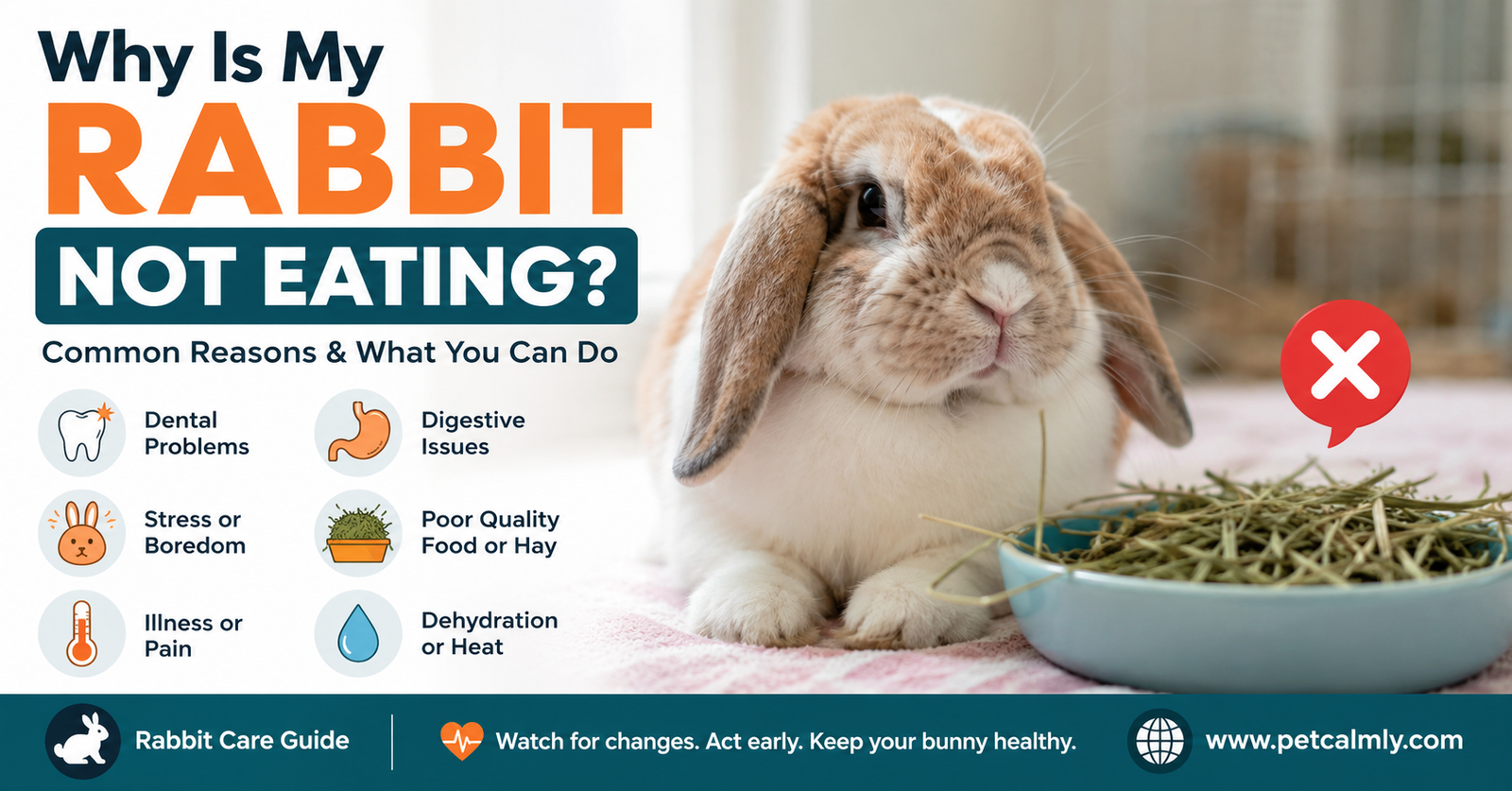
Reduced appetite can be normal during shedding, brumation, or after a stressful change like a new enclosure. It can also signal illness, especially if paired with lethargy or weight loss. If refusal to eat continues longer than is typical for the species, a vet check is the safer option.
6: Is it safe for kids to have a pet lizard?
Yes, with supervision and consistent hand-washing habits, since reptiles can carry Salmonella. Younger children may also need help with the physical care of the enclosure, so a lizard is often best framed as a family pet rather than a solo child’s responsibility.