Short direct answer
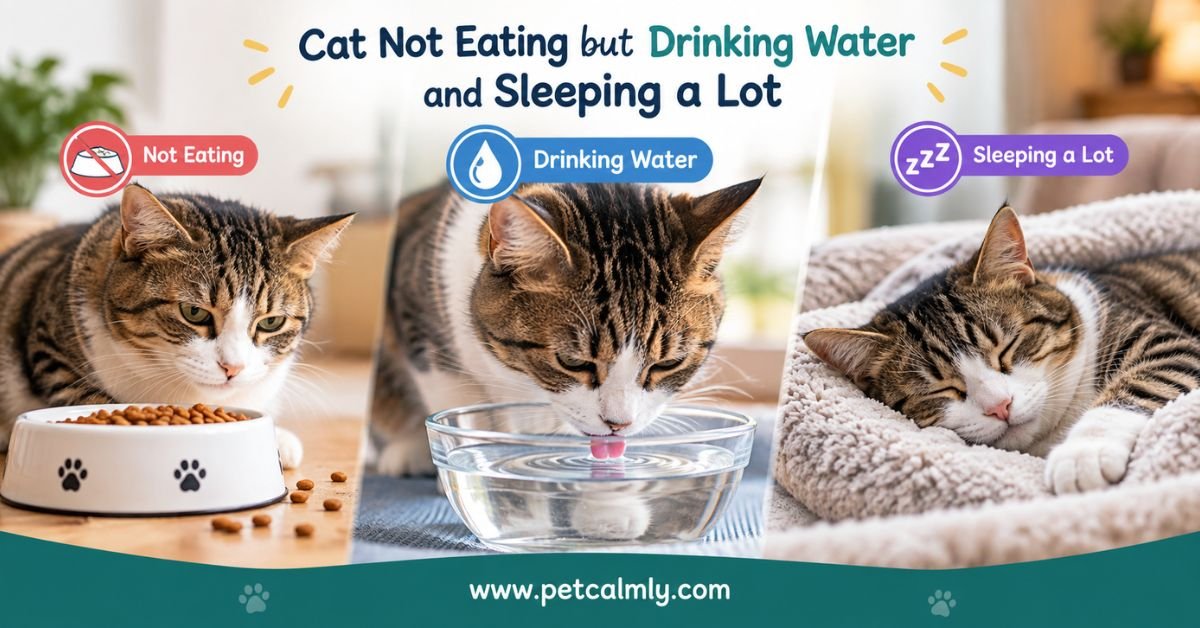
A cat not eating but drinking water and sleeping a lot is showing signs of illness, not laziness. Common causes include kidney disease, diabetes, infection, pain, nausea, and urinary problems. Cats hide sickness well, so even small changes matter. If your cat has eaten nothing for 24 hours, call your vet today. Kittens, seniors, and cats with known health conditions need help sooner. In the meantime, offer fresh water, keep your cat warm and quiet, and never give human medication.
Why This Combination of Symptoms Feels So Worrying
You probably noticed it slowly. The food bowl looked full at breakfast, and it still looked full at dinner. Your cat spent the day curled in the same spot. Then you saw her drinking at the water dish, and you weren’t sure if that was good news or bad.
That mix of confusion and worry is normal. This article walks you through what is likely happening, what you can safely check at home, and when to stop waiting and call a professional. It also covers what a vet will do and how to help your cat eat again once she is on the mend.
One important note first. This guide is general education, not a diagnosis. Your cat’s age, history, and other symptoms all change the picture, so only a veterinarian can say what is going on.
Why Is My Cat Not Eating but Drinking Water and Sleeping a Lot?
Three things are happening at once: low appetite, a change in thirst, and low energy. Together, they usually point to something affecting the whole body rather than a fussy phase.
Illness often causes this pattern in a few ways. Nausea makes food unappealing. Fever and pain drain energy. Dehydration or hormone changes can push a cat to the water bowl. Because cats are both predators and prey animals, they instinctively hide weakness. So by the time you see changes, the problem may have been building for a while.
Why Loss of Appetite Matters More in Cats
Skipping a meal is not a big deal for a healthy human or even a dog. Cats are different. When a cat stops eating, her body starts breaking down stored fat for energy. The liver has to process that fat quickly, and in cats it can become overwhelmed. This condition is called hepatic lipidosis, or fatty liver disease. It is more common in overweight cats, and it can develop within days.
That is why vets take “my cat won’t eat” seriously, even when she otherwise seems okay.
What Drinking Water Tells You (and What It Doesn’t)
Seeing your cat drink can feel reassuring. Sometimes it is a small good sign, because a cat that drinks is less likely to be severely dehydrated right now.
However, drinking more than usual can itself be a symptom. Kidney disease, diabetes, hyperthyroidism, infections, and some toxins all increase thirst. So the question is not only “Is she drinking?” but also “Is she drinking more than normal?”
A simple trick helps here. Fill the bowl to a measured level in the morning. Check how much is gone 24 hours later. Your vet can use that number.
Why Sleeping More Is Not Always “Just Resting”
Healthy adult cats sleep a lot, often 12 to 16 hours a day. Kittens and seniors sleep even more. So extra sleep alone is not alarming.
The difference is in how she sleeps. A tired but healthy cat still wakes up for meals, greets you, and moves normally. A sick cat often sleeps in unusual places, such as the bathroom floor, behind furniture, or inside a closet. She may not react when you come home. She may also look hunched or tucked tightly rather than relaxed.
9 Common Causes of a Cat Not Eating but Drinking Water and Sleeping a Lot
Several conditions can cause this trio of symptoms. The list below goes from conditions that need prompt care to those that are less urgent. Your vet will use your cat’s age, exam findings, and tests to narrow it down.
1: Kidney Disease
Kidney disease is one of the most common problems in older cats. Failing kidneys cannot concentrate urine well, so cats lose more water and drink more to keep up. Waste products also build up in the blood. These toxins cause nausea, a poor appetite, weakness, and weight loss.
Chronic kidney disease can progress slowly, and many cats live well with proper care. Sudden (acute) kidney injury is different, and it is an emergency.
2: Diabetes Mellitus
Diabetic cats drink and urinate more because extra sugar spills into the urine. Early on, many diabetic cats actually eat more, so a cat that suddenly stops eating needs attention quickly.
If diabetes goes untreated, it can lead to diabetic ketoacidosis. Signs include vomiting, weakness, deep sleepiness, and refusing food. This is an emergency.
3: Infections and Fever
A viral, bacterial, or upper respiratory infection can make a cat feel miserable. A stuffy nose reduces smell, and cats rely on smell to want food. Fever also causes sleepiness and a drop in appetite. Some cats drink more when they run a fever.
4: Nausea, Stomach Upset, Pancreatitis, and Constipation
Nausea is a very common reason cats stop eating. Causes include hairballs, a foreign object, inflammatory bowel disease, pancreatitis, and constipation. A nauseated cat may drool, lick her lips, swallow repeatedly, or walk up to the bowl and then walk away.
Constipation is easy to miss. If you have not seen stool in the litter box for two days, mention it to your vet.
5: Dental Pain and Mouth Problems
A painful tooth, gum disease, or a mouth ulcer can make chewing hurt. These cats are often hungry but afraid to eat. They may paw at the mouth, drop food, or eat only from one side. Drinking is usually easier than chewing, which explains why some cats keep drinking.
6: Urinary Tract Problems
Urinary infections, bladder stones, and crystals can cause pain, lethargy, and lost appetite. A male cat that cannot pass urine is in a life-threatening emergency, and this is covered in the warning signs below.
7: Hyperthyroidism and Other Hormonal or Organ Problems
Hyperthyroidism, an overactive thyroid, often causes weight loss and a big appetite in older cats. In more advanced cases, though, cats can become weak and stop eating. Liver disease, heart disease, and cancer can also cause lethargy and appetite loss.
8: Stress, Environment Changes, and Recent Vaccines
Stress can reduce appetite. Common triggers include a new pet, moving house, loud construction, or a change in routine. Even so, do not assume stress is the cause when your cat is also sleeping unusually and drinking differently. Rule out medical causes first.
Vaccines can also cause mild tiredness and a lower appetite for a day or so. If it lasts longer than 24 to 48 hours, call your vet. Call right away if you see facial swelling, vomiting, or trouble breathing.
9: Poisoning and Toxins
Some toxins show up as increased thirst, sleepiness, and vomiting. Two important examples are lilies and antifreeze. Even a small amount of lily pollen or vase water can cause severe kidney failure in cats. Antifreeze (ethylene glycol) has a sweet taste, and it is deadly even in tiny amounts. If your cat could have been exposed to either one, go to an emergency vet immediately.
Human pain relievers such as acetaminophen (Tylenol), ibuprofen, and naproxen are also toxic to cats.
Quick Reference: Clues and Possible Causes
| What you notice | Possible cause | Urgency |
|---|---|---|
| Drinking much more, weight loss, older cat | Kidney disease, diabetes, hyperthyroidism | Vet visit within 24 hours |
| Vomiting, fruity or sweet breath, extreme weakness | Diabetic ketoacidosis | Emergency |
| Straining in the litter box, tiny or no urine | Urinary blockage or infection | Emergency, especially males |
| Drooling, pawing at mouth, dropping food | Dental pain or mouth ulcer | Vet visit within 1 to 2 days |
| Sneezing, watery eyes, warm and tired | Respiratory infection or fever | Vet visit within 1 to 2 days |
| Hiding, vomiting, no stool | Nausea, constipation, blockage | Same-day call |
| Possible exposure to lilies or antifreeze | Poisoning | Emergency |
This table shows patterns, not diagnoses. Several conditions overlap, so use it to describe symptoms to your vet rather than to decide anything alone.
How to Check Your Cat Right Now at Home
You are not trying to play vet. Instead, you are collecting information that helps your vet act faster. Stay calm, and keep your touch gentle.
Look at Her Gums, Breathing, and Posture
Lift her lip gently if she allows it. Healthy gums are pink and moist. Pale, white, or very dark red gums are a warning sign. A yellow tint in the gums, eyes, or ears can point to liver trouble. Dry, sticky gums suggest dehydration.
Next, watch her breathing while she rests. Count the breaths over 30 seconds and double it. Resting cats typically breathe under about 30 breaths per minute. If she breathes with her mouth open or her belly heaves, treat it as an emergency.
Check the Litter Box
The litter box tells you a lot. Note how many urine clumps you see, how big they are, and whether the stool looks normal. Very large clumps point toward increased urination. Tiny clumps or none at all point toward a possible blockage or dehydration.
Ask Yourself These Questions
Write down answers before you call your vet. They will likely ask:
- When did she last eat a full meal?
- Has she eaten any treats or table scraps since then?
- Is she drinking more, less, or about the same?
- Has she vomited or had diarrhea?
- Has she passed stool and urine in the last 24 hours?
- Did anything change recently, such as new food, new pets, cleaning products, or plants?
- Could she have gotten outside or into a cabinet?
- Is she on any medication or flea treatment?
Taking a short video of her behavior can also help, especially if she limps, wobbles, or breathes oddly.
When Should You Worry? Warning Signs That Need a Vet
Some situations are not “wait and see.” Knowing the difference can save your cat’s life.
Go to an Emergency Vet Immediately If You See
- Straining to urinate, crying in the litter box, or producing little or no urine
- Open-mouth breathing or labored breathing
- Pale, white, blue, or yellow gums
- Repeated vomiting, or vomit that contains blood
- Collapse, seizures, or inability to stand
- Possible exposure to lilies, antifreeze, rat poison, or human medication
- Extreme weakness or no response when you touch her
Call Your Vet the Same Day If
- Your cat has not eaten for 24 hours
- She is drinking far more than normal
- She vomited once or twice and still refuses food
- She hides, avoids touch, or seems painful
- She has diarrhea along with the other signs
How Long Can a Cat Go Without Eating?
There is no safe number to aim for. As a general guide, many vets recommend calling if an adult cat has eaten nothing for 24 hours and seeing her within 48 hours at the latest. Kittens, seniors, overweight cats, and cats with diabetes or kidney disease can get into trouble much sooner. Meanwhile, a cat that is also very sleepy and drinking differently should be seen without waiting.
When unsure, call. A phone call to the clinic costs little. Many clinics will tell you honestly whether to come in right now.
What to Do at Home While You Arrange Veterinary Care
Home care does not replace a vet visit. Still, a few safe steps can keep your cat comfortable while you wait for an appointment.
Create a Quiet, Warm Resting Spot
Choose a calm room with a soft bed, and keep the temperature comfortable. Put a litter box nearby so she does not have to travel far. Keep other pets and children away so she can rest.
Offer Fresh Water Without Forcing It
Keep her water bowl clean and full. Some cats prefer a wide ceramic bowl or a pet fountain. Do not squirt water into her mouth, because liquid can enter the lungs. Do not restrict water either, even if she drinks a lot. Restricting it can make things worse.
Tempt Her With Food, Gently
You can try small amounts of her regular wet food. Warming it for a few seconds makes the smell stronger, which often helps. Use a shallow plate in a quiet spot away from the litter box.
Offer a little, then step away. Pressure makes many cats stop eating even more. Do not keep offering her favorite food if she seems nauseated, because she may link it with feeling sick and avoid it later.
Write Down What You See
Note times, amounts, and symptoms. A small log of meals, water intake, litter box visits, and vomiting helps the vet see the pattern quickly.
Do Not Give Human Medications or Home Remedies
Never give paracetamol, ibuprofen, aspirin, or other human drugs. Avoid onion, garlic, milk, and raw dough. Also skip internet recipes that suggest force-feeding at home. Syringe-feeding without guidance can cause choking or aspiration pneumonia.
6 Common Mistakes Owners Make When a Cat Stops Eating
Most of these mistakes come from love and worry, not neglect. Still, they are worth avoiding.
Waiting too long. Many owners hope it will pass overnight. With cats, a few days of no food can cause real harm.
Switching foods repeatedly. Rapidly rotating flavors can create food aversions. Offer one or two familiar options instead.
Assuming it is only stress. Behavior changes can have a medical cause. Rule out illness first.
Force-feeding. This frightens cats and risks choking.
Treating drinking as a good sign and stopping there. Extra thirst can signal kidney disease or diabetes.
Skipping the vet because she “looks fine.” Cats mask illness, so looking fine is not the same as being fine.
What Will the Vet Do?
Knowing what to expect makes the visit less stressful for you.
The Exam and Tests
Your vet will check temperature, weight, hydration, gums, heart, lungs, abdomen, and mouth. She will likely recommend blood work to check kidney and liver values, blood sugar, and thyroid levels. A urine test shows whether the kidneys are concentrating urine and whether there is infection or sugar in the urine. Depending on findings, X-rays or an ultrasound may follow.
Possible Treatments
Treatment depends on the cause. Common options include:
- Subcutaneous or intravenous fluids for dehydration
- Anti-nausea medication
- Appetite stimulants prescribed for cats
- Pain relief that is safe for cats
- Antibiotics when infection is confirmed
- Insulin and monitoring for diabetes
- Special kidney diets and long-term care for kidney disease
- Dental treatment for mouth pain
- Assisted feeding, sometimes through a feeding tube, for cats that cannot eat
Some cats stay at the clinic for a day or two. That can feel scary, but fluids and monitoring often turn things around quickly.
Real-Life Scenarios Pet Owners Often Describe
These are common patterns vets see, not individual case reports.
The senior cat who “just seems old.” An 14-year-old cat sleeps more, eats less, and drinks more than last year. The family assumes aging. Blood work later shows early kidney disease. With diet changes and fluids, many such cats feel better and eat again.
The young indoor cat who stopped eating after a move. The family blames stress. But after 36 hours, she is hiding and vomiting. The cause turns out to be a swallowed piece of string. Early care matters in cases like this.
The male cat who keeps visiting the litter box. Owners think he is constipated. In fact, he cannot urinate. This is an emergency, and the faster he is treated, the better his chances.
In each case, the owner who acted early had the easier road.
How to Help Your Cat Eat Again During Recovery
Once your vet has treated the underlying problem, appetite often returns gradually. You can support it.
Make Food More Appealing
- Warm wet food slightly so the aroma rises
- Offer small portions often rather than large bowls
- Try a different texture, such as pâté versus chunks, if your vet approves
- Use a clean, shallow dish
- Remove uneaten wet food after about 30 minutes to keep it fresh
Set Up a Calm Feeding Space
Place food away from the litter box and loud appliances. Some cats eat better when family members sit nearby quietly. Others prefer privacy. Pay attention to what your cat prefers.
Follow Your Vet’s Feeding Plan
If your cat has kidney disease, diabetes, or another condition, her diet may need to change. Ask before you switch foods. Also ask when to recheck her weight and how many calories she needs each day.
How to Prevent Appetite Loss and Lethargy in Cats
You cannot prevent every illness. Still, you can lower the risk and catch problems sooner.
- Schedule yearly checkups, and twice yearly for seniors. Early blood work can catch kidney disease or diabetes before symptoms appear.
- Weigh your cat regularly. Small weight changes matter in a small animal.
- Keep up with dental care. Ask your vet about home brushing and cleanings.
- Encourage water intake. Wet food, fountains, and several bowls around the house all help.
- Cat-proof your home. Remove lilies, secure chemicals, and keep string and hair ties out of reach.
- Know her normal. Learn her usual eating, sleeping, and litter box habits. Then you will notice changes sooner.
- Reduce stress. Keep routines steady, and introduce changes gradually.
Conclusion
A cat not eating but drinking water and sleeping a lot is a signal to act, not to panic. The combination can come from something treatable, such as nausea or a dental problem. It can also point to something serious, such as kidney disease, diabetes, or a urinary blockage. You cannot tell which one from the couch, and that is okay.
What you can do is watch closely, keep her comfortable, record what you see, and call your vet early. Acting within a day or two gives most cats the best chance of a smooth recovery. Trust your instincts. You know your cat better than anyone, so if something feels off, it probably is.
More Information About Pets, Please Visit Our Website: 12 Signs Your Cat Is Happy
Why Is My Cat Breathing With Its Mouth Open?
Why Is My Cat Eating Too Fast?
Why Is My Cat Sleeping in the Litter Box?
Why Does My Cat Lick My Hair After a Shower?
How to Bathe a Cat Safely at Home
Do Cats Understand Siblings?
How to Clean Cat Eyes at Home
Frequently Asked Questions
1: Why is my cat not eating but drinking water and sleeping all day?
The most common reasons are illness, pain, nausea, or an infection. Kidney disease, diabetes, and urinary problems are also possible, especially in older cats. Because cats hide symptoms, this pattern usually means she needs a vet exam, ideally within 24 hours.
2: How long can a cat go without eating before it becomes dangerous?
There is no fully safe window, but a cat that eats nothing for 24 hours should prompt a call to your vet. Kittens, seniors, overweight cats, and cats with medical conditions need help even sooner. Extended fasting can lead to liver damage.
3: Is it a good sign if my cat is still drinking water?
It is slightly reassuring, but it does not mean she is fine. Drinking more than normal can signal kidney disease, diabetes, infection, or poisoning. Track how much she drinks and tell your vet.
4: Should I force-feed my cat if she won’t eat?
No. Force-feeding can cause stress, choking, or aspiration. Your vet can show you safe assisted-feeding methods or prescribe an appetite stimulant if appropriate.
5: Can stress make a cat stop eating and sleep more?
Yes, stress can lower appetite and change sleep. Even so, medical causes are common, so rule them out first. If your cat has been off her food for more than a day, see your vet before assuming stress.
6: What can I give my cat at home to make her eat?
Try warmed wet food, small portions, and a quiet feeding spot. Do not give human medicine, milk, or seasoned foods. If she still refuses food after a day, contact your vet instead of experimenting.