
Short direct answer
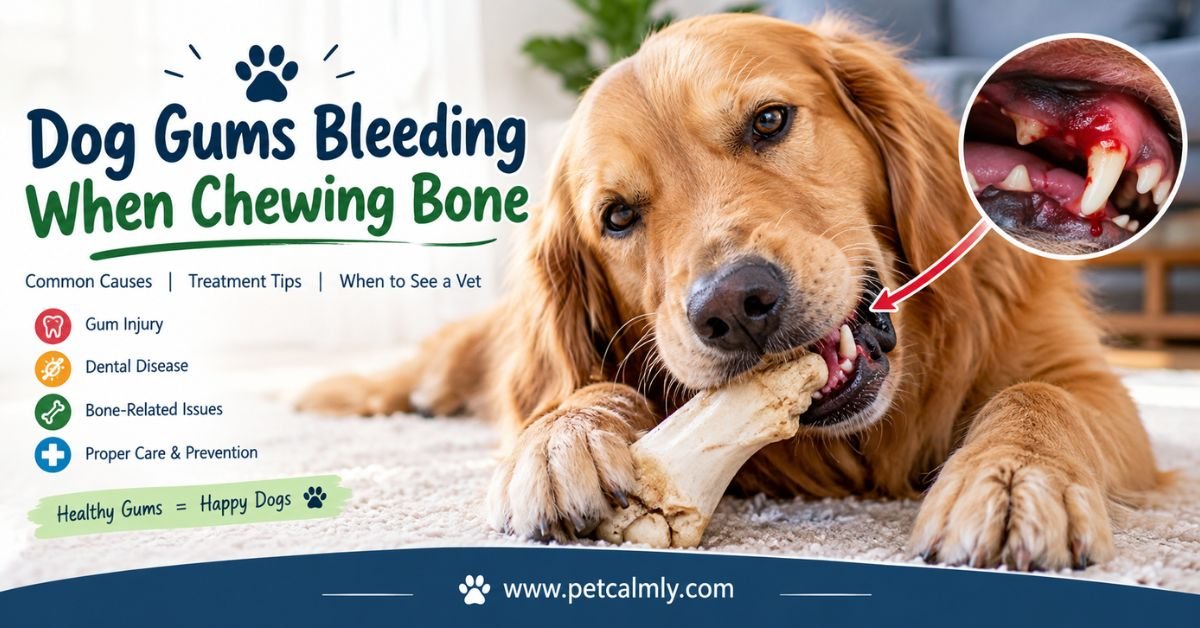
Dog gums bleeding when chewing bone is usually caused by a minor scrape from rough bone edges, or by gums that were already inflamed from gingivitis. A few drops of blood that stop within a few minutes are often harmless. Take the bone away, check the mouth gently, and offer soft food. Bleeding that lasts longer than ten minutes, a cracked tooth, a stuck bone fragment, or a dog in obvious pain needs a vet visit.
Why This Happens, and Why You Don’t Need to Panic
Few things make an owner’s stomach drop like seeing pink saliva on a dog’s chin, or red streaks on a bone you handed over a minute ago. Your mind jumps straight to the worst case. Did the bone cut something? Is a piece stuck in there? Is this serious?
Take a breath. In most cases, a little blood during bone chewing is a small problem with a clear explanation. Dogs’ mouths are tough, and their gums heal quickly. Still, bleeding is your dog’s way of showing that something in the mouth was irritated, scraped, or already unhealthy. It is worth understanding why.
In this guide, you’ll learn what causes bleeding gums during bone chewing and how to tell a harmless scrape from a real problem. You’ll also get step-by-step instructions for what to do right now, plus safer ways to keep your dog chewing happily. One note first: I’m writing as a pet content specialist, not as your veterinarian. If something feels wrong, your vet is the right person to ask.
What Causes Dog Gums to Bleed When Chewing a Bone?
Bone is hard, uneven, and sometimes sharp. Gums are soft tissue packed with tiny blood vessels. When the two meet with enough pressure, bleeding can happen quickly. The cause usually falls into one of a few groups.
- Surface scrapes: Rough edges or splintered ridges scratch the gum line.
- Already-inflamed gums: Gingivitis or gum disease makes tissue fragile.
- Tooth problems: A cracked or loose tooth bleeds around its base.
- Teething: Puppies naturally have sore, bleeding gums.
- Lodged fragments: A sliver of bone wedges between teeth or into the gum.
- Clotting problems: Rare, but important to rule out if bleeding is heavy.
The sections below explain each cause so you can match it to what you saw.
Minor Scrapes From Rough Bone Edges
This is the most common reason. Many bones, especially cooked ones or ones that have been chewed for a while, develop jagged edges. As your dog gnaws, those edges drag across the gum line like coarse sandpaper.
The result is usually a small abrasion. You might notice a few spots of blood on the bone or a pink tinge in the drool. The bleeding often stops within a few minutes once chewing ends.
Dogs rarely stop on their own, though. Many keep chewing through mild discomfort because the reward, the taste and the satisfaction of gnawing, outweighs it. That is why you need to be the one who stops the chew session.
Think of it like biting into a very crunchy cracker. One scrape is no big deal, but you wouldn’t keep eating it if your gums were bleeding.
Gingivitis and Gum Disease Making Gums Fragile
Sometimes the bone isn’t the main problem. It is simply the thing that revealed it.
Gingivitis is inflammation of the gums. It happens when plaque, a sticky film of bacteria, builds up along the gum line. According to the Merck Veterinary Manual, plaque and the resulting gum inflammation are the earliest stage of periodontal disease, and the process can go unnoticed for a long time.
Inflamed gums are red, swollen, and easy to bleed. They can bleed from gentle pressure, such as chewing a bone, a firm toy, or even a dental brush.
Clues that gums were already unhealthy include:
- Bad breath that has gotten worse over time
- Red or puffy gum edges
- Yellow or brown tartar on the teeth
- Dropping food or chewing on one side
If this sounds familiar, the bleeding is a useful warning. A dental check can stop gum disease before it advances.
Cracked, Loose, or Broken Teeth
Hard bones are one of the leading ways dogs fracture teeth. Many veterinary dental specialists caution against very hard chews for this reason, and the American Veterinary Medical Association also advises owners to be careful with them.
When a tooth cracks, the gum around it may bleed, and the exposed inner tissue can be very painful. The damage isn’t always easy to see. A dog may break a large back tooth and look mostly normal from the front.
Signs to watch for:
- Chewing on only one side of the mouth
- Dropping the bone suddenly and walking away
- Pawing at the face or rubbing the muzzle on the floor
- A visible chip or a tooth that looks darker than the others
- Swelling under or next to one eye
A fractured tooth won’t heal on its own. If you suspect one, book a veterinary exam. Waiting can allow infection to develop.
Teething Puppies and Young Dogs
Puppies lose their baby teeth and grow adult ones between roughly three and seven months of age. During this stage, their gums are tender, and a little blood on a chew toy or bone is pretty common.
Puppy teeth falling out can also cause small spots of blood. Many owners find a tiny red smear and then a missing tooth on the floor.
Even so, puppies are the group where bone chewing needs the most caution. Their baby teeth are sharp but fragile, and their adult teeth are still settling in. Offer softer, puppy-appropriate teething items instead of hard bones. Chilled (not frozen) rubber toys and soft textured chews often feel better on sore gums.
If a puppy bleeds heavily, refuses to eat, or seems feverish, call your vet. That is not typical teething.
A Bone Fragment Stuck in the Gum or Between Teeth
Bones can splinter. A thin sliver can wedge between the teeth, jam into the roof of the mouth, or poke into the gum tissue itself. This can cause bleeding that seems to keep coming back.
Common signs include:
- Frequent pawing at the mouth
- Drooling more than usual
- Gagging or retching
- Refusing to close the mouth fully
- Bad smell from one specific spot
Stuck fragments sometimes sit in the mouth for hours before anyone notices. If you can see the piece clearly and it comes out easily, you may gently remove it with clean fingers. If it’s lodged, don’t dig around. You could push it deeper or get bitten by a dog in pain. That is a job for a vet.
Clotting Problems: Rare but Worth Knowing
Occasionally, bleeding isn’t about the bone at all. Dogs with clotting disorders, certain medications, or rat poison exposure can bleed far more than a small scrape should cause.
This is rare, but it is important. Heavy bleeding that doesn’t slow down, pinpoint red spots on the gums, nosebleeds, unexplained bruising, or black stools alongside bleeding gums are emergency signs. Call a vet immediately, especially if there is any chance your dog got into rodent poison.
Is It Normal for a Dog’s Gums to Bleed After Chewing a Bone?
A small amount, once, is usually not alarming. A dog whose gums bleed slightly after a vigorous chew, and who then eats normally and acts like themselves, has probably had a minor scrape.
Pay attention to patterns, though. Here is a simple way to judge what you’re seeing.
| What you see | Likely meaning | Suggested action |
|---|---|---|
| A few drops, stops within minutes | Minor scrape | Remove bone, observe |
| Pink saliva, dog eating normally | Gum irritation | Monitor for 24 hours |
| Bleeding every time your dog chews | Gum disease or tooth issue | Book a dental exam |
| Heavy or constant bleeding | Possible injury or clotting issue | Call your vet now |
| Bleeding plus pain or swelling | Fractured tooth or infection | Vet visit soon |
One more thing to know: saliva spreads blood, so a small amount can look dramatic. A tiny cut can turn a whole bowl of water pink. That doesn’t mean the injury is as large as it looks.
What to Do Right Now If Your Dog’s Gums Are Bleeding
Stay calm, because your dog will pick up on your stress. Then follow these steps in order.
- Take the bone away. Offer a treat or a toy in trade so it doesn’t turn into a standoff.
- Look in the mouth. Lift the lips gently in good light. Note where the blood is coming from.
- Check for fragments. Look between teeth and along the roof of the mouth.
- Rinse softly. Offer fresh water. You can dab the area with a damp, clean gauze pad.
- Apply light pressure if needed. Use clean gauze for a minute or two on a visible bleeding spot.
- Offer soft food. Wet food or softened kibble is easier on sore gums.
- Watch closely. Check for appetite, energy, and drooling over the next day.
Don’t give human pain medication. Ibuprofen, acetaminophen, and naproxen can be dangerous to dogs. If your dog seems to be hurting, call your vet instead.
If your dog won’t let you look, don’t force it. A frightened dog may bite even if they have never done so before. Stop and call your clinic.
When Should You Worry? Signs That Need a Vet
Most minor bleeding resolves quickly. But some situations need professional help, and acting early often makes treatment easier and cheaper.
Call your vet the same day if you notice:
- Bleeding that continues for more than about ten minutes
- A broken, chipped, or loose tooth
- Swelling of the face or gums
- Your dog refusing food or water
- Heavy drooling, gagging, or pawing at the mouth
- Bad breath that suddenly gets worse
- Bleeding that happens again with each chewing session
Go to an emergency clinic right away if:
- Bleeding is heavy or doesn’t slow down
- Your dog is struggling to breathe
- You suspect a swallowed bone fragment, with vomiting, a tense belly, or repeated retching
- The gums look very pale, white, or gray
- Your dog is weak, collapsing, or lethargic
- There is any possibility of rat poison exposure
Swallowed bone pieces are a separate concern. They can cause choking, blockages, or tears in the digestive tract. If your dog swallowed a large chunk, call a vet even if the mouth bleeding looks minor.
What a Veterinarian Might Do
Knowing what to expect can make the visit feel less scary.
Your vet will likely start by looking inside the mouth, checking the teeth, gums, tongue, and roof of the mouth. They may press on the gums to check for pain and swelling. Some dogs need sedation for a thorough exam, particularly if the mouth is very sore.
Depending on what they find, treatment might include:
- Removing a stuck fragment
- A professional dental cleaning under anesthesia
- Dental X-rays to check below the gum line
- Treating or extracting a fractured tooth
- Antibiotics or pain relief when an infection is present
- Blood tests if a clotting problem is suspected
Dental X-rays matter because most of a tooth sits beneath the gum. According to the American Animal Hospital Association’s dental care guidelines, a thorough oral exam under anesthesia, with imaging, is the standard way to assess dental disease properly. Surface checks alone can miss a lot.
6 Common Mistakes Owners Make With Bones and Bleeding Gums
Most people give bones out of love. They want their dog to enjoy something natural and satisfying. But several habits can quietly raise the risk.
Giving cooked bones. Cooking makes bones brittle, so they splinter into sharp shards. The U.S. Food and Drug Administration has warned pet owners against giving bones to dogs, citing risks such as broken teeth, mouth injuries, choking, and digestive blockages.
Letting dogs chew unsupervised. A bone left in the yard becomes a hazard if you aren’t around to notice a problem.
Offering bones that are too small. A bone small enough to fit fully in the mouth can be swallowed or lodged.
Ignoring early bleeding. Repeating the same chew after bleeding invites more damage.
Skipping dental care. Healthy gums handle chewing better than inflamed ones.
Assuming raw means safe. Raw bones may be softer, but they can still break teeth and carry bacteria such as Salmonella, which can affect both dogs and the people handling them.
Are Raw, Cooked, and Store-Bought Bones Safe?
This is where opinions get heated, so let’s keep it practical.
Cooked bones are the riskiest. They splinter easily, and most veterinary organizations advise against them.
Raw bones are a debated topic. Some owners and raw feeders swear by them. Many vets still warn about tooth fractures, choking, blockages, and bacterial contamination. If you choose to feed raw bones, talk to your vet first, supervise every session, and handle the bone with food-safety care.
Smoked, roasted, or “dental” bones from pet stores vary widely. Some are very hard and can cause the same tooth damage as natural bones. Always check the product’s size, hardness, and ingredients.
A common rule of thumb among veterinary dental professionals is the thumbnail test. If you can’t press a dent into the chew with your thumbnail, it may be too hard for your dog’s teeth. It’s not a perfect test, but it is a useful starting point.
No bone is risk-free. The real question is whether the benefit is worth the risk for your particular dog.
Safer Chew Options for Dogs With Sensitive Gums
If your dog loves to chew, and most do, the goal isn’t to take that joy away. It’s to redirect it to something gentler.
| Chew type | Good for | Things to watch |
|---|---|---|
| Soft rubber toys | Gentle chewers, puppies | Check for tearing |
| Dental chews approved by the VOHC | Plaque control | Match size to your dog |
| Rope toys | Light play | Remove if strings fray |
| Frozen washcloth or carrots | Teething puppies | Supervise closely |
| Food-puzzle toys | Mental stimulation | Pick the right size |
| Soft treat chews | Senior dogs | Watch calories |
The Veterinary Oral Health Council (VOHC) awards a seal to products that meet standards for reducing plaque or tartar, and it’s a helpful label to look for. It won’t guarantee that a chew is safe for every dog, but it shows the product has been tested.
Whatever you choose, size matters. Pick something too large to swallow whole. And throw out any toy or chew that breaks into sharp pieces.
How to Prevent Bleeding Gums During Chewing
Prevention comes down to two things: healthy gums and sensible chews.
Build a simple dental routine:
- Brush with dog-safe toothpaste, ideally daily, or at least a few times a week. Never use human toothpaste.
- Start slowly. Let your dog lick the paste first, then touch a finger to the teeth, then use a soft brush.
- Add dental chews or water additives if your vet approves.
- Schedule regular dental checkups. Many vets suggest an oral exam at least once a year.
Choose chews carefully:
- Match the chew to your dog’s size and chewing style.
- Supervise every session.
- Take the chew away once it is small enough to swallow.
- Rotate options so your dog doesn’t focus on one hard item.
Know your dog:
- Heavy chewers need extra caution.
- Small breeds often have crowded teeth that trap plaque.
- Senior dogs may have fragile enamel and sensitive gums.
A few minutes of care each day is far cheaper than a dental surgery bill later.
What Bleeding Gums Can Look Like in Real Life
Here are three common scenarios, written as examples of typical situations rather than personal stories.
The weekend bone. A medium-sized dog is given a cooked leftover rib bone after dinner. Twenty minutes later, there are red streaks on the carpet. The owner checks and finds a small scratch along the lower gum. The bleeding stops by itself. The sensible move is to skip the bone next time and watch for appetite changes.
The picky eater. An older terrier suddenly starts chewing on one side and has a little blood on a bone every time. Bad breath has been getting worse for months. This pattern suggests dental disease, and a vet exam is the right next step.
The sore-mouth puppy. A five-month-old puppy chews a hard bone, whimpers, and pulls away. A tiny bit of blood shows near a back tooth. This could be teething, but it could also be an injury, so a quick call to the vet is smart.
In each case, the right choice depends on the pattern, not just the single event.
Bone Chewing for Puppies, Adults, and Senior Dogs
Different life stages carry different risks.
Puppies have delicate teeth and are losing baby teeth. Avoid hard bones. Offer soft teething toys and supervise.
Adult dogs can usually handle a wider range of chews, but only when their teeth and gums are healthy. A dog with a history of dental problems needs extra care.
Senior dogs often have worn enamel, gum recession, or loose teeth. Bones that were fine at three years old may be risky at ten. If your older dog suddenly bleeds from the gums, don’t dismiss it as age. Older dogs deserve a dental exam, because pain from dental disease can be hidden easily.
Small and toy breeds deserve a mention too. Their teeth are tightly packed, and plaque builds up quickly. They tend to develop gum disease earlier, so regular dental care matters even more.
Conclusion
Seeing your dog’s gums bleed while chewing a bone is upsetting, but it isn’t always an emergency. Often, it’s a scrape from rough bone edges or a sign that the gums were already inflamed. The most useful response is calm and practical. Remove the bone, check the mouth gently, offer soft food, and watch for changes.
Pay close attention to patterns. Repeated bleeding, bad breath, a favored side of the mouth, or any sign of pain means it’s time to see your vet. A dental problem caught early is easier to treat than one left alone.
You don’t have to give up chewing altogether. With size-appropriate, gentler options and a steady dental routine, most dogs can chew happily and safely. You know your dog best. If something feels off, trust that instinct and ask for help.
More Information About Pets, Please Visit Our Website: Best Chew Toys for Aggressive Chewers Dogs
Best Dog Treats for Dental Care
How to Stop Dog Chewing
Best Food for Senior Dogs to Gain Weight
Best Food for Senior Dogs
What Is the Most Common Disease in Dogs?
Frequently Asked Questions
1: Why are my dog’s gums bleeding after chewing a bone?
The most common reasons are a scrape from a rough bone edge, gum inflammation (gingivitis), or a damaged tooth. Puppies may also bleed from teething. A small amount that stops quickly is usually minor. Repeated or heavy bleeding needs a vet check.
2: How long should a dog’s gum bleeding last?
Minor bleeding from a scrape typically stops within a few minutes. If it keeps going for more than about ten minutes, or comes back each time your dog chews, call your veterinarian.
3: Can a dog get a bone stuck in their gums?
Yes. Bone fragments can lodge between teeth, in the gum line, or along the roof of the mouth. Signs include pawing at the face, drooling, gagging, and ongoing bleeding. Don’t dig the piece out if it’s stuck deep. Let a vet handle it.
4: Should I stop giving my dog bones if their gums bleed?
Pause bones, at least until you know the cause. Repeated bleeding suggests the bone is too hard or the gums are unhealthy. Your vet can help you decide whether any bones are safe for your dog, and which alternatives suit them better.
5: Is blood in my dog’s saliva an emergency?
Not always. A little pink saliva after chewing can come from a small scrape. It becomes an emergency if the bleeding is heavy, if your dog has pale gums, weakness, trouble breathing, or repeated vomiting, or if you suspect they swallowed bone pieces or rat poison.
6: What can I give my dog instead of bones?
Soft rubber chew toys, VOHC-accepted dental chews, puzzle feeders, and soft treat chews are gentler options. Choose items sized for your dog, supervise chewing, and replace anything that starts breaking apart.