Short direct answer
Creating a calm environment for dogs means reducing stressors and providing a safe, predictable space where your dog feels secure. This involves managing noise and visual stimuli, establishing consistent routines, using comfort tools like beds and pheromone diffusers, and ensuring your dog gets adequate rest and exercise. Most dogs respond positively within 2-4 weeks of environmental changes, though chronically stressed dogs may take longer. The goal isn’t eliminating all stimuli it’s helping your dog feel safe enough to relax.
Why Your Dog’s Stress Matters
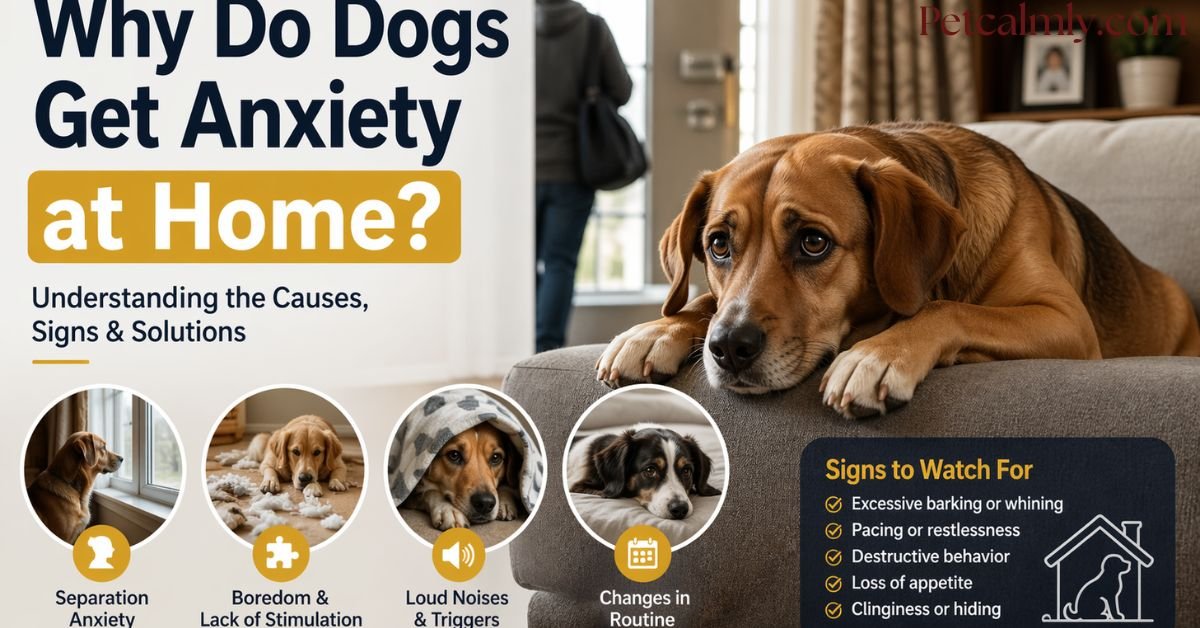
If your dog seems constantly on edge pacing, panting, unable to settle you’re not alone. Anxious dogs are incredibly common, and most owners feel that helpless mix of concern and frustration watching their pet struggle.
The good news? A calm environment is one of the most powerful tools you have, and it costs far less than you might think.
This isn’t about creating a sterile, boring space. It’s about understanding what makes your dog feel safe, then intentionally building that into your home and routine. Some dogs need minimal stimulation. Others thrive with quiet background activity. The key is reading your dog’s signals and adjusting accordingly.
Throughout this guide, you’ll learn exactly what environmental stressors affect dogs, practical modifications you can make today, and how to recognize when anxiety needs professional support. We’ll focus on realistic, sustainable changes—not quick fixes that fade after a week.
Why Dogs Become Stressed and Anxious
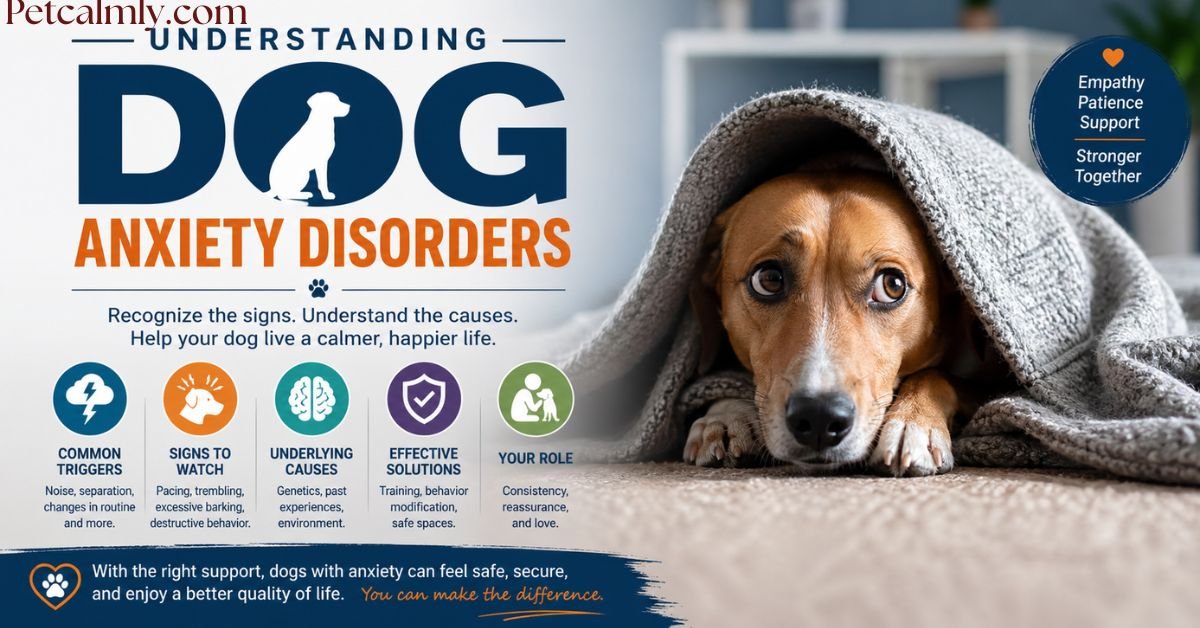
Before you can calm an anxious dog, it helps to understand why they’re anxious in the first place.
Dogs experience stress similarly to humans their nervous system activates when they perceive a threat, real or imagined. The difference is their threat detection system is calibrated differently. A dog might feel genuinely threatened by:
- Unpredictable noises (fireworks, thunderstorms, vacuum cleaners, loud traffic)
- Sudden changes in routine (a new schedule, moving homes, changes in the family)
- Too much sensory input (crowded spaces, multiple people, busy environments)
- Lack of predictability (never knowing what’s happening next)
- Insufficient exercise or mental stimulation (boredom creating anxiety)
- Past trauma or negative experiences (rescue dogs often carry this)
- Natural personality traits (some dogs are simply more sensitive)
- Insufficient safe space (nowhere to retreat when overwhelmed)
Understanding the cause of your dog’s stress matters because different stressors need different solutions. A dog stressed by loud noises needs acoustic management. A dog stressed by unpredictability needs routine. A dog stressed by confinement needs gradual desensitization.
The important thing: stress is cumulative. A dog might handle one stressor fine, but stack three or four together, and they tip into an anxious state. Creating a calm environment means removing or reducing the stressors you can control so your dog has emotional bandwidth to handle the ones you can’t.
Recognizing the Signs Your Dog Needs a Calmer Environment
Your dog can’t tell you they’re stressed, so you have to read the signs. Some are obvious. Others are subtle enough that owners miss them for months.
Physical stress signals:
- Excessive panting or heavy breathing (when they’re not hot)
- Lip licking or yawning repeatedly
- Shedding more than usual
- Trembling or shaking
- Digestive issues or loss of appetite
- Restlessness and inability to settle
Behavioral stress signals:
- Pacing in circles or repetitive patterns
- Destructive behavior (chewing furniture, digging)
- Excessive barking or whining
- Avoidance behaviors (hiding, refusing to go certain places)
- Attention-seeking or clinginess
- Aggression or snapping
- Over-grooming or self-soothing behaviors
Mental stress signals:
- Lack of interest in toys or play
- Difficulty focusing or training
- Hypervigilance (constantly alert)
- Avoidance of eye contact
The tricky part? Some anxious dogs aren’t hyperactive they’re the opposite. They shut down, become withdrawn, sleep excessively, or lose interest in activities they usually enjoy. If your dog seems “depressed” or unusually passive, stress might be the culprit.
If you notice a sudden change in behavior, talk to your vet first. Stress sometimes masks medical issues, so ruling out health problems is important.
How to Create a Calm Environment for Dogs: The Core Components
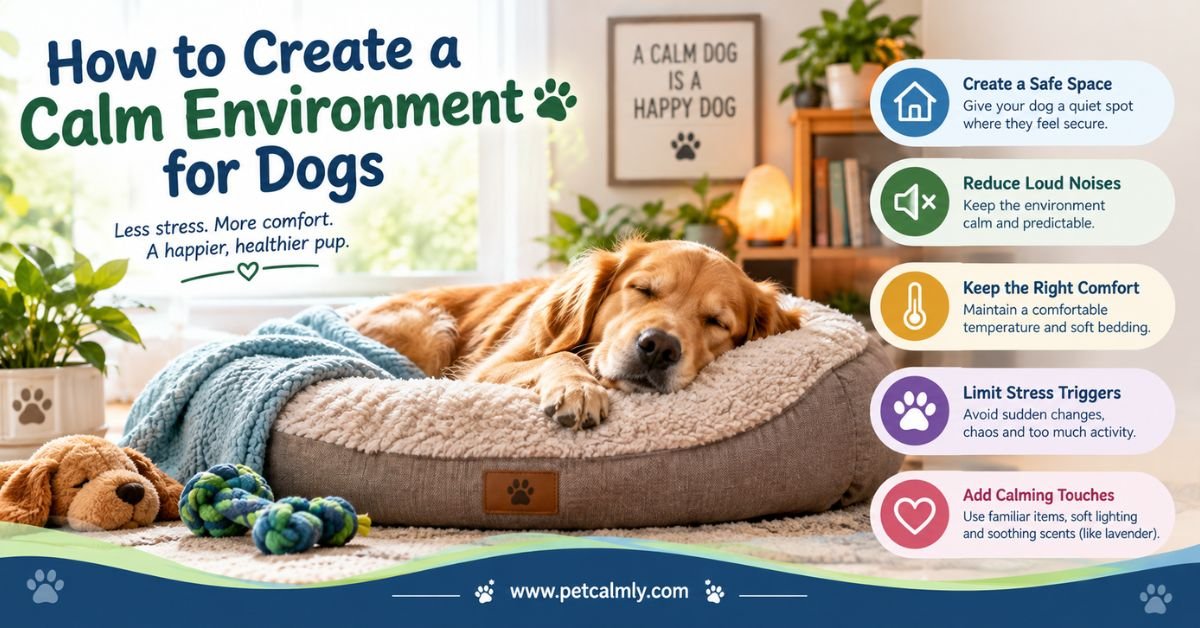
Creating a calm dog environment has five core components. Each one matters, and they work best together.
Component 1: Reduce Noise and Sensory Overload
Dogs hear at much higher frequencies than humans, which means a dog’s auditory world is much louder than ours. That TV volume that seems normal to you? Your dog might find it jarring.
What you can do:
- Use white noise or ambient sound. A white noise machine, fan, or even background music designed for dogs (try Through a Dog’s Ear or similar Spotify playlists) masks unpredictable household sounds. This works especially well during typical “trigger times” like evenings or early mornings.
- Minimize household noise. This doesn’t mean living in silence. It means being intentional about volume. Lower TV volume, soften your speech during tense moments, and warn your dog before using loud appliances.
- Acoustic management for problem sounds. If traffic, fireworks, or neighborhood dogs are chronic issues:
- Close windows and curtains
- Use weatherstripping around doors
- Consider a soundproofing panel or acoustic foam in your dog’s safe space
- Earplugs designed for dogs are a thing (and they actually work for some dogs)
- Create a low-stimulation zone. One room or corner where visitors, noise, and activity rarely happen. Your dog’s nervous system needs a break.
- Manage visual stimuli too. Closing blinds reduces the constant motion of outdoor activity. Some dogs fixate on moving shadows or passing dogs, and visual boundaries help.
Component 2: Establish a Safe Space or Sanctuary
Every dog needs a place that’s theirs somewhere they can retreat without judgment or interruption. This isn’t punishment. It’s refuge.
Creating the perfect safe space:
- Pick a quiet, low-traffic area. A bedroom corner, bathroom, laundry room, or closet works. The key is minimal foot traffic and distance from household activity.
- Keep it consistent. Use the same space every single day. Your dog’s brain needs predictability.
- Minimize visual access to triggers. A room without windows overlooking the street is ideal. If that’s not possible, cover windows or position the safe space away from them.
- Use comfortable bedding. Orthopedic beds, blankets, or even a den-style bed (like a cave bed or crate with the door open). Many anxious dogs feel safer in enclosed spaces—it’s why crate training works.
- Keep essential items nearby. Water bowl, favorite toys, chew toys. Your dog shouldn’t have to leave to meet basic needs.
- Make it reward-based, not forced. Toss treats in the space. Spend quiet time there with your dog. Never force them inside or use it as punishment. Over time, your dog will naturally retreat there when overwhelmed.
- Respect the boundary. When your dog is in their safe space, they’re off-limits. No grabbing them out, no children bothering them, no interruptions. This is sacred ground.
Component 3: Establish Rock-Solid Routine and Predictability
Anxiety thrives in uncertainty. The opposite calm thrives in predictability.
Dogs are creatures of habit. They don’t need novelty; they need to know what’s happening next. A consistent routine acts like an emotional anchor.
Building a calming routine:
- Standardize times. Feeding, walks, playtime, bedtime same times every day. Your dog’s internal clock becomes your clock. They know breakfast is at 7 AM, walk is at 8 AM, and bedtime is 9 PM.
- Sequence matters. After dinner, walk. After walk, play. After play, quiet time. The predictable flow reduces anxiety because your dog knows what comes next.
- Communicate transitions. Don’t just suddenly grab a leash or crate. Warn your dog. “We’re going for a walk in five minutes.” Use the same phrase every time. Dogs learn language patterns.
- Keep weekends and weekday routines similar. Wildly different weekends confuse dogs and often trigger anxiety.
- Maintain consistency even during travel. Boarding, vet visits, or new environments are less stressful when your basic routine continues. Feeding times, walk times, and sleep routines matter even when traveling.
- Be consistent with rules. If the couch is off-limits Monday, it’s off-limits Wednesday. Mixed signals increase stress.
Component 4: Sensory Calming Strategies
Beyond environmental management, certain sensory experiences actively calm dogs. Think of these as tools in your calm-environment toolkit.
Pheromone products:
- Dog-appeasing pheromones (like Adaptil diffusers or sprays) mimic natural calming chemicals mother dogs produce. Evidence supports their use for mild to moderate anxiety.
- They’re not a cure-all, but they reduce the nervous system’s response to stress.
- Use them consistently in your dog’s safe space or room.
Calming music and sound:
- Binaural beats and classical music designed for dogs have research backing showing they reduce stress behaviors.
- Keep it playing during stressful times (thunderstorms, fireworks, when you leave home).
- Aim for volume around 50-60 decibels calming, not distracting.
Weighted pressure:
- Anxiety wraps (like Thundershirt) apply gentle, constant pressure similar to swaddling. They work for some dogs, not all.
- Try before buying not every dog tolerates them.
- They’re especially helpful during predictable stressful events (storms, fireworks).
Scent and comfort items:
- Your worn t-shirt in their bed carries your scent, which is naturally calming.
- Some dogs benefit from items that smell like their littermates (if they came from a multi-dog home).
- Avoid artificial scents that might add to sensory overload.
Physical touch:
- For some anxious dogs, gentle petting, massage, or holding provides comfort.
- For others, it amplifies anxiety.
- Watch your dog’s signals. If they lean into you, it’s helping. If they pull away, respect that.
Component 5: Exercise and Mental Enrichment (The Right Way)
Here’s where many owners get confused: exercise doesn’t cure anxiety, and high-intensity activity sometimes worsens it.
A tired dog isn’t necessarily a calm dog. An overstimulated dog is an anxious dog.
The right approach:
- Moderate, consistent exercise. A 30-minute walk is better than a chaotic 10-minute play session. Steady state beats intense bursts.
- Low-key walks. Sniffing walks where your dog sets the pace are more calming than structured fetch or running. Sniffing is inherently meditative for dogs.
- Mental enrichment over intensity. Puzzle toys, sniff games, and training sessions tire the brain—often better than physical exercise for anxious dogs.
- Timing matters. Exercise right before stressful events can help. Exercise in the evening helps with sleep. Exercise in chaotic environments might add stress.
- Match activity to personality. A shy dog in a dog park is getting more anxious, not less. A herding dog might need outlet-appropriate play. Understand your dog’s personality, then match activities to it.
- Avoid overstimulation. Multiple dogs playing, loud voices, unpredictable interactions all can spike anxiety. Calm dogs have boundaries around who and what they interact with.
6 Common Mistakes That Backfire
Even with good intentions, some strategies accidentally worsen anxiety.
Mistake 1: Coddling anxiety
- When your dog is anxious, you probably want to comfort them. It feels natural.
- But excessive reassurance sometimes signals to your dog that the situation is dangerous (“Mom’s worried, so I should be too”).
- Better approach: Stay calm and neutral. Don’t make a big deal about stressful moments. Act like it’s normal.
Mistake 2: Forced exposure
- Pushing an anxious dog into scary situations doesn’t help. It creates trauma.
- Your dog doesn’t become brave by facing fear they become more fearful.
- Better approach: Gradual, controlled exposure paired with positive experiences. Baby steps.
Mistake 3: Inconsistent boundaries
- One day the dog sleeps on the couch, the next day they can’t. One day they get treats during storms, the next they don’t.
- Inconsistency signals unpredictability, which increases anxiety.
- Better approach: Consistency even when it’s inconvenient.
Mistake 4: Punishment or harsh corrections
- Yelling at an anxious dog for anxious behaviors teaches them to hide their anxiety, not fix it.
- It also damages trust.
- Better approach: Redirect calmly to desired behavior and reward.
Mistake 5: Assuming medication or supplements will replace environmental changes
- Some dogs do benefit from anxiety medication (prescribed by a vet). But without environmental changes, medication only masks the problem.
- Supplements like L-theanine or hemp-derived products help some dogs, but they’re one tool, not the whole solution.
- Better approach: Use environmental management as the foundation. Add medication or supplements if needed.
Mistake 6: Creating an overly restricted environment
- Some owners go too far, keeping their dog in near-darkness, silence, and isolation.
- Dogs do need some stimulation and social connection (even if minimal).
- Better approach: Find your dog’s personal sweet spot between stimulation and calm.
When Your Dog’s Environment Alone Isn’t Enough
Most dogs respond well to environmental changes within 2-4 weeks. But some don’t.
Signs you need professional help:
- Anxiety continues or worsens despite environmental improvements
- Your dog shows signs of panic disorder (extreme fear responses, destructive behavior)
- Anxiety is paired with aggression
- Your dog seems unable to function normally
- You suspect trauma or abuse history
What to do:
- Start with your veterinarian. Rule out medical causes (thyroid issues, ear infections, pain can all cause anxiety-like behavior).
- Ask about medication. SSRIs like fluoxetine, trazodone, or alprazolam prescribed by a vet can take the edge off anxiety so your dog can respond to environmental management and training.
- Find a certified animal behaviorist. Certified Professional Dog Trainers (CPDT) or veterinary behaviorists can create an individualized desensitization and counter-conditioning plan.
- Consider multiple approaches simultaneously. Environment + medication + professional training = best results for serious anxiety.
The Calm Environment Checklist: What to Implement Today
Ready to start? Use this checklist to prioritize:
This week:
- Designate a safe space and set it up with comfortable bedding
- Establish a consistent daily routine and post it somewhere visible
- Reduce TV volume and household noise levels
- Get a white noise machine or download a calming dog music playlist
- Identify your dog’s specific stressors (write them down)
This month:
- Close blinds or curtains in high-stimulation areas
- Trial acoustic improvements (weatherstripping, heavy curtains)
- Start pheromone diffuser or spray if appropriate for your dog
- Adjust exercise routines to be calmer and more consistent
- Begin training calm behavior (rewarding settling, quiet, stillness)
Ongoing:
- Monitor your dog’s stress signals weekly
- Maintain consistency with routine and boundaries
- Adjust strategies based on what works for your dog
- Schedule a vet check-up if anxiety persists
Frequently Asked Questions
1: How long does it take to see results when creating a calm environment for a dog?
Most dogs show visible improvement within 2-4 weeks of consistent environmental changes. Deeply anxious or traumatized dogs might take 8-12 weeks. The key is consistency if you slip back into old patterns, your dog’s progress resets. Small gains often feel insignificant, so track changes weekly by noting specific behaviors (Does your dog settle faster? Is panting less frequent? Do they retreat to their safe space to relax vs. pace?).
2: Can I over-stimulate a dog by giving them too much enrichment?
Absolutely. High-energy play sessions, multiple training sessions daily, or chaotic environments all overstimulate anxious dogs. The goal is optimal stimulation enough to keep their mind engaged, not enough to spike their nervous system. For anxious dogs, “less is more.” Shorter, calmer interactions beat marathon play sessions.
3: Should I leave my anxious dog crated when I’m not home?
It depends on your dog. Some anxious dogs feel safer in a crate (enclosed, predictable space). Others feel trapped (panic increases). If your dog already loves their crate, yes leave them in it. If they panic when crated, an open-door crate or safe room is better. Never force a crate as a “punishment” for anxiety.
4: Will natural supplements for dog anxiety actually help?
Some do, some don’t. L-theanine, hemp-derived CBD products, and herbal blends show promise in studies, but results are individual. They’re rarely enough on their own they’re a supporting tool, not a cure. Always check with your vet before adding supplements, especially if your dog’s on medication. And note: CBD products for pets aren’t FDA-regulated, so quality varies wildly.
5: Is an anxious dog’s calm environment different from a shy dog’s?
Not really. Both benefit from safe spaces, routine, low noise, and predictability. The difference is often in social needs. Shy dogs might not want interaction, so respect that. Anxious dogs sometimes crave reassurance but would benefit from you staying calm instead. The environmental skeleton is the same; the social management differs.
6: the difference between an anxious dog and a dog that’s just energetic?
Energetic dogs seek stimulation, engage with their environment, play, and recover quickly. Anxious dogs try to avoid triggers, seem “stuck” in worry mode, and struggle to recover from minor stressors. Energetic dogs might zoom around the house anxious dogs might pace in circles. Energetic dogs sleep deeply anxious dogs seem vigilant even while resting. If you’re unsure, your vet can help distinguish between normal energy and problematic anxiety.
More Information About Pets, Please Visit Our Website: Best Protein Food for Dogs
How to Stop Reverse Sneezing in Dogs
How to Help Dog Anxiety in Car
How to Stop Leash Pulling in Dogs
Fireworks Anxiety in Dogs
Why Dogs Lick You So Much
Best Dog Calming Treats
Best Calming Supplements for Dogs
Vet Recommended Calming Supplements for Dogs
Best Probiotics for Dogs with Yeast Infection
Conclusion
Creating a calm environment for your dog isn’t a one-time project. It’s an ongoing practice of reading your dog’s signals, adjusting when needed, and maintaining consistency even when life gets chaotic.
Some owners are surprised how much a calmer home helps them too. Less barking, fewer destructive episodes, and a more relaxed dog often means a more relaxed household.
The good news is that dogs are incredibly resilient. Even dogs that have lived with anxiety for years respond to patient, consistent environmental changes. The nervous system can heal. Anxious behaviors can decrease. Trust can be rebuilt.
You don’t need fancy products or expensive trainers to start. You need consistency, observation, and a willingness to adjust your environment around your dog’s needs. Everything else builds from there.
Your dog is counting on you to be the calm in their world. And based on the fact that you’re reading this, you already are.