Short direct answer
The best crested gecko tank setup ideas combine a vertical enclosure of at least 18x18x24 inches, a bioactive or reptile-safe substrate, a mix of live or artificial plants for climbing and hiding, and stable humidity between 50-80%. Crested geckos are arboreal, meaning they spend most of their time climbing rather than walking on the ground, so vertical space matters more than floor space. A well-designed tank gives your gecko places to hide, climb, hunt, and feel secure, which directly reduces stress and supports long-term health.
Why Tank Setup Matters More Than Most New Owners Realize
When people bring home their first crested gecko, they often focus on the animal itself and treat the enclosure as an afterthought. That’s understandable, but it’s also one of the most common early mistakes. Crested geckos are shy, nocturnal, and easily stressed by open, exposed spaces. A tank that doesn’t match their natural habits can lead to hiding behavior that looks like illness, poor appetite, or even tail loss from panic.
I’ve seen this pattern come up again and again in gecko owner communities: someone sets up a tank that looks good to human eyes but doesn’t actually work for a gecko’s instincts. The animal spends weeks glued to one corner, refusing to explore. Once the owner adds more vertical clutter, cover, and climbing routes, the gecko starts behaving normally within days. The tank setup isn’t just decoration. It’s the foundation of your gecko’s sense of safety.
Choosing the Right Enclosure Size and Shape
What Size Tank Does a Crested Gecko Need?
A single adult crested gecko needs a minimum enclosure size of 18x18x24 inches (WxDxH), though 20x20x24 inches or larger is increasingly recommended by experienced keepers as the standard for a happy, active adult. Juveniles can start in smaller enclosures, such as 12x12x18 inches, but they grow quickly and usually need an upgrade within their first year.
The height of the tank matters more than the width for this species. Crested geckos are arboreal climbers native to the forests of New Caledonia, so they naturally move upward through branches and foliage rather than across open ground. A wide, short tank wastes the vertical space these geckos actually use.
Glass Terrariums vs PVC Enclosures
Front-opening glass terrariums are the most common choice for crested geckos because they hold humidity well and make feeding, cleaning, and observation easy. PVC enclosures are lighter, retain heat and humidity efficiently, and tend to be more affordable at larger sizes, but they don’t allow the same side-viewing experience.
Mesh or screen-top enclosures are generally not recommended as a primary home for crested geckos, since they struggle to hold the humidity levels this species needs and can dry out a gecko’s skin, leading to incomplete sheds.
Best Substrate Options for a Crested Gecko Tank
Substrate affects humidity retention, cleanliness, and your gecko’s overall comfort, so this is one of the setup decisions worth taking seriously rather than grabbing whatever’s cheapest at the store.
Common substrate choices include:
- Coconut fiber (coco coir) – Holds humidity well, affordable, and widely available
- Bioactive soil mixes – Support live plants and a cleanup crew of isopods or springtails
- Paper towels or reptile carpet – Easiest to clean, ideal for quarantine or juvenile setups
- Sphagnum moss – Often used as a top layer to boost humidity in specific zones
Avoid loose sand, gravel, or small bark chips as a primary substrate, since crested geckos can accidentally ingest these while hunting insects, which may lead to digestive blockages. If you want a natural-looking floor, a bioactive substrate topped with moss and leaf litter gives you the aesthetic without the ingestion risk of loose particles.
Creating a Climbing-Friendly, Naturalistic Layout
Vertical Décor Ideas
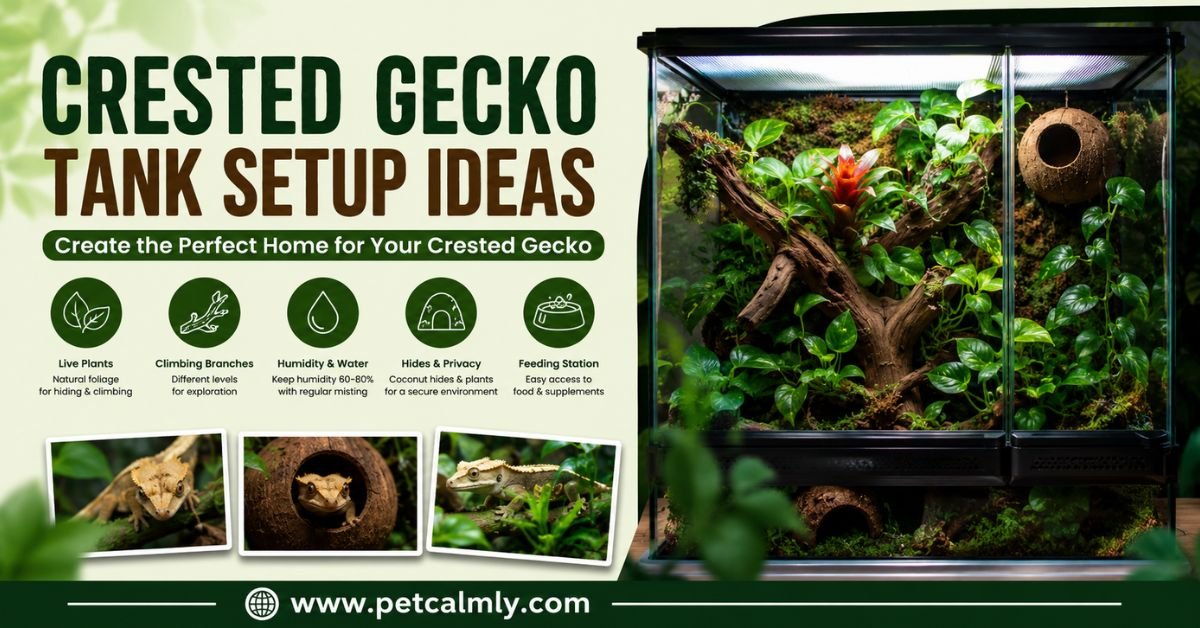
Since crested geckos spend most of their active hours climbing, your layout should prioritize vertical structure over floor decorations. Effective options include:
- Cork bark rounds and flats, angled diagonally across the tank
- Grapevine or Manzanita branches of varying thickness
- Silk or artificial plants like pothos, ficus, or bromeliads for cover
- Live plants such as pothos, snake plants, or bromeliads if you’re running a bioactive setup
- Bamboo poles for lightweight vertical routes
A useful rule of thumb: your gecko should be able to move from the floor to the highest point of the tank without ever touching down twice in the same spot. This mimics the layered canopy structure they’d navigate in the wild.
Hides and Privacy Zones
Crested geckos need multiple hiding spots at different heights, not just one hide near the substrate. A common oversight is placing a single hide low in the tank and assuming that’s enough. In reality, a gecko that only feels safe near the ground will avoid climbing altogether, which limits natural behavior and exercise.
Aim for at least two to three hides or dense foliage clusters positioned at different tank levels, including one closer to the top where the gecko can retreat during the day.
Choosing Safe Plants for a Crested Gecko Enclosure
Plants do more than make a tank look attractive. They create humidity pockets, offer climbing surfaces, and give your gecko a sense of cover it wouldn’t get from bare branches alone. If you’re leaning toward live plants, it’s worth choosing species that tolerate high humidity and low light, since most crested gecko enclosures aren’t set up with intense grow lighting.
Reptile-safe live plant options commonly used in crested gecko tanks include pothos, snake plant, bromeliads, ficus, and pilea. These are popular partly because they’re hardy enough to survive occasional gecko traffic and partly because they’re non-toxic if nibbled, which matters since geckos will sometimes investigate foliage while exploring.
If you’d rather avoid the extra maintenance live plants require, high-quality artificial plants can achieve a similar visual and functional effect. Look for silk or fabric-leaf plants rather than stiff plastic ones, since soft leaves are gentler on a gecko’s delicate toe pads and less likely to cause injury during climbing.
Whichever route you choose, avoid plants treated with pesticides or fertilizers unless they’re specifically labeled safe for terrariums, and always research a species before adding it if you’re unsure about toxicity.
Humidity, Lighting, and Temperature Setup
Humidity Ranges and Misting Schedules
Crested geckos generally do best with humidity fluctuating between 50-80%, with a daily spike into the higher range after misting and a gradual drop before the next misting cycle. This rise-and-fall pattern matters more than holding a single constant number, since it mimics natural rainfall and evaporation cycles.
Most keepers mist once or twice daily, adjusting based on their home’s ambient humidity and the enclosure’s ventilation. A digital hygrometer, not a guess, is the only reliable way to track this.
Do Crested Geckos Need UVB Lighting?
Crested geckos don’t strictly require UVB to survive, since they’re primarily nocturnal, but low-level UVB exposure (around 2-6% output) is increasingly recommended by reptile veterinarians and keepers because it may support natural vitamin D3 synthesis and healthier calcium metabolism. If you add UVB lighting, make sure your gecko has shaded retreats to move away from it when needed, since forced exposure without an escape option can cause stress.
Temperature Requirements
Crested geckos are sensitive to heat and do best in a range of roughly 72-78°F (22-26°C), with anything consistently above 82°F (28°C) becoming a real safety concern. Unlike many reptiles, they typically don’t need a dedicated basking bulb, and in warmer climates, room temperature alone may be sufficient. If your home runs cool, a low-wattage heat source on one side of the tank creates a gentle gradient without overheating the whole enclosure.
Juvenile Setup vs Adult Setup: What Changes
New owners often ask whether a baby crested gecko needs a different setup than an adult, and the honest answer is: somewhat, but less than you’d think. Juveniles benefit from a smaller enclosure at first, mainly because it’s easier for them to find food and feel secure without navigating a huge open space. A 12x12x18 inch tank with dense, low-growing foliage works well for the first several months.
The bigger difference is décor density. Baby crested geckos are more vulnerable to stress and benefit from tighter cover, meaning more overlapping leaves, tighter branch spacing, and hides positioned close together rather than spread out. As your gecko grows into its final size, usually around 12 to 18 months, you can gradually widen the layout and move it into the full adult enclosure.
One thing that doesn’t change between life stages is the need for secure footing. Juveniles have delicate toe pads, and slick or overly smooth décor can make climbing difficult while they’re still building strength and coordination.
Budget-Friendly vs Premium Tank Setup Ideas
Not every crested gecko owner wants or needs an elaborate bioactive display, and that’s completely fine. A simple, well-maintained setup can be just as healthy for your gecko as an expensive one, as long as the fundamentals are covered.
Budget-friendly setup ideas:
- Paper towel or reptile carpet substrate
- Artificial silk plants (look for reptile-safe, non-toxic options)
- Store-bought cork bark pieces or half-logs for hides
- A simple spray bottle for manual misting
Mid-range setup ideas:
- Coconut fiber substrate with a moss top layer
- A mix of live pothos in pots and artificial vines
- Multiple cork rounds arranged at different heights
- A basic digital hygrometer and thermometer combo
Premium bioactive setup ideas:
- A full bioactive substrate blend with a cleanup crew of isopods and springtails
- Rooted live plants such as bromeliads, pothos, and ficus
- Automated misting systems on a timer
- Natural branches, leaf litter, and drainage layers for long-term ecosystem balance
None of these tiers is inherently “better” for your gecko’s welfare. What matters most is that the humidity, climbing space, and hiding options are adequate, regardless of how much you spend achieving them.
Cleaning and Long-Term Maintenance
A tank setup isn’t a one-time project. How you maintain it day to day affects your gecko’s health just as much as the initial design.
For simple substrate setups like paper towel or reptile carpet, most owners do a full clean and substrate change roughly once a week, along with spot-cleaning waste as it appears. Bioactive setups work differently, since the cleanup crew handles most waste breakdown, meaning full substrate changes are rarely needed once the ecosystem is established, though you should still watch for mold, pest issues, or dying plants.
Glass or PVC walls benefit from a weekly wipe-down to remove mineral buildup from misting, especially around the areas your gecko frequently walks or perches. Décor items like cork bark and branches occasionally need a rinse under hot water to remove waste or shed skin.
A simple weekly maintenance checklist:
- Spot-clean visible waste every one to two days
- Check hygrometer and thermometer readings daily
- Wipe down glass to remove water spots and mineral residue
- Inspect plants (live or artificial) for mold, mildew, or damage
- Refill or clean the water and feeding dishes
Seasonal Adjustments to Your Tank Setup
Humidity and temperature needs don’t stay static throughout the year, especially if your home doesn’t have consistent climate control. During drier winter months, indoor heating can pull moisture out of the air quickly, meaning you may need to mist more often or add a small humidifier near the enclosure. In summer, especially in warmer climates, keep an eye on ambient room temperature, since crested geckos are sensitive to heat and can become stressed or lethargic if temperatures climb too high.
Many experienced keepers adjust their misting schedule seasonally rather than sticking to a fixed routine year-round. Watching your hygrometer trends over a few weeks will usually tell you more than any generic schedule could.
Feeding Setup Inside the Tank
Where and how you place food matters for a species that’s naturally cautious about open spaces. A shallow feeding ledge or dish mounted partway up the tank, rather than on the floor, tends to get used more consistently, since it lets your gecko eat without leaving the safety of elevated cover.
Most keepers offer a commercial crested gecko diet (CGD) as a powder mixed with water, supplemented occasionally with appropriately sized live insects like small crickets or dubia roaches. Placing the food dish near a favorite hide or climbing branch, rather than in an exposed corner, often improves how reliably a gecko feeds.
6 Common Crested Gecko Tank Setup Mistakes
Even well-meaning owners run into avoidable problems. Some of the most frequent mistakes include:
- Choosing a tank that’s too wide and too short – wastes climbing space this species actually uses
- Using loose substrate too early – increases impaction risk in young or inexperienced geckos
- Under-decorating the tank – leaves geckos feeling exposed and stressed
- Inconsistent misting – causes shedding problems and dehydration
- Placing the enclosure near direct sunlight or a heating vent – creates dangerous temperature spikes
- Skipping a hygrometer and thermometer – makes it impossible to know if conditions are actually safe
Most of these aren’t dramatic failures. They tend to show up slowly, as a gecko that stops eating well, hides constantly, or has trouble shedding. Catching the setup issue early usually resolves the behavior.
When Should You Worry About Your Gecko’s Environment?
General care adjustments are normal, but certain signs suggest the tank setup may be affecting your gecko’s health in ways that go beyond a quick fix. Contact an exotics veterinarian if you notice:
- Retained shed around the toes, tail tip, or eyes for more than a few days
- Sunken eyes or visibly dehydrated skin despite regular misting
- Persistent refusal to eat for more than one to two weeks in an adult
- Lethargy that doesn’t improve after adjusting temperature or humidity
- Visible mouth, tail, or limb injuries
These symptoms can have causes beyond the tank itself, so they’re worth a professional opinion rather than guesswork. A reptile-experienced veterinarian can rule out illness before you spend time troubleshooting equipment, and catching a problem early almost always leads to a simpler recovery than waiting to see if things improve on their own.
What Should Pet Owners Do Before Setting Up a Tank?
Before buying decorations, it helps to plan the layout on paper or research photos of natural crested gecko habitats. Owners who succeed with their first setup tend to:
- Choose the tank size for the adult gecko, not just the juvenile they’re bringing home
- Research plant and décor placement before purchasing, to avoid overcrowding or underusing vertical space
- Invest in a reliable hygrometer and thermometer from day one
- Start with easy-to-clean substrate if it’s their first reptile, then transition to bioactive later if desired
- Observe the gecko’s behavior in the first few weeks and adjust hide placement based on where it naturally retreats
Conclusion
A thoughtful crested gecko tank setup isn’t about following a rigid checklist. It’s about understanding that this species evolved to climb, hide, and move through layered vegetation, and building an enclosure that respects those instincts. Getting the size, substrate, humidity, and vertical décor right from the start makes daily care easier and gives your gecko the security it needs to display natural, healthy behavior. When in doubt, watching how your individual gecko uses its space is the best guide for fine-tuning the setup over time.
More Information About Pets, Please Visit Our Website: Top 5 Best Reptiles for Beginners
Pet Lizard Care Requirements
How Long Do Bearded Dragons Live?
What Is the Easiest Pet Reptile to Take Care Of?
Frequently Asked Questions
1: What is the minimum tank size for one crested gecko?
An adult crested gecko needs at least an 18x18x24 inch enclosure, though many keepers now recommend 20x20x24 inches or larger for more climbing room.
2: Can crested geckos live in a tank without live plants?
Yes. Artificial plants, cork bark, and branches can provide the same climbing structure and hiding cover as live plants, as long as there’s enough vertical density.
3: How often should I mist my crested gecko’s tank?
Most owners mist once or twice daily to create a humidity cycle between roughly 50-80%, though the exact frequency depends on your home’s ambient humidity and the enclosure’s ventilation.
4: Do crested geckos need a heat lamp?
Not usually. Crested geckos prefer temperatures around 72-78°F and can often be kept at stable room temperature, with supplemental heat only needed in consistently cool homes.
5: Why does my crested gecko hide all the time?
Constant hiding is often a sign the tank doesn’t offer enough elevated cover or feels too exposed. Adding more hides and climbing décor at different heights usually improves this within a few weeks.
6: Is bioactive substrate better than paper towel for crested geckos?
Bioactive substrate offers a more natural look and self-cleaning benefits through a cleanup crew, but paper towel is easier to monitor and often recommended for beginners or quarantine setups until they’re ready for a bioactive system.