Short direct answer
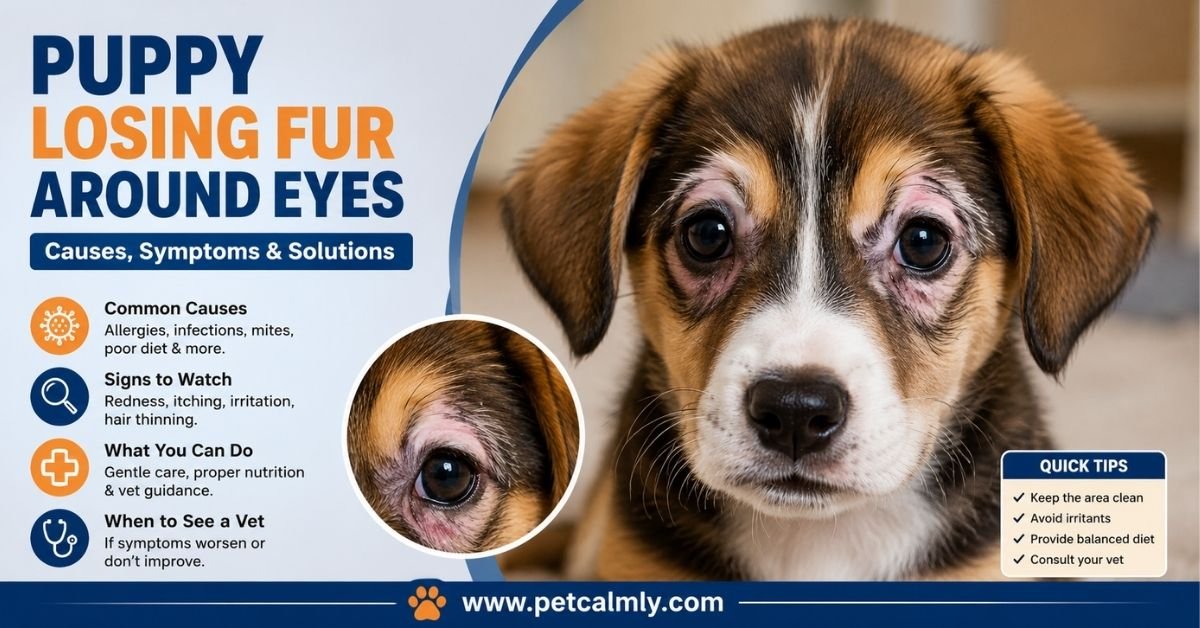
Puppy Losing Fur Around Eyes usually caused by one of a few common culprits: demodectic mange (a mite that many puppies carry in small numbers), a mild skin or food allergy, excessive rubbing or scratching from irritation, or a localized fungal infection like ringworm. In most cases, this is treatable and not an emergency but if the skin looks red, crusty, or the bald patch is spreading, a vet visit is the safest next step. Puppies under a year old are especially prone to demodex-related hair loss simply because their immune systems are still maturing.
Why This Happens More Than Owners Expect
If you’re staring at a small bald patch above your puppy’s eye right now, you’re not imagining things, and you’re definitely not alone. This is one of the most common reasons puppy owners end up searching late at night, phone in one hand, worried pup in the other.
The eye area is thin-skinned, close to the face where puppies rub and paw constantly, and it’s one of the first places subtle skin issues tend to show up. A puppy’s immune system is also still under construction during the first year, which means skin conditions that an adult dog’s body would suppress without issue can occasionally get a foothold in a young pup.
None of that means something is seriously wrong. It just means the eye area is an early warning sign, and it’s worth understanding what it’s actually telling you.
What Puppy Fur Loss Around the Eyes Usually Looks Like
Before jumping to causes, it helps to know what you’re actually looking at. Fur loss around a puppy’s eyes generally falls into one of these patterns:
- A single small round patch just above or below one eye, often with normal-looking skin underneath
- Symmetrical thinning around both eyes, sometimes described as “old man eyebrows” or a spectacled look
- Patchy, moth-eaten fur loss that spreads outward from the eye toward the muzzle or ears
- Fur loss paired with redness, scabbing, or a greasy texture to the skin
Each of these patterns points toward slightly different causes, which is why matching the visual pattern to the likely cause matters more than panicking over the bald spot itself.
5 Common Causes of Fur Loss Around a Puppy’s Eyes
1: Demodectic Mange (Demodex Mites)
This is, by far, the most common reason vets see puppies with fur loss around the eyes. Demodex mites live in the hair follicles of essentially every dog, passed from mother to puppy in the first few days of life. In healthy adult dogs, the immune system keeps mite populations in check without any visible symptoms.
Puppies are different. Their immune systems haven’t fully matured, so mite populations can occasionally spike, leading to localized hair loss very often starting around the eyes, muzzle, and front legs, since these are common contact points during nursing and play.
Localized demodex usually looks like one or two small, roughly circular bald patches with mildly pink but not dramatically inflamed skin underneath. According to the Merck Veterinary Manual, localized demodicosis in puppies often resolves on its own as the immune system matures, though a vet visit is still recommended to confirm the diagnosis and rule out secondary infection.
2: Allergic Reactions (Food or Environmental)
Allergies in puppies tend to show up as itchiness before they show up as bald patches. If your puppy has been pawing at their face, rubbing their cheek along the carpet, or squinting more than usual, the fur loss around the eyes may actually be self-inflicted from constant scratching rather than a direct skin condition.
Common allergy triggers in young dogs include:
- New protein sources in puppy food (chicken and beef are frequent culprits)
- Dust mites and pollen, especially in puppies introduced to the outdoors for the first time
- Flea saliva, even from a single bite, in flea-sensitive puppies
- New shampoos, bedding detergent, or household cleaning products
Allergic hair loss tends to be symmetrical on both sides of the face and often comes with watery eyes, sneezing, or paw-licking as additional clues.
3: Ringworm (a Fungal Infection, Not a Worm)
Despite the name, ringworm has nothing to do with worms it’s a fungal skin infection, and puppies are more susceptible than adult dogs because of their developing immune defenses. Ringworm patches are often circular with a slightly scaly or crusty ring around the edge, which is where the name comes from.
This one matters for a specific reason: ringworm is contagious to other pets and to people, particularly children and anyone with a weaker immune system. If the bald patch has a distinct ring shape or scaly border, it’s worth mentioning ringworm specifically when you call your vet.
4: Excessive Rubbing From Irritation
Sometimes the cause isn’t medical at all it’s mechanical. Puppies explore the world face-first, and a mild irritant like shampoo residue, a scratchy collar riding too high, or even dry winter air can cause enough itchiness that the puppy rubs their face against furniture, bedding, or your leg until the fur thins out.
This type of fur loss usually has a giveaway: the skin underneath looks completely normal, just thinner in coverage, without redness, scabs, or a rash pattern.
5: Localized Trauma or Play Injuries
Puppies play rough with littermates and other dogs, and small nicks or friction injuries around the eye area aren’t unusual. A scrape from a rough game of chase, a scratch from a cat encounter, or even repeated contact with a food bowl rim can cause a small localized bald spot that heals on its own within a couple of weeks.
How to Tell the Difference: A Quick Comparison
| Cause | Typical Appearance | Itchy? | Spreads Quickly? | Vet Visit Needed? |
|---|---|---|---|---|
| Demodectic mange (localized) | Small round patch, mild pinkness | Rarely | Slowly, if at all | Recommended to confirm |
| Allergies | Symmetrical thinning, watery eyes | Yes | Can worsen with exposure | If persistent beyond a week |
| Ringworm | Circular patch with scaly ring | Sometimes | Yes | Yes, promptly |
| Irritation/rubbing | Thinning fur, normal skin | Mild | No | Only if it doesn’t resolve |
| Minor trauma | Small, localized, isolated | No | No | Usually not, unless infected |
This table isn’t a diagnostic tool it’s a way to organize what you’re seeing so you can describe it clearly to your vet, which genuinely speeds up diagnosis.
What to Do at Home Right Now
If your puppy’s fur loss is small, not spreading, and the skin doesn’t look angry or broken, there are a few reasonable things you can do while you monitor the situation:
- Take a clear photo today, and another in 3–4 days. Comparing photos side by side is far more reliable than trying to remember how big the patch was last week.
- Stop any new products you’ve introduced recently new shampoo, new food, new bedding for about two weeks to see if the patch improves.
- Discourage face-rubbing where you can, gently redirecting your puppy rather than scolding, since stress can sometimes worsen skin irritation.
- Check for fleas, even if you don’t think your puppy has been exposed. A flea comb near the base of the tail is the easiest place to check.
- Avoid home remedies like tea tree oil, coconut oil rubs, or human anti-fungal creams near the eyes the eye area is sensitive, and some common home treatments are actually irritating or unsafe this close to the eyes.
Mistakes Puppy Owners Commonly Make
- Waiting too long because “it’s just a small patch.” Small patches are exactly the stage where treatment is easiest, especially with ringworm, which spreads while you wait.
- Assuming it’s always mange. Mange gets blamed for almost every case of puppy hair loss online, but allergies and irritation are just as common and require a completely different approach.
- Applying human skin products near the eyes. Products safe for human skin, including some anti-itch creams, can be harmful if they get into a puppy’s eyes.
- Bathing more frequently to “fix” the skin. Over-bathing often strips natural oils and makes irritation worse, not better.
- Not mentioning other symptoms to the vet. Sneezing, ear scratching, or a change in appetite might seem unrelated, but they can be the detail that points to the actual cause.
When Should You Worry? Signs That Need a Vet Visit
Most cases of fur loss around a puppy’s eyes are manageable, but certain signs mean it’s time to stop watching and start calling. Contact your vet if you notice:
- The bald patch is growing larger day by day rather than staying the same size
- The skin underneath is red, oozing, crusted, or has an odor
- Your puppy seems uncomfortable, is pawing frantically at their face, or avoids being touched near the eyes
- Fur loss is spreading to other parts of the body beyond the face
- There’s any swelling near the eye itself, or the eye looks irritated, cloudy, or watery beyond normal
- The patch has a distinct ring shape, which raises the possibility of ringworm
- Your puppy has other symptoms like lethargy, reduced appetite, or a fever
None of these symptoms automatically mean something severe, but they’re the kind of details a vet needs to hear about directly rather than through a home diagnosis. According to VCA Animal Hospitals, skin conditions that involve the face and eyes are generally worth a professional exam sooner rather than later, since misdiagnosing a fungal infection as mange (or vice versa) can delay the right treatment.
What Pet Owners Should Actually Do Next
Here’s a simple, realistic path forward rather than an overwhelming checklist:
Step 1 — Observe for 3 to 5 days, photographing the area daily, as long as your puppy seems otherwise comfortable and the skin isn’t broken or inflamed.
Step 2 — Rule out the obvious, checking for fleas, reviewing any recent product or food changes, and noting whether your puppy has been unusually itchy elsewhere.
Step 3 — Call your vet if anything from the warning list above applies, or if the patch simply hasn’t improved after five days of monitoring. A vet can do a quick skin scrape test, which is the only truly reliable way to confirm or rule out demodex mites and ringworm.
Step 4 — Follow through on treatment fully, even after symptoms appear to clear up. Mange and fungal treatments in particular often need to run their full course to prevent the issue from returning weeks later.
Prevention: Reducing the Odds of This Happening Again
While you can’t prevent every case of puppy skin irritation, a few habits lower the odds meaningfully:
- Introduce new foods gradually, over 7–10 days, rather than switching all at once
- Use a flea preventative recommended by your vet, even for puppies who stay mostly indoors
- Choose fragrance-free, puppy-specific shampoo, and avoid bathing more than once every 2–3 weeks unless your vet advises otherwise
- Keep bedding clean and washed regularly, since mites and fungal spores can linger in fabric
- Schedule routine wellness checks, since early-stage skin issues are often caught during a normal exam before they become visible to you at home
Real-Life Example: What This Often Looks Like
A first-time puppy owner might notice a dime-sized bald spot above their eight-week-old puppy’s left eye. There’s no redness, no scabbing, and the puppy doesn’t seem bothered by it. After two weeks of simply monitoring and photographing the patch, it neither grows nor disappears. At the next scheduled puppy vaccination visit, the vet performs a quick skin scrape and confirms mild localized demodex, which is treated with a topical prescribed by the vet and resolves within a month without further issues.
This is a genuinely common storyline mild, manageable, and rarely as alarming as it first looks, provided it’s tracked and addressed rather than ignored indefinitely.
Conclusion
A puppy losing fur around the eyes is unsettling to notice, especially when you can’t immediately tell whether it’s something minor or something serious. In the majority of cases, it comes down to demodectic mange, mild allergies, irritation from rubbing, or occasionally a fungal infection like ringworm all of which are manageable once properly identified. The real skill isn’t diagnosing it yourself; it’s knowing what to watch for, what to try at home, and when the situation has crossed the line into “this needs a vet.” Track it, stay calm, and lean on your vet’s expertise when the warning signs show up. Most puppies come through this stage with a full, healthy coat and no lasting issue at all.
More Information About Pets, Please Visit Our Website: Puppy Not Eating After Deworming
Puppy Sleeping After Vaccination
How to Stop Reverse Sneezing in Dogs
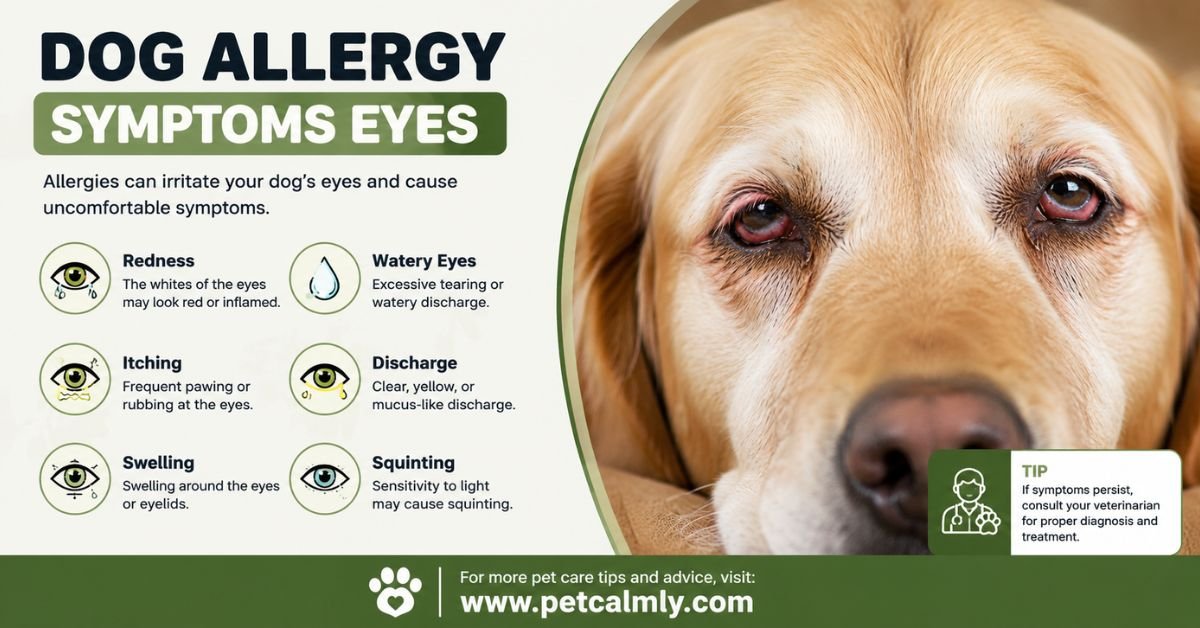
Dog Allergy Symptoms Eyes
Dog Constipation
Dog Vomiting Yellow Foam Treatment at Home
Dog Yeast Infection Treatment
How to Treat Dog Ear Infection Without Vet
Reverse Sneezing in Dogs
Early Signs of Heart Disease in Dogs
Frequently Asked Questions
1: Is it normal for puppies to lose a little fur around their eyes?
Some mild thinning can happen as a puppy’s coat transitions, but a distinct bald patch is not considered normal and is worth monitoring closely, even if it turns out to be minor.
2: Can puppy food cause fur loss around the eyes?
Yes, food allergies can cause itchiness and hair loss around the face, particularly with protein sources like chicken or beef. This usually resolves within weeks of switching to a different protein under veterinary guidance.
3: Will demodex mange go away on its own?
Localized demodex often does resolve as a puppy’s immune system matures, but a vet visit is still recommended to confirm the diagnosis, since generalized demodex requires active treatment.
4: Is fur loss around a puppy’s eyes contagious to other pets?
It depends on the cause. Ringworm is contagious to other animals and people, while demodex mites are generally not passed between healthy adult dogs, though they can transfer between a mother and her puppies.
5: How long does it take for fur to grow back after treatment?
Once the underlying cause is treated, fur typically starts regrowing within 3 to 6 weeks, though full regrowth can take a couple of months depending on the size of the patch.
6: Should I clean the bald patch with anything?
Avoid applying anything to the area, including home remedies, until you’ve spoken with a vet, since the eye area is sensitive and some products can cause additional irritation or harm if they contact the eyes.