Short direct answer
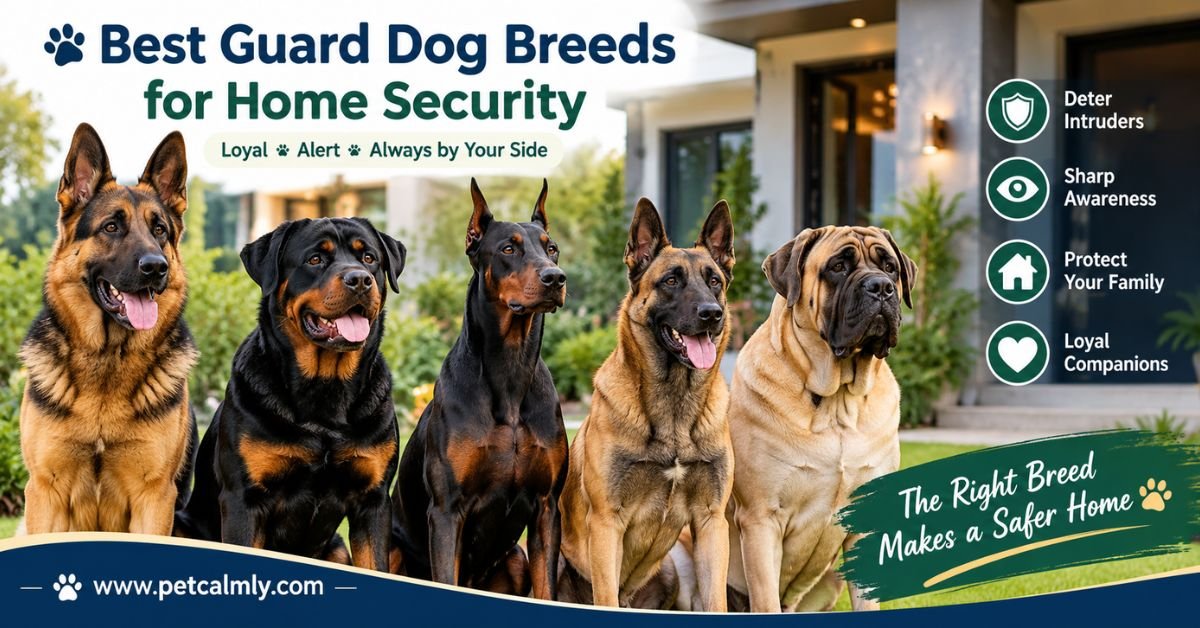
The best guard dog breeds for home security are the German Shepherd, Rottweiler, Doberman Pinscher, Giant Schnauzer, and Bullmastiff. Each combines loyalty, alertness, and a confident, protective nature. German Shepherds and Dobermans suit active families, while Bullmastiffs and Rottweilers suit homes that want a calm, imposing presence. Whichever breed you pick, training and socialization matter more than breed alone.
Why Choosing the Right Guard Dog Matters More Than You Think
Most people searching for a guard dog aren’t really shopping for a dog. They want to feel safe in their own home. Maybe there was a break-in on your street, or you live alone, or you have kids and want peace of mind at night. That feeling is valid, and a good dog can help.
However, a guard dog is also a living animal that will share your couch, meet your neighbors, and wait by the door when you come home. A dog that is wrong for your lifestyle can become a stressed pet and a liability. A dog that fits can be one of the best decisions you ever make.
So this guide goes beyond a simple ranking. You’ll learn what “guard dog” actually means, which breeds do it well, and which ones suit apartments, children, or first-time owners. You’ll also learn how to train a dog safely and when to ask a professional for help.
What Makes a Dog Good at Home Security?
Before comparing breeds, it helps to know what you’re really looking for. Many owners assume a guard dog should be aggressive. In practice, the opposite is true.
Alert Dog, Guard Dog, and Protection Dog: What’s the Difference?
These terms get mixed up constantly, and the difference matters.
- Alert dog (watchdog): Barks to tell you something is wrong. Most dogs can do this.
- Guard dog: Is naturally territorial and deters strangers with presence, posture, and a strong bark.
- Protection dog: Is professionally trained to respond on cue to a real threat, then stand down on command.
For most families, the sweet spot is a dog that alerts reliably and looks intimidating enough to make an intruder think twice. In many cases, that alone is what keeps a home safe.
Traits to Look for in a Home Security Dog
When experts talk about good guard dog temperament, a few traits come up again and again:
- Stable nerves: The dog stays calm around ordinary things like delivery drivers, thunder, or a dropped pan.
- Trainability: The dog learns quickly and wants to work with you.
- Loyalty and bonding: The dog is attached to its family and keeps an eye on its home.
- Territorial instinct: The dog notices when something is out of place.
- Size and presence: A deep bark and a solid build discourage trouble before it starts.
Notice that “aggression” isn’t on the list. Nervous or reactive dogs are unpredictable, and unpredictable dogs are a risk to everyone, including you.
Best Guard Dog Breeds for Home Security at a Glance
Here is a quick comparison before we go deeper. These are general breed tendencies, and individual dogs vary.
| Breed | Size | Energy Level | Good With Kids | Beginner Friendly |
|---|---|---|---|---|
| German Shepherd | Large | High | Yes, with training | Moderate |
| Rottweiler | Large | Moderate | Yes, with socialization | Moderate |
| Doberman Pinscher | Large | High | Yes, with training | Moderate |
| Giant Schnauzer | Large | High | Usually | Challenging |
| Bullmastiff | Giant | Low | Usually | Moderate |
| Boxer | Medium-large | High | Excellent | Good |
| Rhodesian Ridgeback | Large | Moderate-high | Usually | Challenging |
| Belgian Malinois | Medium-large | Very high | Varies | Not recommended |
The Best Guard Dog Breeds for Home Security, Reviewed
Each breed below has a different personality. Read the downsides as carefully as the strengths, because they are what decide whether a breed works in real life.
1: German Shepherd
The German Shepherd is probably the most recognized guard dog in the world, and for good reason. These dogs are intelligent, loyal, and eager to learn. They are widely used in police and service work because they are focused and trainable.
At home, a well-raised German Shepherd is watchful without being frantic. They tend to bond tightly with their family and notice small changes in their environment.
The tradeoff is energy and attention. Without daily exercise and mental work, a bored Shepherd may bark excessively or chew furniture. The breed is also prone to hip and elbow dysplasia, so ask breeders about health screening of the parents.
2: Rottweiler
Rottweilers have a reputation that is sometimes unfair. A properly socialized Rottweiler is typically calm, confident, and deeply devoted. Their muscular build and steady gaze often discourage strangers without any barking at all.
They were originally bred to herd livestock and guard property, so protectiveness is built in. That is exactly why early socialization is non-negotiable. A Rottweiler who never meets new people may become suspicious of everyone.
They are strong dogs, so leash manners need to be taught early. If you can commit to consistent, kind training, a Rottweiler can be a wonderful, steady guardian.
3: Doberman Pinscher
Dobermans are fast, sleek, and extremely alert. They were originally developed to accompany a tax collector, which tells you something about their protective roots. Today they are known for being affectionate “velcro dogs” who want to be near their people.
A Doberman will usually sound the alarm quickly and move with athletic confidence. They respond well to training because they are sensitive and smart.
Health is worth discussing with your veterinarian. The breed is known to be at risk for heart disease, specifically dilated cardiomyopathy, so regular check-ups matter. Dobermans also dislike being left alone for long stretches.
4: Giant Schnauzer
The Giant Schnauzer is the underrated name on this list. They are powerful, intelligent, and fiercely loyal to their families. Their bearded face and upright stance are impressive to strangers.
These dogs need a job. Daily exercise, training games, and structure keep them balanced. Without those, they can become pushy or destructive.
They also require regular grooming. Giant Schnauzers are best for owners who enjoy training and have some prior dog experience.
5: Bullmastiff
If you want a guard dog that is more “quiet presence” than “constant alarm,” the Bullmastiff may fit. Bullmastiffs were developed to guard estates, and they tend to be calm, observant, and patient at home.
They are not big barkers. Instead, they lean on a simple strategy: being very large and very present. Many owners describe them as gentle giants who save their seriousness for real concerns.
Keep in mind that giant breeds usually have shorter lifespans and higher food and vet costs. They also drool, snore, and need space. Heat can be hard on them, so plan for cool, shaded areas in summer.
6: Boxer
Boxers are often left off guard dog lists, which is a mistake. They are alert, athletic, and famously devoted to children. A Boxer will usually announce visitors and place itself between its family and the door.
Because they are playful and sociable, they are less likely to be intimidating than a Rottweiler. Even so, their muscular look and loud, sudden bark are enough to make many strangers pause.
Boxers are good for active families. They are sensitive to heat because of their short faces, so avoid strenuous exercise in hot weather.
7: Rhodesian Ridgeback
Rhodesian Ridgebacks were bred in southern Africa to track and hold large game. They are dignified, reserved with strangers, and fiercely loyal at home.
A Ridgeback rarely barks without a reason. When one does, owners tend to pay attention. They need strong leadership, plenty of exercise, and early socialization.
They are independent thinkers. That can make training harder for beginners, but experienced owners often love their steady character.
8: Belgian Malinois: Impressive, but Not for Most Homes
The Belgian Malinois is widely used in military and police work. They are incredibly driven, fast, and focused. On paper, that sounds perfect.
In reality, a Malinois is one of the most demanding breeds you can own. Without hours of structured activity, they can become anxious and destructive. Many rescues see Malinois surrendered by owners who underestimated them.
Unless you have experience with high-drive working dogs and a lot of time, this breed is usually a poor fit for a typical home.
Best Guard Dog Breeds for Home Security in Apartments and Small Spaces
You don’t need a giant dog to get a good alarm system. In an apartment, a smaller dog with a big voice may serve you better than a large one. Thin walls, shared hallways, and neighbors also make constant barking a problem.
Some breeds that work well as alert dogs in smaller homes include:
- Miniature Schnauzer: Sturdy, fearless, and quick to alert.
- Yorkshire Terrier: Tiny, but vocal and very aware of strange sounds.
- Chihuahua: Intensely loyal and quick to bark at anything unfamiliar.
- Jack Russell Terrier: Energetic and very watchful, though it needs lots of activity.
These dogs won’t physically stop a determined intruder. Still, a loud, persistent bark is often enough to make someone leave. If you do want a large breed in an apartment, a calm one like the Bullmastiff, with daily walks, can work. Always check your lease for breed or weight restrictions first.
Best Guard Dog Breeds for Home Security When You Have Kids
This is where many parents feel torn. You want protection, but you also want a dog who is gentle with children. Fortunately, those two goals can go together.
Breeds that often do well include Boxers, Bullmastiffs, German Shepherds, and Rottweilers, all with proper socialization. Great Danes are another option. They are gentle, huge, and surprisingly sweet with children, though they require space and have a shorter lifespan.
Whatever the breed, a few rules protect everyone:
- Never leave a young child alone with any dog, no matter how friendly.
- Teach children not to hug, climb on, or disturb a dog that is eating or sleeping.
- Give the dog a quiet space where it can retreat.
- Supervise play with visiting children carefully, since the dog may see unfamiliar kids differently.
A calm family dog that happens to be protective is much safer than a dog selected only for how scary it looks.
Best Guard Dog Breeds for Home Security for First-Time Owners
If you’ve never owned a dog, picking a high-drive guard breed can be overwhelming. Strength is easy to find. Good judgment in a dog comes from the training you give it.
For first-time owners, these breeds are usually more forgiving:
- Boxer: Friendly, trainable, and forgiving of mistakes.
- Standard Schnauzer or Miniature Schnauzer: Alert and smart without being overwhelming.
- Bullmastiff: Calm and low-energy, though large.
- Labrador-type mixes: Not intimidating, but many are excellent alert dogs.
Breeds like the Malinois, Akita, or Caucasian Shepherd can be more than a beginner can manage. Akitas, for example, are independent and can be selective about other dogs. If you love one of these breeds, working with a professional trainer from day one is the safest path.
How to Choose the Right Guard Dog for Your Home
Picking a breed is only half the decision. These questions will help you narrow it down honestly.
A Quick Checklist Before You Decide
Ask yourself:
- How much time do I have each day? Most guard breeds need at least an hour of exercise and training.
- Who lives here? Consider children, elderly family members, and other pets.
- What is my space like? Fenced yards, apartments, and rural land call for different dogs.
- Can I afford it? Large breeds cost more for food, medication, boarding, and veterinary care.
- Do I have experience? Be honest. Underestimating a breed is the most common mistake.
- How do my neighbors feel? A barking dog can strain relationships quickly.
Puppy, Rescue, or Trained Adult?
Each path has benefits. A puppy lets you shape behavior from the start, but it requires patience and months of socialization. A rescue can be a wonderful companion, and shelter staff can often tell you how the dog behaves with people. An adult with professional training offers predictability, though it costs more.
If you buy from a breeder, look for one who health-tests parents, lets you meet the mother, and raises puppies in a home environment. Avoid anyone who advertises “attack-trained” puppies. A trustworthy breeder cares about temperament first.
How to Train a Guard Dog Safely and Responsibly
Training is what turns a good breed into a good guard dog. It’s also where most owners need the most guidance.
1: Start With Socialization
Socialization is the most important step. Between roughly 3 and 14 weeks of age, puppies are especially open to new experiences. Expose your puppy gently to different people, sounds, surfaces, and places, and keep each experience positive.
A dog who understands that most people and things are safe can then recognize the few that aren’t. Fearful dogs often react to everything, which makes them poor protectors.
2: Teach Solid Obedience First
Basic commands are your safety net. Aim for dependable sit, down, stay, come, and “leave it.” A guard dog that doesn’t respond to you is a problem, not a protector.
Use reward-based training, such as treats, praise, and play. Harsh punishment can create fear and unpredictable reactions.
3: Build a “Quiet” Cue
Many owners teach their dog to bark but forget to teach them to stop. Try this:
- Let your dog bark once or twice at a sound.
- Say “Thank you” calmly and show a treat.
- When the dog pauses, say “Quiet” and reward.
- Gradually increase the length of the quiet moments.
This keeps barking useful instead of exhausting.
4: Skip DIY Bite Training
Many people search for ways to teach a dog to attack. Please don’t try this at home. Bite work is a specialized skill that needs a qualified professional. Done wrong, it can create a dog that bites without judgment, which puts family members, visitors, and neighbors at risk.
If you want a true protection dog, work with a reputable trainer who emphasizes control, impulse management, and an “off switch.”
6 Common Mistakes People Make With Guard Dogs
Even great dogs can go wrong when owners make these errors:
- Isolating the dog outside. A dog chained or kept alone all day often becomes frustrated, anxious, and reactive. Guard dogs do best when they live with the family.
- Encouraging aggression. Rewarding growling at guests makes behavior worse.
- Skipping socialization. A dog that fears strangers is dangerous, not protective.
- Relying on the dog alone. A dog is one layer of security. Locks, lighting, and alarms are still essential.
- Ignoring exercise. Under-exercised guard breeds develop behavior problems.
- Picking by looks. A tough appearance doesn’t guarantee a stable temperament.
Legal and Liability Considerations
This part isn’t glamorous, but it matters. In many places, owners can be held responsible if their dog injures someone, even on private property. Some regions restrict certain breeds, and some insurance providers charge more or decline coverage for specific breeds.
Before bringing a dog home, check local ordinances, your lease or HOA rules, and your homeowner’s or renter’s insurance policy. Post visible “dog on property” signs where appropriate. Because laws differ widely, consider speaking with an insurance agent or a local attorney if you’re unsure. This article isn’t legal advice.
The Real Cost and Lifestyle Commitment
A guard dog is a long-term commitment, often lasting 8 to 14 years depending on the breed. Larger breeds tend to have shorter lives, which is hard on families.
Plan ahead for food, routine veterinary care, vaccinations, parasite prevention, grooming, training classes, and emergency expenses. Pet insurance can help soften unexpected bills. Costs vary a lot by location and breed, so ask local veterinarians and breeders for realistic estimates before you commit.
Time is the bigger cost. These breeds want daily walks, play, and mental work. If you travel often or work very long hours, a guard breed may not be the right match.
When Should You Worry About Your Guard Dog’s Behavior?
Protective behavior should be controlled and predictable. Some changes, however, are worth taking seriously.
Consider contacting your veterinarian or a qualified behavior professional if you notice:
- Sudden aggression in a dog who was previously calm. Pain from arthritis, dental problems, or injury can cause a dog to snap, so a vet exam is a good first step.
- Growling, lunging, or snapping at family members, especially children.
- Constant barking or pacing that doesn’t settle even when the dog is calm.
- Fear-based reactions, such as cowering, tucked tail, or hiding, mixed with aggression.
- Changes in appetite, sleep, or energy alongside behavior shifts.
Deep-chested breeds like German Shepherds, Great Danes, and Dobermans can also develop bloat, also called gastric dilatation-volvulus. Signs include a swollen belly, unproductive retching, drooling, and restlessness. This is a life-threatening emergency. Go to a veterinarian immediately.
A certified behaviorist, such as a veterinary behaviorist or a certified applied animal behaviorist, can help when the issue is behavioral rather than medical.
What Should Pet Owners Do to Keep Both Family and Dog Safe?
Once your guard dog is home, a few daily habits make a big difference.
- Keep up with veterinary visits. Annual exams catch hidden problems, including those that affect temperament.
- Exercise before you leave. A tired dog is calmer and less likely to over-react.
- Manage greetings. Teach your dog to settle on a mat when guests arrive, and put the dog in another room if needed.
- Secure the property. Use a sturdy fence, a latched gate, and good lighting. Dogs shouldn’t be your only defense.
- Keep training going. Short daily sessions maintain good habits for life.
- Watch the body language. Stiff posture, hard stare, or a closed mouth can warn you that a dog is uncomfortable.
- Don’t punish growling. A growl is communication. Punishing it can teach a dog to skip the warning and go straight to biting.
Conclusion
The best guard dog breeds for home security are not simply the biggest or the toughest. They are the dogs whose personality, energy, and needs match your life. A well-trained German Shepherd, a calm Bullmastiff, or even a feisty Miniature Schnauzer can all help you feel safer, as long as they are socialized, healthy, and loved.
Take your time with this decision. Meet breeders or rescues, ask honest questions, and be realistic about your schedule and experience. A balanced dog who is part of your family will protect you far better than a dog who is simply feared.
If you ever feel unsure, reach out to a veterinarian or a qualified trainer. Getting help early is a sign of a responsible owner.
More Information About Pets, Please Visit Our Website: Golden Retriever Health Problems
How to Take Care of a Husky in Hot Weather
German Shepherd Behavior Problems
Why Does My Dog Pace at Night?
How to Create a Calm Environment for Dogs
Dog Shaking Head Constantly Meaning
How to Help an Overweight Dog Lose Weight
Why Is My Dog Scratching So Much?
Frequently Asked Questions
1: What is the number one guard dog breed for home security?
The German Shepherd is the most commonly recommended. It combines intelligence, loyalty, and trainability. That said, the “best” breed depends on your home. A Bullmastiff may suit a calm household better, while a Boxer may suit a family with young kids.
2: What is the best guard dog for a family with children?
Boxers, Bullmastiffs, Rottweilers, and German Shepherds are popular choices when properly socialized. Great Danes are another gentle option. No matter the breed, always supervise interactions between dogs and young children.
3: Can a small dog be a good guard dog?
Small dogs can be excellent alert dogs. Miniature Schnauzers, Chihuahuas, and Yorkshire Terriers bark readily at unfamiliar sounds, which helps warn you. They can’t physically stop an intruder, but a loud bark is often enough to discourage one.
4: Do guard dogs need special training?
Every guard dog needs socialization and basic obedience. True protection training is different and should only be done by a qualified professional. Teaching a dog to bite on your own can be unsafe.
5: Is a guard dog better than a home security system?
Neither is better on its own. A dog offers early warning and deterrence, while an alarm system offers monitoring, cameras, and emergency response. Together they make a stronger, layered approach to home security.
6: Are guard dogs safe to have around other pets?
Often yes, when introductions are slow and supervised. Some guard breeds have a strong prey drive or can be selective with other dogs. Early socialization and careful management go a long way. Ask a trainer for help if you have cats or small pets.