
Short direct answer
Does a dog miss its owner when rehomed? Yes, most dogs do. Dogs form real attachments to the people who feed, walk, and comfort them, so losing that person is a big change. A rehomed dog may seem quiet, clingy, restless, or less interested in food for the first days or weeks. Nobody can read a dog’s mind, but the behavior is clear enough to take seriously. The good news is that most dogs settle in and bond again with patience, steady routines, and a calm new home.
Why This Question Weighs So Heavily on People
If you’re asking this, you’re probably in one of two places. Maybe you’re about to rehome your dog, and the guilt is keeping you up at night. Or maybe you just brought home a rescue, and you can’t stop wondering who they’re pining for.
Both situations come from love. Both deserve an honest answer, not just a comforting one.
So here’s what this guide covers. It explains what dogs likely feel, how they remember people, and what missing someone looks like in daily life. It shows how long the adjustment usually takes and how to tell normal sadness from a problem that needs a vet. It also gives you a practical plan, whether you’re the one saying goodbye or the one opening the door to a new dog.
One note before we start. Every dog is different. A shy seven-year-old who spent his whole life with one person will handle a move very differently from a social two-year-old who has already lived in a few homes. Use this guide as a map, not a stopwatch.
Does a Dog Miss Its Owner When Rehomed? What Dogs Actually Feel
Dogs don’t sit around thinking, “I wonder how Sarah is doing.” But they do feel absence. The smells, voices, and routines that made up their whole world are suddenly gone, and that shows up as stress, searching, and something that looks a lot like longing.
How Dogs Bond With the People They Live With
Dogs are social animals, and they attach to their people. Researchers have tested this with a setup borrowed from child psychology. A dog is briefly separated from its owner and then reunited. In those studies, dogs tended to show more attachment behavior toward their owner than toward a stranger, and they often relaxed more when the owner was near (Topál et al., 1998). That pattern looks a lot like the bond between a young child and a caregiver.
Think about what you give your dog every day. Meals, walks, play, a warm spot to sleep, a familiar voice saying their name. Over months and years, you become the center of their safe world. Take that away overnight, and it makes sense that they feel unsettled.
How Dogs Remember Their Owners
Dogs recognize people through several senses at once. Smell is the big one. A dog’s nose is far more sensitive than ours, and a person’s scent works like a name tag. In a brain imaging study, researchers found that dogs showed activity in a reward-related brain area when they smelled familiar people (Berns et al., 2015).
Dogs also learn voices, faces, body language, and routines. Their memory of a person isn’t a photograph. It’s a bundle of feelings: how you smelled, how you sounded, and what usually happened when you walked in. That’s why a dog can perk up at the sound of one particular car.
What Nobody Can Say for Sure
Here’s the honest part. Science can measure behavior and stress, but it can’t tell us exactly what a dog thinks. We don’t know whether a dog feels longing the way you do. We also don’t know how long a specific dog holds onto the memory of a specific person.
What we can say is that dogs notice loss, show stress when routines break, and often look for familiar people. Taking that seriously, without over-reading it, is the sensible middle path. A dog doesn’t need to feel human sadness for its distress to matter.
Signs a Dog Is Missing Its Owner After Rehoming
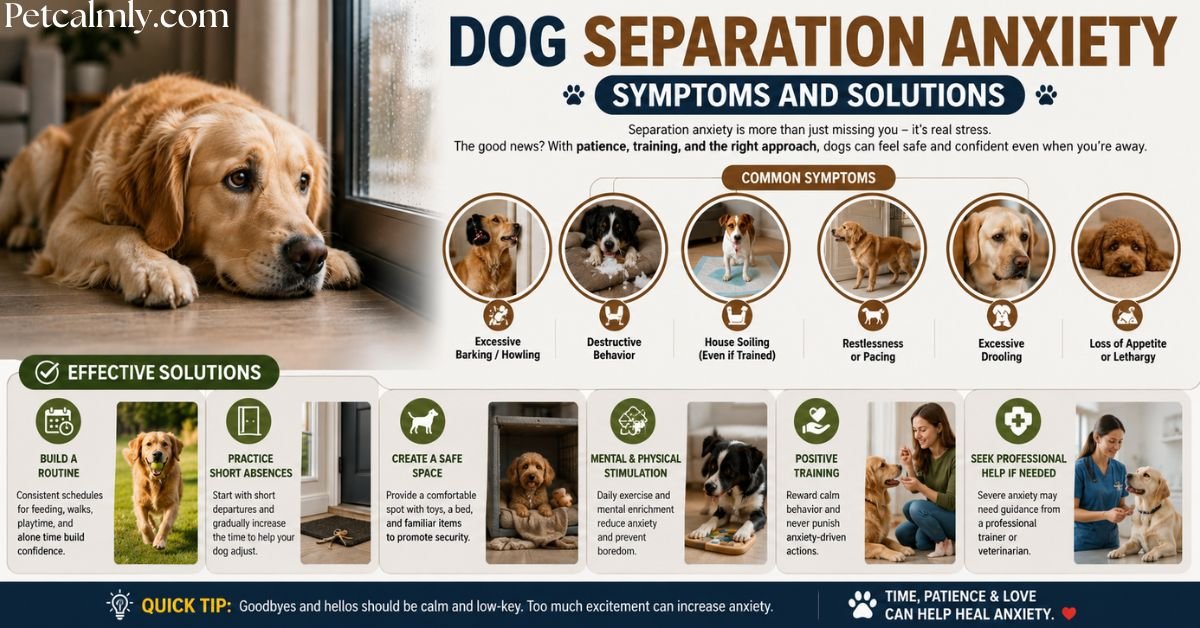
Missing someone doesn’t look the same in every dog. Some dogs go quiet. Others get loud. Most show a mix. Use the lists below to spot patterns, but keep in mind that many of these signs overlap with plain stress from a new environment.
Behavior Changes You Might See
- Waiting at the door or window, especially around the time the old owner usually came home
- Searching behavior, like checking rooms, sniffing the door, or trotting back to the same spot
- Whining, howling, or pacing, particularly when left alone
- Clinginess, such as following you from room to room
- Withdrawal, hiding, or avoiding eye contact and touch
- Chewing, digging, or accidents indoors, even in a house-trained dog
- Less interest in toys, play, or walks
Picture a three-year-old Labrador mix who spent every evening on the couch with one person. In the new home, he parks himself by the front door at 6 p.m. and refuses to move. That’s not stubbornness. That’s a dog whose body clock still expects someone to walk in.
Changes in Eating, Sleep, and Routine
Stress often shows up in the basics. A dog may eat less, gulp food, or skip a meal or two in the first days. Sleep can change too. Some dogs sleep far more than usual, while others pace at night or doze lightly near the door.
A small dip in appetite during the first few days isn’t unusual. A dog who keeps refusing food needs a vet check, and the worry section below explains when.
Quick Guide: What the Sign Might Mean
| Sign | Common reason | What can help |
|---|---|---|
| Waiting at the door | Expecting a familiar person to return | Calm distraction, steady routine, no scolding |
| Whining when alone | Unfamiliar space, separation distress | Short practice absences, a cozy safe spot |
| Skipping meals | Stress, new bowls or food | Keep the old food, feed in a quiet place |
| Accidents indoors | Stress, unclear house rules | Frequent trips outside, reward success, no punishment |
| Clinginess | Seeking security | Predictable days, calm presence |
| Hiding or avoiding | Fear, overwhelm | Give space, let the dog come to you |
| Destructive chewing | Anxiety or boredom | Chew toys, exercise, sniff walks |
Why a Rehomed Dog Acts the Way It Does
Understanding the reason behind a behavior makes it easier to stay patient. A rehomed dog is dealing with several changes at once, and each one adds weight.
Grief, Stress, and Separation Anxiety Are Not the Same Thing
People often lump these together, but they point to different needs.
- Stress is the broad reaction to change. Almost every rehomed dog has some.
- Grief-like behavior means lowered mood and searching after losing a bond. It usually eases gradually.
- Separation anxiety is real panic when left alone. It often involves destruction, nonstop vocalizing, drooling, or house soiling, and it can start before or after rehoming.
Why does the difference matter? Stress and grief usually improve with time and routine. Separation anxiety often needs a structured plan, sometimes with help from a trainer, behaviorist, or vet. The Merck Veterinary Manual describes it as a condition driven by distress when a dog is apart from the people it’s attached to.
Why Everything Smells Wrong to Your Dog
Imagine waking up in a house where the smells, sounds, light, floors, people, and schedule are all different. That’s a rehomed dog’s first night.
Dogs read the world through scent, so a home that smells unfamiliar can feel unsafe, even when it’s lovely. The food might change. Walk times shift. Even the way people talk and move is new. Dogs thrive on predictability, so losing it all at once is a big deal. That’s why a dog can look “sad” when the real driver is overload.
How Long Does a Dog Miss Its Owner After Being Rehomed?
There’s no exact number, and anyone who gives you one is guessing. Most dogs show the biggest adjustment signs in the first few days to weeks. After that, they slowly settle over a couple of months. Some take longer, especially older dogs, dogs with a very strong attachment, or dogs with a rough history.
A Realistic Timeline
| Stage | Rough timeframe | What you may see |
|---|---|---|
| First days | Days 1 to 3 | Shock, hiding, little appetite, restless or light sleep |
| Early weeks | Weeks 1 to 3 | Exploring, searching behavior, clinginess or distance, a routine starting to form |
| Settling in | Weeks 3 to 12 | Personality shows up, trust grows, more play |
| Feeling at home | About 3 months and beyond | Relaxed body language, secure bond with the new person |
Treat these as rough ranges, not rules. Your dog may skip ahead or take a detour.
The 3-3-3 Rule as a Loose Guide
Many rescue groups and trainers use the 3-3-3 idea: about three days to decompress, three weeks to learn the routine, and three months to feel at home. It’s a handy mental model, not a scientific law.
One thing worth knowing is the “honeymoon” effect. Some dogs act perfectly calm for the first week, then show stress or testing behavior once they feel safe enough to relax. If that happens, it’s not a step backward. It’s often a sign they’re finally settling.
Will a Dog Remember Its Old Owner After Rehoming?
Probably, at least for a while. Dogs recognize familiar people by scent, voice, and sight, and many greet a former owner with joy even after a long gap. There’s no firm rule for how long the memory lasts. It depends on the bond, the dog, and how much time has passed. Stories of dramatic reunions are common, but they’re stories, not proof of any exact timeline.
What Happens When Dogs See a Former Owner Again
Reunions can go many ways. Some dogs get wildly excited, wiggle, whine, and cling. Others are cautious at first and then warm up.
Big emotions at a reunion don’t mean the dog is unhappy in the new home. They mean the old bond was real. The harder moment is often when the visit ends. Some dogs get upset again when the person leaves, which can undo some of the progress they’ve made.
Should the Previous Owner Visit?
It depends. For the first few weeks, a clean break usually gives a dog room to settle. If the dog is doing well later on, a short, calm, supervised visit can be fine, as long as the new owner agrees.
Pause the visits if the dog is very upset afterward, or if the former owner is secretly hoping to take the dog back. If the dog came through a shelter or rescue, follow their advice. I’m not aware of research showing that visits are good or bad as a rule, so let the individual dog’s reaction guide you.
What Makes Rehoming Easier or Harder for a Dog
Two dogs can go through the same move and have very different experiences. A few factors usually explain why.
Age and Life History
Puppies and young dogs often adapt faster because their habits are still forming, though they’re not immune to stress. Senior dogs can struggle more, especially if they have joint pain, poor hearing, or vision loss, because they lean on familiar layouts and routines.
A dog who has been rehomed several times may be wary of attachment. Another might bond very fast because they crave stability. A dog’s history shapes what they expect from people.
Strength of the Bond
A dog who spent years as one person’s shadow usually has more to adjust to than a dog who shared time among many caregivers. Dogs raised in busy households often take a new family in stride.
Dogs who already showed signs of separation anxiety may find the change harder. If that sounds like your dog, plan for extra support from the start.
Temperament and the New Environment
Confident dogs tend to bounce back sooner. Shy or sensitive dogs need slower introductions and more space.
The new home matters just as much. A calm, predictable household with steady routines helps. Loud, chaotic homes, constant visitors, or other pets introduced too fast make settling harder. Dogs adapt best when the move feels safe, not just different.
Common Mistakes That Make Settling In Harder
Most mistakes come from good intentions. People want the dog to feel loved, so they do more, not less. Here are the ones that cause trouble most often.
Doing Too Much, Too Soon
- Welcome parties. Everyone wants to meet the new dog. Wait a week or two.
- Big outings on day one. Dog parks, pet stores, and long car rides can overwhelm a dog who’s already stressed.
- Rushed pet introductions. Use baby gates, scent swapping, and short supervised meetings.
- Expecting instant affection. Cuddling a nervous dog who wants distance can backfire.
Picture a new adopter who brings a nervous beagle to a family barbecue on day two. The dog hides under a table and snaps when a child reaches for him. The family decides he’s aggressive. In reality, he was overloaded. A quiet first week would have gone very differently.
Getting the Small Things Wrong
- Scolding accidents. A stressed dog who has an accident needs a calm reset. Punishment adds fear and teaches nothing.
- Changing everything at once. New food, new bed, new schedule, and new rules on the same day is too much. Change what you must and keep the rest steady.
- Throwing away old items. A blanket, toy, or collar that smells like the old home can be comforting.
- Skipping the vet. A check-up in the first couple of weeks can catch pain or illness that looks like a behavior problem.
- Ignoring early warning signs. Small problems are easier to fix before they become habits.
How to Help a Rehomed Dog Settle In: A Step-by-Step Guide
You can’t erase the loss, but you can make the new home feel safe. The goal is simple: be calm, be predictable, and let the dog set the pace.
The First 48 Hours
- Set up a quiet space. Put a bed or crate in a low-traffic corner with water nearby. Let the dog choose where to rest.
- Go straight home. Skip errands and visits after pickup.
- Show the bathroom spot first. Take the dog out on a leash and reward calmly when they go.
- Offer familiar food. Ask what they ate before and keep it going for at least a week. If you switch, mix the foods slowly.
- Keep voices and movement gentle. No crowds, no hugging a dog who stiffens.
- Let them explore at their own pace. Don’t force interaction.
The First Few Weeks
- Build a predictable schedule. Feed, walk, play, and rest at roughly the same times each day.
- Use scent from the old home. A blanket, worn T-shirt, or favorite toy can ease the shift.
- Practice short absences. Leave for a minute, return calmly, and extend the time gradually.
- Give the brain a job. Sniff walks, food puzzles, and chew toys burn off stress.
- Start simple, reward-based training. Teach a name response and a basic sit with treats.
- Introduce people and pets slowly. One new face at a time works best.
- Book a vet visit. Get a baseline check and ask about any behavior concerns.
- Keep a short log. Note appetite, sleep, and mood. It shows progress and helps your vet.
One small tip: don’t force cuddles. Sit nearby, read a book, and let the dog come to you. It’s surprisingly effective.
When Should You Worry About a Rehomed Dog?
Some sadness and stress are normal. Certain signs are not. An article can’t diagnose a dog, so when you’re unsure, call your vet.
Signs That Need a Vet Visit
- Refusing food for more than a day or two (sooner for puppies, toy breeds, seniors, or dogs with health conditions)
- Refusing water
- Vomiting or diarrhea that keeps going, or contains blood
- Extreme tiredness, weakness, or collapse
- Straining to pee or crying while going
- Limping, yelping when touched, or a hunched posture
- Sudden aggression, which can be a sign of pain
Stress can upset a dog’s stomach, but only a vet can tell stress apart from illness, parasites, or something more serious.
Signs That Call for a Trainer or Behaviorist
- Panic when alone, such as nonstop barking, drooling, destruction, or escape attempts
- Growling, snapping, or biting
- Fear that isn’t improving after several weeks
- Self-injury, like chewing paws raw
- Hiding for days and refusing to come out
Look for a certified trainer who uses reward-based methods, or a veterinary behaviorist for serious cases. Your vet can refer you. Steer clear of anyone who promises to “dominate” or “fix” your dog with force.
What Should You Do If You Are Rehoming Your Dog?
If you’re the one letting go, you can make the move easier on your dog in ways that really matter.
Handing Over Your Dog Gently
- Write down the routine. Include feeding times, food brand, walk schedule, commands, likes, fears, and quirks.
- Pass on medical records. Share vaccine history, medications, and microchip details. Update the microchip registration.
- Send familiar items. A bed, blanket, favorite toy, or an unwashed T-shirt carries your scent.
- Arrange short meet-ups first. If you can, let the dog meet the new person a few times before the move.
- Keep the goodbye calm and brief. A long, tearful farewell can raise your dog’s stress.
- Choose the adopter carefully. Ask questions, meet them, and consider working with a rescue if you want extra support.
- Ask for updates. Respect the new owner’s boundaries about how often.
Dealing With Guilt
People rehome dogs for many reasons: allergies, housing, health problems, safety, family changes, or money. Choosing a better fit than you can offer isn’t failure. It’s often an act of care.
You can grieve and still know you did the responsible thing. It also helps to remember that most dogs adapt. If the guilt feels heavy, talk to someone you trust. Your feelings aren’t dramatic. They’re proof that you cared.
Conclusion
So, does a dog miss its owner when rehomed? In the way dogs experience things, yes. They notice who is gone, they feel the loss of familiar smells and routines, and they often show it through searching, clinginess, quiet, or a lost appetite.
But that’s only half the story. Dogs are also adaptable. With a calm space, a predictable routine, gentle patience, and vet support when needed, most rehomed dogs build new bonds and settle into their new lives. The early weeks can be rough, and that doesn’t mean the move was a mistake.
If you’re the adopter, give your dog time and don’t take their distance personally. If you’re the person who rehomed a dog, you can feel sad and still have made a caring choice. Either way, the most useful thing you can do is stay steady, watch for signs that need help, and let the bond grow at the dog’s pace.
More Information About Pets, Please Visit Our Website: How Many Times a Month Should I Bathe My Dog?
What Does a Dog Like to Eat?
How Many Puppies Does a Dog Give Birth To?
Can Dogs Have Peanut Butter Every Day?
Can I Feed My Dog Meat Everyday?
Why Is My Dog Throwing Up Undigested Food?
Best Guard Dog Breeds for Home Security
How to Create a Calm Environment for Dogs
How to Check Dog Health at Home
Frequently Asked Questions
1: Does a rehomed dog miss its owner forever?
Probably not in a constant, painful way. Most dogs show their strongest reaction in the first weeks, then settle as they build new bonds. A dog may still greet the old owner happily if they meet again. That shows memory, not ongoing distress.
2: How do I know if my rehomed dog is missing its owner?
Look for waiting at doors, whining, searching, a dip in appetite, and clinginess or withdrawal. These signs overlap with ordinary stress, so look at the whole picture. If they last or get worse, talk to your vet or a trainer.
3: Do dogs think they were abandoned when they are rehomed?
Nobody knows for sure. Dogs likely don’t understand rehoming the way people do. They notice absence and change. What matters most is that the new home feels stable and safe.
4: Will a rehomed dog forget its old owner?
Dogs recognize familiar scents and voices, and many remember people for a long time. There’s no fixed timeline, because it varies by dog and by bond. Forgetting isn’t something you need to plan around.
5: How long does it take a rehomed dog to bond with a new owner?
Some dogs bond within days. Others need months. Consistent care, calm routines, reward-based training, and respect for the dog’s space speed things up more than any trick does.
6: ConclusionWhat can I do to help my new rescue dog feel less sad?
Stick to a routine, offer a quiet bed, use scent items from the old home, give plenty of sniff walks, and reward calm behavior. If sadness comes with not eating, illness, or panic, call your vet.