Short direct answer
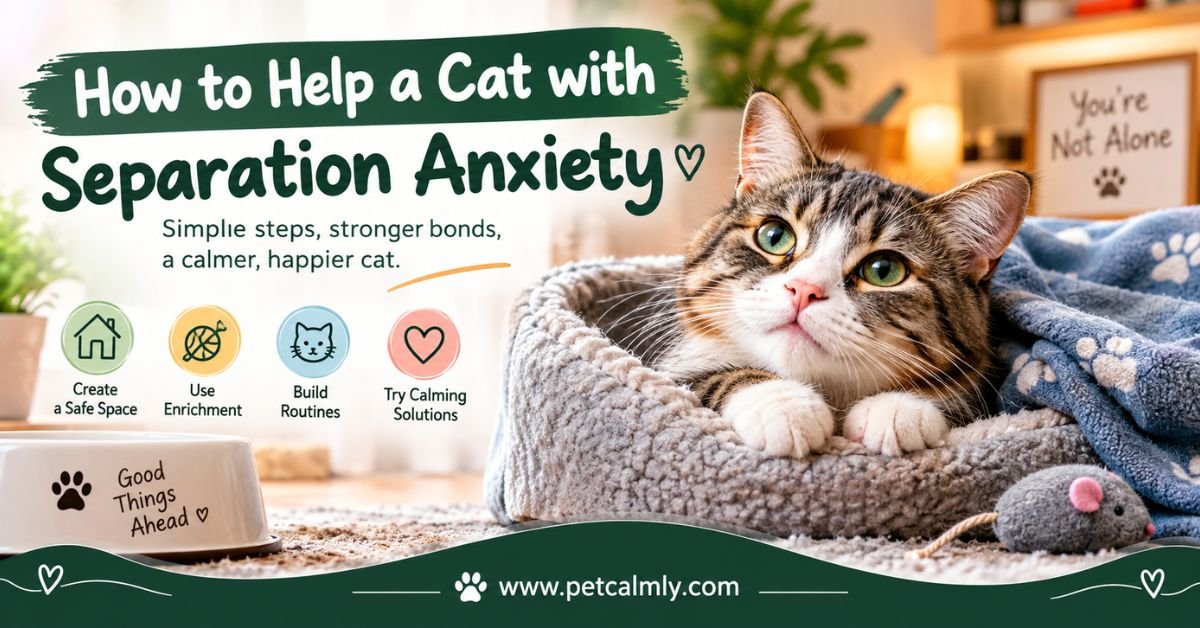
The best way to help a cat with separation anxiety is to make your departures boring, build up alone time in small steps, and give your cat safe, interesting things to do while you’re gone. Start with a vet visit to rule out pain or illness. Then add puzzle feeders, window perches, and cozy hiding spots, and practice short absences your cat can handle. Most cats improve with patience and consistency. Severe cases may need a vet or a certified behaviorist.
If you’ve come home to a shredded toilet roll, a puddle by the front door, or a cat who screamed at the window the second you left, you probably feel awful. Maybe you’ve even started to dread leaving the house. That reaction makes sense. But your cat isn’t being spiteful or “naughty.” They’re struggling, and you can help.
Cats have a reputation for being independent, and many are. Still, plenty of cats form deep bonds with their people, and a few fall apart when those people disappear. This guide explains why that happens and what to look for. You’ll also get a step-by-step plan and clear red flags that mean it’s time to call your vet.
What Is Separation Anxiety in Cats?
Cat separation anxiety is a stress response that shows up when a cat is left alone or separated from a person they’re closely bonded to. Behaviorists often use the term “separation-related distress,” and that name fits well. Your cat isn’t plotting revenge. They’re upset, and the behavior is a symptom of that upset.
It helps to know that research on cats is thinner than research on dogs. Dog separation anxiety has been studied for decades, while cats are still catching up. So you’ll find some disagreement among experts about how common it is and which treatments work best. What most agree on is the basic approach: rule out medical causes, reduce stress, and teach the cat that being alone is safe.
Cat separation anxiety is also different from plain boredom. A bored cat might knock things off a shelf at 3 a.m. An anxious cat’s behavior is tied to your absence. It often starts within minutes of you leaving, and it may ease once you’re back.
Signs of Separation Anxiety in Cats
No single sign proves anxiety, so look for a pattern. The key question is whether the behavior happens mainly when you’re gone, or when your cat senses you’re about to leave.
Behaviors You May Notice When You Leave
- Loud, repeated crying or yowling, especially near the door
- Peeing or pooping outside the litter box, often on your bed, clothes, or other things that smell like you
- Scratching or chewing at doors, window frames, or blinds
- Over-grooming, sometimes to the point of thin or bald patches
- Vomiting or loose stool that only seems to happen when you’ve been out
- Refusing to eat while you’re away, then eating very fast when you return
- Following you from room to room as you get ready to leave
- Pacing, hiding, or trying to slip out the door
Some owners only learn about the crying from a neighbor. A cheap pet camera can show what really happens in the first half hour after you leave. That information is gold, because it tells you how long your cat takes to settle.
Signs That Look Like Anxiety but May Be Something Else
Several health problems copy the signs above. That’s why the vet visit comes first.
- Urinary problems. Peeing outside the box is a classic sign of a urinary tract issue, not only stress.
- Thyroid or other hormone problems. These can cause extra vocalizing and restlessness, especially in older cats.
- Cognitive decline. Senior cats may cry at night or seem lost, which isn’t the same as separation anxiety.
- Pain. A cat in pain may hide, over-groom one spot, or avoid the litter box.
- Normal boredom or play. A young, under-stimulated cat can wreck a room with no anxiety involved.
If you aren’t sure which one you’re dealing with, treat it as a medical question first.
Why Do Some Cats Develop Separation Anxiety?
There’s rarely one cause. Usually several things stack up, and understanding them helps you choose the right fixes.
Early Life and Temperament
Some cats are simply more sensitive. Kittens that were orphaned, hand-reared, or separated from their mother very early may grow into clingier adults, though experts don’t fully agree on how strong that link is. Cats that were never exposed to normal household comings and goings can also be more easily rattled.
Big Changes in Routine
Cats love predictability. A sudden shift can tip a coping cat into distress. Common triggers include:
- You return to the office after months of working from home
- You move house
- A family member leaves for college or passes away
- A new baby, roommate, or pet arrives
- Your work shifts change
Many owners notice the problem starts after one of these changes. Spotting the trigger gives you a useful starting point.
Being the Only Pet, Indoors, With Not Much to Do
An indoor cat’s whole world is your home. If you’re the main source of play, food, and company, your absence leaves a big hole. A cat with no climbing space, no window view, and no puzzle to solve has little to do except wait for you.
Age and Health
Older cats may become more anxious as their senses dull or their memory changes. Cats with chronic health problems can also feel more vulnerable. So a new anxiety problem in a senior cat deserves a thorough check-up.
How to Help a Cat With Separation Anxiety Step by Step
Here’s the core plan. Work through it in order, and don’t rush. A slow plan that works beats a fast plan that makes your cat more upset.
Step 1: Start With a Vet Visit
Book a check-up before anything else. Tell your vet exactly what you’ve seen, when it happens, and how long it’s been going on. Videos help a lot. Your vet can rule out urinary, thyroid, pain, or age-related causes. They can also talk about whether anxiety medication might support your training plan.
Step 2: Make Leaving and Coming Home Low-Key
Big, emotional goodbyes can raise your cat’s stress right before you leave. The same goes for wild, excited reunions. Instead:
- Skip the long cuddle at the door. A calm, quiet “see you later” is enough.
- Leave without fuss.
- When you get home, say a soft hello and wait until your cat is relaxed before you give lots of attention.
This isn’t about being cold. You’re teaching your cat that coming and going is ordinary and nothing to panic about.
Step 3: Defuse Your Departure Cues
Cats are sharp observers. Picking up your keys, putting on shoes, and grabbing a bag can all become alarm bells. To weaken that link, practice these cues when you aren’t leaving.
- Pick up your keys, then sit down and watch TV.
- Put on your coat, then make a cup of tea.
- Carry your bag to the door, then put it back.
Do this several times a day for a week or two. Over time, the cues stop predicting a departure, and your cat’s reaction usually fades.
Step 4: Practice Short Absences and Build Slowly
This is the heart of the process, often called gradual desensitization. You’re teaching your cat to cope with being alone, one small step at a time.
- Start with an absence so short your cat stays calm. For some cats that’s 10 seconds. For others it’s a minute.
- Return before your cat gets upset.
- Slowly lengthen the time: 30 seconds, 2 minutes, 5 minutes, 10 minutes, and so on.
- If your cat shows distress, you’ve gone too far. Go back to the last duration that worked.
A camera or baby monitor helps you judge your timing. Progress is rarely a straight line, so expect good days and rough days. Real life will also interrupt your plan, because you can’t always stay home to practice. On those days, use the enrichment steps below to keep your cat comfortable.
Step 5: Give Your Cat Something Good to Do While You’re Gone
A busy cat has less room to panic. Offer a special activity only when you leave, so it becomes a signal that good things happen when you go.
- A puzzle feeder or treat ball filled with part of the daily meal
- A lick mat with a small amount of cat-safe food
- A fresh cardboard scratcher
- A safe window perch with a view of birds or street life
Pick up the special item when you get home. That keeps it exciting. If your cat is on a weight plan or special diet, use their normal portion rather than extra treats.
Step 6: Build Your Cat’s Confidence While You’re Home
Separation anxiety is often easier to ease when your cat feels secure all day, not just during practice sessions. Try these:
- Play for 10 to 15 minutes with a wand toy once or twice a day, ending with a small meal or treat
- Reward your cat for relaxing on their own bed or perch, even if you’re in the room
- Let your cat choose to come to you instead of always scooping them up
- Keep feeding, play, and bedtime at roughly the same times each day
The goal is a cat who knows their needs will be met, with or without you in the next room.
A Home Setup Checklist for an Anxious Cat
Your environment can either add to your cat’s stress or take some of it away. Use this checklist as a starting point.
- Hiding spots. Covered beds, boxes, or cat caves where your cat can retreat.
- Vertical space. Cat trees, wall shelves, or sturdy bookcases to climb and survey the room.
- A window perch. Many cats find a window view calming and entertaining.
- Enough litter boxes. The widely used rule is one per cat plus one extra, kept clean and in quiet spots.
- Your scent. An unwashed T-shirt or blanket in your cat’s bed can feel comforting.
- Background sound. Soft radio, TV, or calm music may help some cats. Others don’t care, so watch how yours reacts.
- Safe scratching spots. Several scratchers in different shapes and locations.
- Fresh water in more than one place. Some cats prefer drinking away from their food.
Here’s a quick comparison of what tends to help and what tends to backfire.
| Helps | Often backfires |
|---|---|
| Calm, quick goodbyes | Long, emotional farewells |
| Puzzle feeders given only when you leave | Leaving a huge pile of food out all day |
| Gradual alone-time practice | Suddenly leaving for many hours |
| Predictable daily routine | Constantly changing feeding and play times |
| Quiet, safe hiding spots | Forcing your cat out to “face” their fear |
6 Common Mistakes That Make Cat Separation Anxiety Worse
Most owners make these mistakes out of love. Knowing them can save you weeks of frustration.
Punishing accidents. Scolding a cat for peeing on your bed adds fear to the stress. Your cat won’t connect the scolding with something they did hours ago. Clean the spot with an enzymatic cleaner, and have your vet check for medical causes.
Doing everything at once. Changing food, adding a pet, and starting new training in the same week overloads your cat. Change one thing at a time.
Skipping the vet. It’s tempting to try training first. But if pain or illness is behind the behavior, no amount of training will fix it.
Expecting overnight results. Gradual progress is normal. Quick fixes rarely last with anxious cats.
Making alone time a sudden surprise. If your cat has had you home for months, jumping straight to a ten-hour day is a shock. Ease into it where you can.
Ignoring your own stress. Cats pick up on routine and mood. If you’re tense about leaving, your cat may notice. Taking a few slow breaths and keeping your exit routine steady helps both of you.
Real-Life Examples of Separation Anxiety in Cats
These two scenarios are composite examples, written to show common patterns. They aren’t individual case studies.
The work-from-home switch. Imagine a three-year-old cat who spent two years with her owner at home all day. When the owner returns to the office, the cat starts crying at the door and peeing on the owner’s laundry basket. The vet finds no medical problem. The owner starts by practicing short absences, adds a puzzle feeder before leaving, and puts a cozy bed near a bird-watching window. Over several weeks, the crying shortens, and accidents become rare. The key was the gradual build-up, because the original change had been so sudden.
The older cat who changed overnight. Imagine a 14-year-old cat who suddenly yowls whenever he’s left alone, and he’s also drinking more water. This one needs a vet before a training plan. Anxiety might be part of the picture, but age-related illness could be the main driver. Treating the health issue and then adding gentle routine support gives him the best chance.
Should You Get a Second Cat to Help With Separation Anxiety?
It’s a common question, and the honest answer is: sometimes, but not always. A second cat can be a good companion for some cats. Others see a newcomer as a stressful intruder, and that can make anxiety worse.
A few things to consider first:
- Is your cat social with other cats, or has she always been a loner?
- Can you introduce the new cat slowly over days or weeks, with separate rooms at first?
- Will your cat’s anxiety be about being alone, or about missing you specifically? A new cat doesn’t replace a favorite person.
If you’re thinking about it, talk to your vet or a feline behaviorist first. Don’t adopt a second cat purely as a quick fix for anxiety.
Calming Aids: Pheromones, Supplements, and Medication
Calming products can support a training plan, but they rarely solve the problem alone. Here’s what you’ll commonly hear about.
Synthetic pheromones. Diffusers and sprays mimic a cat’s natural comforting scent. Some owners and vets report a mild calming effect. The evidence is mixed, so think of them as a small helper rather than a cure.
Calming supplements. Some vets suggest products with ingredients like L-theanine or milk protein derivatives. Quality varies, and research is limited. Always check with your vet before starting a supplement, especially if your cat has health conditions or takes other medication.
Prescription medication. For moderate to severe anxiety, vets sometimes prescribe anti-anxiety drugs, such as fluoxetine or clomipramine, alongside behavior work. These are not a quick fix, and they require a proper exam and follow-up.
A strong warning. Never give your cat human medication or herbal products without veterinary advice. Some are toxic to cats, and what looks like a small dose can be dangerous.
When Should You Worry About Your Cat’s Anxiety?
Most mild separation anxiety improves with the steps above. But some signs call for prompt professional help.
Call your vet right away or seek emergency care if:
- Your cat strains in the litter box, cries while trying to pee, or produces little or no urine. This can be a life-threatening blockage, especially in male cats.
- Your cat stops eating for a day or more. Cats that don’t eat can develop serious liver problems.
- Your cat is vomiting repeatedly, seems weak, or breathes with effort.
Book a vet or behaviorist visit soon if:
- Your cat injures themselves, for example by scratching a door until their claws or paws bleed
- Over-grooming has caused bald patches or sore skin
- The anxiety isn’t improving after several weeks of steady effort
- The behavior is getting worse, or new signs keep appearing
- You’re not sure whether the cause is medical or behavioral
A veterinary behaviorist or a certified cat behavior consultant can tailor a plan to your home. It’s not a failure to ask for help. It often saves time.
What Should Pet Owners Do This Week?
Overwhelmed? Here’s a simple one-week starting plan. Adjust it to your cat’s pace.
| Day | Action |
|---|---|
| 1 | Book a vet check-up and write down when the behavior happens |
| 2 | Set up a camera and watch the first 30 minutes after you leave |
| 3 | Add a window perch and a hiding spot |
| 4 | Start practicing departure cues without leaving |
| 5 | Try your first very short absence (seconds to a minute) |
| 6 | Introduce a puzzle feeder you only use when you leave |
| 7 | Review what worked, then lengthen alone time slightly |
Keep notes. Small wins matter, like a shorter crying spell, a calmer greeting, or a cat who naps in the sun while you’re out.
Conclusion
Learning how to help a cat with separation anxiety takes patience, but it’s very doable. Start with your vet, make goodbyes calm, and build alone time in small steps. Then fill your cat’s world with places to climb, hide, and explore. Be gentle with yourself, too. Your cat’s distress is not a sign that you’re a bad owner. It’s a sign that your cat loves you and needs help feeling safe.
Progress may be slow, but it’s real. If things aren’t improving, bring in a professional. Many cats go on to relax and enjoy their alone time once they learn that you always come back.
More Information About Pets, Please Visit Our Website: Why Does My Cat Follow Me Everywhere?
Best Cat Breeds for Apartments
Siamese Cat Personality Problems
How to Introduce Cats to Each Other
Why Does My Cat Meow So Much?
Why Do Cats Knead?
What Helps Anxiety in Cats Naturally?
Frequently Asked Questions
1: Can cats really get separation anxiety?
Yes. Cats can form strong bonds and may show distress when left alone. Experts still study how common it is in cats, and signs can overlap with medical problems. That’s why a vet check is the first step.
2: How long can I leave my cat alone?
Many healthy adult cats manage a normal workday if they have food, water, clean litter, and things to do. Kittens, seniors, and cats with health needs need more frequent check-ins. For overnight trips, arrange for someone to visit and care for your cat each day.
3: Will my cat grow out of separation anxiety?
Not usually without help. Some cats settle as routines become familiar, but many need a gradual training plan and environmental changes. Early action tends to make things easier.
4: Why does my cat cry when I leave the house?
Crying is often a sign your cat is stressed by your absence. It can also come from boredom, hunger, or a medical issue. A camera helps you see when it starts and how long it lasts, which is useful information for your vet.
5: Does getting another cat help with separation anxiety?
It can help some cats, but it can also add stress. It depends on your cat’s personality and how well you introduce the newcomer. Talk with your vet or a behavior professional before deciding.
6: Is it okay to leave the TV or radio on for my cat?
For many cats, soft background sound is fine and may be comforting. It won’t fix anxiety by itself. Watch your cat’s reaction, and keep the volume low so it doesn’t add stress.