Short direct answer
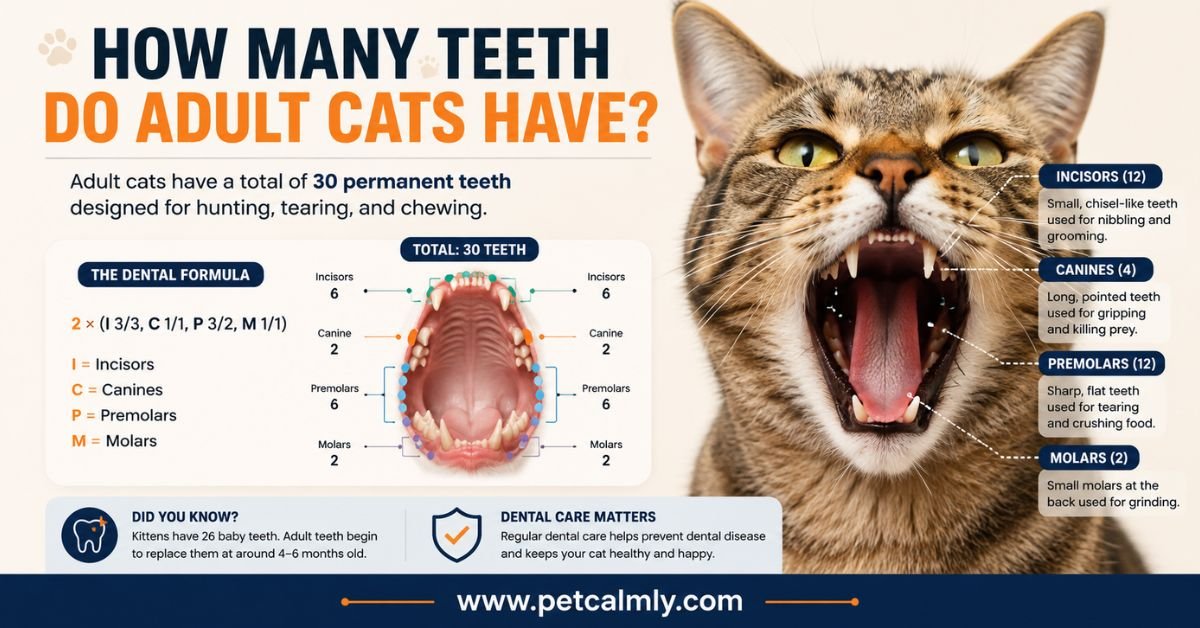
Adult cats have 30 permanent teeth. These include 12 incisors, 4 canines, 10 premolars, and 4 molars, all designed for gripping, tearing, and chewing meat. Most kittens develop their full set of adult teeth between 5 and 7 months of age, replacing the 26 baby teeth they had earlier. If your adult cat has fewer than 30 teeth, it may be due to injury, dental disease, or a previous veterinary extraction.
How Many Teeth Do Adult Cats Have? Everything Cat Owners Should Know
Many cat owners are surprised to learn that a healthy adult cat has exactly 30 permanent teeth. Unlike humans, cats don’t have flat grinding teeth because they’re built as natural carnivores. Every tooth has a specific purpose, from gently picking up toys to tearing through pieces of meat.
Knowing what’s normal helps you recognize problems before they become painful. Missing teeth, bad breath, swollen gums, excessive drooling, or difficulty eating can all point to dental disease that needs attention.
Whether you’ve recently adopted a playful kitten or you’re caring for an older feline companion, understanding your cat’s teeth is one of the easiest ways to support lifelong health. This guide explains how many teeth adult cats have, what each tooth does, when kittens lose their baby teeth, and how to keep your cat’s mouth healthy for years to come.
Table of Contents
- How Many Teeth Do Adult Cats Have?
- Understanding the Adult Cat Dental Formula
- Types of Adult Cat Teeth and Their Functions
- When Do Cats Get Their Adult Teeth?
- How Kitten Teeth Differ from Adult Teeth
- Why Adult Cats Have 30 Teeth
- Common Dental Problems
- Signs of Dental Disease
- How to Check Your Cat’s Teeth
- How to Keep Your Cat’s Teeth Healthy
- Common Mistakes Owners Make
- When Should You Worry?
- What Should Pet Owners Do?
- FAQs
- Conclusion
How Many Teeth Do Adult Cats Have?
The simple answer is 30 permanent teeth.
These teeth are specially adapted for hunting and eating animal protein rather than grinding plant material. Every healthy adult cat should have:
| Tooth Type | Number |
|---|---|
| Incisors | 12 |
| Canines | 4 |
| Premolars | 10 |
| Molars | 4 |
| Total | 30 |
Unlike people, cats don’t chew food for long periods. Instead, their teeth are built to:
- Catch prey securely
- Hold and carry objects
- Tear meat into bite-sized pieces
- Slice food efficiently
- Defend themselves when necessary
- Groom their fur
If your veterinarian tells you your cat has fewer than 30 teeth, don’t panic. Many adult cats live perfectly happy lives after losing one or more teeth because of injury or dental treatment. The important question isn’t simply how many teeth they have—it’s whether the remaining teeth and gums are healthy.
Quick Facts About Adult Cat Teeth
- Adult cats have 30 permanent teeth.
- Most kittens finish getting adult teeth by 6 to 7 months old.
- Baby kittens have only 26 deciduous (baby) teeth.
- Cats rarely develop cavities like humans.
- Gum disease is far more common than tooth decay.
- Dental disease is one of the most frequently diagnosed health problems in adult cats.
Understanding the Adult Cat Dental Formula
Veterinarians often describe teeth using a dental formula rather than simply giving the total number.
For adult cats, the dental formula is:
2 × (I 3/3, C 1/1, P 3/2, M 1/1) = 30 teeth
At first glance, this looks complicated, but it’s actually straightforward.
Here’s what each abbreviation means:
- I = Incisors
- C = Canines
- P = Premolars
- M = Molars
The numbers show how many teeth appear on one side of the upper and lower jaws.
For example:
- Upper jaw (one side):
- 3 incisors
- 1 canine
- 3 premolars
- 1 molar
- Lower jaw (one side):
- 3 incisors
- 1 canine
- 2 premolars
- 1 molar
Multiply that by both sides of the mouth, and the total comes to 30 permanent teeth.
Why the Dental Formula Matters
Understanding the dental formula helps veterinarians:
- Identify missing teeth
- Detect retained baby teeth
- Diagnose developmental abnormalities
- Plan dental procedures
- Monitor oral health over time
For cat owners, it’s simply useful to know that not every tooth is identical. Each one has a unique role in helping your cat eat, groom, and interact with the world.
Types of Adult Cat Teeth and Their Functions
A cat’s mouth contains four different types of teeth. Each serves a specific purpose that reflects millions of years of evolution as a skilled predator.
Incisors: The Small Front Teeth
Adult cats have 12 incisors, with six on the top jaw and six on the bottom.
These tiny teeth are often overlooked because they’re much smaller than the prominent canine teeth.
What Incisors Do
Incisors help cats:
- Groom loose fur
- Remove dirt and debris
- Pick up small pieces of food
- Hold delicate objects
- Scratch itchy areas while grooming
If you’ve ever watched your cat carefully nibble at its fur during grooming, you’ve seen the incisors hard at work.
Although they’re small, they’re surprisingly useful for everyday tasks.
Canines: The Long Fang-Like Teeth
Cats have 4 canine teeth—two on the upper jaw and two on the lower jaw.
These are the teeth most people notice first.
Why Canines Are So Important
The canine teeth allow cats to:
- Catch prey securely
- Hold onto moving objects
- Tear meat
- Carry kittens gently by the scruff
- Defend themselves if threatened
Healthy canines should look clean, smooth, and firmly attached to the gums.
Because they’re longer than other teeth, fractured canines can be painful and often require veterinary attention.
Premolars: The Cutting Teeth
Adult cats have 10 premolars.
These sharp-edged teeth sit behind the canines.
Unlike human premolars, they’re not designed for crushing vegetables or grinding grains.
Instead, they act like tiny scissors.
Premolar Functions
Premolars help cats:
- Slice meat
- Break food into smaller pieces
- Cut through tendons
- Process tougher foods
Many veterinarians describe these teeth as specialized cutting tools rather than chewing teeth.
Molars: The Final Teeth
Adult cats have 4 molars, located toward the back of the mouth.
Although people often associate molars with heavy chewing, feline molars are much sharper.
Their Main Jobs Include
- Cutting food
- Crushing softer tissues
- Assisting premolars during eating
Cats usually swallow fairly large pieces of food instead of grinding them extensively.
That’s one reason their molars remain pointed rather than flat.
How All 30 Teeth Work Together
Rather than functioning independently, your cat’s teeth operate as a coordinated system.
Imagine your cat eating a small piece of cooked chicken:
- The incisors grasp the food.
- The canines hold it firmly.
- The premolars slice it apart.
- The molars finish cutting it into manageable pieces.
- The tongue helps move the food toward the throat for swallowing.
This process happens quickly—often within seconds.
Unlike humans, cats rely less on prolonged chewing and more on efficient slicing and tearing.
Why Cats Don’t Need Flat Chewing Teeth
Many owners wonder why their cat’s teeth look so different from their own.
The answer lies in diet.
Cats are obligate carnivores, meaning they evolved to eat primarily animal tissue. Their ancestors survived by hunting small prey, not grazing on plants or chewing fibrous vegetation.
Because of this, cats developed:
- Long canine teeth for catching prey
- Sharp premolars for slicing meat
- Pointed molars for cutting
- Small incisors for grooming and delicate tasks
They never evolved broad, flat molars like humans, horses, or cows because they simply didn’t need them.
Even today’s house cats retain this same dental design, whether they eat kibble, canned food, or a veterinarian-approved fresh diet.
When Do Cats Get Their Adult Teeth?
Kittens aren’t born with teeth.
Like human babies, they go through two separate stages of dental development.
Birth to 2 Weeks
Newborn kittens are completely toothless.
During this period, they rely entirely on their mother’s milk.
2 to 4 Weeks
The first baby teeth begin to emerge.
These tiny teeth are often difficult to see unless you gently lift the kitten’s lips.
The earliest teeth to appear are usually the incisors.
3 to 6 Weeks
More baby teeth erupt, including:
- Canines
- Premolars
By around six weeks of age, most kittens have a full set of 26 baby teeth.
These teeth are smaller, thinner, and noticeably sharper than adult teeth.
3 to 4 Months
The baby teeth gradually loosen and begin falling out.
Many owners never find these tiny teeth because kittens often swallow them while eating or playing.
This is completely normal.
Some kittens may drool slightly or chew on toys more often during this stage due to mild gum discomfort.
5 to 7 Months
Permanent adult teeth replace the baby teeth.
By approximately six to seven months of age, most cats have all 30 adult teeth fully erupted.
At this point, the jaw has matured enough to support the larger, stronger permanent teeth that should last throughout adulthood with proper dental care.
What Is Normal During Teething?
Watching a kitten lose baby teeth can worry first-time owners, but most kittens pass through this stage with little trouble.
Normal signs include:
- Mild chewing on toys
- Temporary gum sensitivity
- Occasional tiny spots of blood on chew toys
- Slight increase in drooling
- Missing baby teeth that seem to disappear overnight
- Increased curiosity about chewing safe objects
As long as your kitten continues eating, playing, and behaving normally, these changes are usually part of healthy development.
However, persistent bleeding, severe swelling, refusal to eat, or a baby tooth that remains firmly in place beside an adult tooth should be evaluated by a veterinarian.
How Kitten Teeth Differ from Adult Teeth
If you’ve ever found a tiny tooth on the floor or noticed your kitten chewing everything in sight, you’ve probably witnessed the teething process firsthand. While baby teeth and adult teeth serve the same basic purpose, they’re quite different in size, strength, and function.
Understanding these differences helps you know what’s normal as your kitten grows and when a dental issue might need veterinary attention.
Baby Teeth vs. Adult Teeth at a Glance
| Feature | Baby Teeth | Adult Teeth |
|---|---|---|
| Total number | 26 | 30 |
| Also called | Deciduous or milk teeth | Permanent teeth |
| When they appear | 2–6 weeks old | 3–7 months old |
| Size | Smaller and thinner | Larger and stronger |
| Color | Bright white | Creamy white |
| Purpose | Nursing and early eating | Lifelong eating, grooming, and defense |
Although baby teeth are temporary, they’re still important. They help kittens begin eating solid food, develop normal jaw muscles, and guide permanent teeth into their proper positions.
Why Do Kittens Lose Their Teeth?
As a kitten grows, its jaw becomes larger. The small baby teeth can no longer meet the demands of an adult cat’s diet, so permanent teeth gradually push them out.
This process is completely natural.
Many owners never notice missing teeth because kittens often swallow them while eating or playing. Swallowing a baby tooth is generally harmless.
Signs Your Kitten Is Teething Normally
During teething, you may notice:
- Increased chewing on toys
- Mild gum redness
- Slight drooling
- Temporary bad breath
- Finding a tiny tooth around the house
- Brief sensitivity while eating harder food
These signs usually disappear once the permanent teeth finish erupting.
When Teething Isn’t Normal
Although complications are uncommon, contact your veterinarian if your kitten has:
- Severe bleeding from the mouth
- Swollen or infected gums
- A foul odor that doesn’t improve
- Difficulty eating for more than a day
- Adult teeth growing beside baby teeth (retained baby teeth)
- Persistent mouth pain
Early treatment can prevent long-term dental problems.
Why Do Adult Cats Have Exactly 30 Teeth?
Many pet owners wonder why adult cats have 30 teeth instead of the 32 teeth found in most adult humans.
The answer comes down to evolution.
Cats are obligate carnivores. Over thousands of years, their teeth evolved specifically for catching prey, tearing meat, and eating animal tissue. They never needed the broad grinding molars that humans use for chewing fruits, vegetables, and grains.
Instead, every tooth in a cat’s mouth has a specialized job.
Evolution Designed Cats for Meat
A cat’s teeth are optimized for:
- Gripping prey
- Delivering an effective bite
- Cutting muscle tissue
- Tearing meat into swallowable pieces
- Grooming thick fur
Because cats don’t chew food extensively, they simply don’t require extra grinding teeth.
Why Don’t Cats Chew Like Humans?
Unlike people, cats usually:
- Bite
- Slice
- Tear
- Swallow
They rarely grind food into a paste before swallowing.
Even when eating dry kibble, many cats crack pieces into smaller fragments instead of thoroughly chewing every bite.
This explains why their teeth remain sharp throughout life.
Can Adult Cats Have Fewer Than 30 Teeth?
Yes.
Not every healthy adult cat still has all 30 permanent teeth.
Some cats naturally lose teeth due to injury, while others have teeth removed during veterinary dental procedures because they’re causing pain or infection.
The important factor is not the number of teeth but whether the mouth is healthy and pain-free.
Common Reasons Cats Lose Teeth
Advanced Gum Disease
Periodontal disease is the leading reason adult cats lose teeth.
As bacteria build along the gumline, inflammation gradually destroys the tissues supporting each tooth.
Without treatment, affected teeth loosen and may eventually fall out or require extraction.
Tooth Resorption
Tooth resorption is one of the most common dental diseases seen in cats.
In this condition, the tooth slowly breaks down from the inside.
It can become extremely painful, even before obvious damage is visible.
Many affected cats require one or more tooth extractions.
Broken Teeth
Cats occasionally fracture teeth after:
- Falling from a height
- Chewing very hard objects
- Trauma from accidents
- Fighting with other animals
A broken tooth may expose the sensitive pulp inside, causing significant discomfort.
Veterinary Extractions
Sometimes removing a damaged tooth is the kindest option.
Although owners often worry about extractions, cats usually recover remarkably well.
Many begin eating more comfortably within days because the painful tooth has been removed.
Can Cats Live Normally Without Some Teeth?
Absolutely.
Cats are incredibly adaptable.
Even cats missing several teeth can:
- Eat comfortably
- Groom themselves
- Play normally
- Maintain a healthy weight
- Enjoy excellent quality of life
Some cats with extensive dental disease even seem happier after extractions because they’re no longer living with chronic mouth pain.
Your veterinarian may recommend softer food during recovery, but many cats eventually return to eating dry food without difficulty.
Common Dental Problems in Adult Cats
Dental disease is one of the most common health issues seen in adult cats, especially as they get older.
Recognizing problems early can prevent unnecessary pain and expensive treatments later.
1. Periodontal Disease
Periodontal disease affects the gums and tissues supporting the teeth.
It usually develops gradually.
Food particles mix with bacteria to form plaque.
If plaque isn’t removed, it hardens into tartar.
Over time, this irritates the gums and causes inflammation.
Early Signs
- Red gums
- Mild bad breath
- Yellow tartar
- Slight bleeding
Advanced Signs
- Loose teeth
- Gum recession
- Pain while eating
- Tooth loss
- Facial swelling
Many cats continue eating despite significant dental pain, making regular oral checks especially important.
2. Gingivitis
Gingivitis is inflammation of the gums.
Fortunately, it’s often reversible when treated early.
Common causes include:
- Plaque buildup
- Poor dental hygiene
- Certain viral infections
- Immune-related conditions
Healthy gums should appear pale pink.
Bright red or swollen gums usually indicate inflammation.
3. Tooth Resorption
One of the most painful feline dental diseases is tooth resorption.
The exact cause isn’t fully understood.
The tooth gradually dissolves, exposing sensitive nerves.
Many cats hide the pain surprisingly well.
Signs may include:
- Chattering while eating
- Dropping food
- Avoiding hard kibble
- Pawing at the mouth
- Increased drooling
Because lesions often occur below the gumline, dental X-rays are usually needed for diagnosis.
4. Broken or Fractured Teeth
Cats can crack teeth from:
- Trauma
- Falls
- Biting unusually hard objects
- Accidents
Not every fracture requires extraction, but any broken tooth should be examined promptly.
Untreated fractures can lead to painful infections inside the tooth.
5. Stomatitis
Stomatitis is a severe inflammatory condition affecting the tissues inside the mouth.
Affected cats often experience intense pain.
Symptoms may include:
- Refusing food
- Weight loss
- Thick drool
- Bleeding gums
- Bad breath
- Crying while eating
Treatment varies depending on severity and often requires close veterinary management.
Signs Your Cat May Have Dental Disease
Cats instinctively hide pain.
By the time obvious symptoms appear, dental disease may already be advanced.
That’s why subtle changes deserve attention.
Watch for These Warning Signs
Changes While Eating
Your cat may:
- Eat more slowly
- Drop food
- Chew on one side
- Avoid hard food
- Walk away from meals
- Swallow food whole
These behaviors can easily be mistaken for picky eating.
Bad Breath
Occasional food odor is normal.
Persistent foul-smelling breath usually isn’t.
Strong bad breath often indicates bacterial buildup or infection.
Excessive Drooling
Healthy cats usually don’t drool much.
Excess saliva can signal:
- Mouth pain
- Gum disease
- Broken teeth
- Oral ulcers
Blood-tinged drool should always be evaluated.
Pawing at the Mouth
Some cats repeatedly rub their face or paw at their mouth when something hurts.
Owners sometimes mistake this for grooming.
Swollen or Red Gums
Healthy gums should look:
- Pink
- Moist
- Smooth
Redness, swelling, or bleeding often signals inflammation.
Loose or Missing Teeth
Adult cats shouldn’t suddenly lose healthy teeth.
Any loose tooth should be examined by a veterinarian.
Changes in Behavior
Dental pain doesn’t always look like mouth pain.
Some cats become:
- Less playful
- Irritable
- Quiet
- Less interested in grooming
- More withdrawn
Because cats hide discomfort so well, these behavioral changes are often the earliest clue.
How to Check Your Cat’s Teeth Safely at Home
Regular home checks can help you spot problems before they become serious.
The goal isn’t a full dental examination it’s simply becoming familiar with what’s normal for your cat.
Step 1: Choose a Calm Time
Pick a quiet moment when your cat is relaxed.
Avoid checking immediately after energetic play.
Step 2: Lift the Lip Gently
Without forcing the mouth open, gently lift one side of the upper lip.
Look for:
- Pink gums
- Clean teeth
- Minimal tartar
- No swelling
- No broken teeth
Repeat on the opposite side.
Step 3: Look for Changes
Watch for:
- Yellow or brown tartar
- Red gums
- Bleeding
- Loose teeth
- Broken teeth
- Bad odor
- Mouth sores
If you notice any of these, schedule a veterinary dental examination.
Step 4: Never Force Your Cat
If your cat becomes stressed:
- Stop immediately.
- Try another day.
- Reward with praise or a favorite treat afterward.
A positive experience makes future checks much easier.
A Simple Monthly Dental Check Checklist
Once a month, spend just a minute looking for:
✅ Pink gums
✅ White teeth
✅ No broken teeth
✅ Fresh-smelling breath
✅ No swelling
✅ No excessive drooling
✅ Comfortable eating
These quick observations can help catch dental disease before it becomes painful or expensive to treat.
How to Keep Your Cat’s Teeth Healthy
Keeping your cat’s teeth healthy doesn’t have to be complicated. A few simple habits can dramatically reduce the risk of painful dental disease and help your cat keep a healthy mouth for years to come.
Just like people, cats benefit from consistent dental care rather than waiting until a problem develops.
Brush Your Cat’s Teeth Regularly
Brushing is the most effective way to remove plaque before it hardens into tartar.
While not every cat will happily accept a toothbrush on day one, many can learn with patience and positive reinforcement.
Tips for Successful Tooth Brushing
- Start when your cat is calm.
- Introduce the toothbrush gradually.
- Let your cat taste the toothpaste first.
- Brush gently along the gumline.
- Focus on the outer surfaces of the teeth.
- Keep sessions short—30 to 60 seconds is enough in the beginning.
- Reward your cat after every session.
Even brushing a few times each week is far better than never brushing at all.
Important: Never use human toothpaste. Many contain ingredients, such as fluoride or xylitol, that are unsafe for cats. Always choose a toothpaste made specifically for pets.
Choose Dental-Friendly Foods and Treats
Diet alone won’t prevent dental disease, but it can support good oral health.
Some veterinary dental diets are specially designed to reduce plaque buildup by encouraging the cat to chew more thoroughly.
Dental treats may also help when used alongside brushing not as a replacement for it.
Healthy Dental Habits Include
- Feeding a balanced, high-quality diet.
- Providing fresh drinking water every day.
- Using veterinarian-approved dental treats.
- Avoiding sugary human foods.
- Following your veterinarian’s feeding recommendations.
Remember, no food or treat can replace routine dental care.
Offer Safe Chew Toys
Cats naturally enjoy chewing, especially as kittens.
Providing safe chew toys gives them an appropriate outlet while reducing the temptation to chew unsafe household objects.
Good options include:
- Rubber cat chew toys
- Dental chew toys designed for cats
- Soft silicone toys
- Cat-safe textured toys
Avoid giving your cat:
- Cooked bones
- Hard plastic objects
- Rocks
- Antlers
- Ice cubes
These items can crack or fracture teeth.
Schedule Regular Veterinary Dental Checkups
Even if your cat’s teeth look healthy, routine veterinary examinations are essential.
Many dental problems develop below the gumline where they’re impossible to see at home.
Your veterinarian may recommend:
- Annual oral examinations
- Professional dental cleanings when needed
- Dental X-rays
- Tooth extractions if severe disease is present
Older cats and those with previous dental issues may benefit from more frequent checkups.
Watch for Early Warning Signs
One of the best ways to protect your cat’s oral health is to recognize problems early.
Contact your veterinarian if you notice:
- Persistent bad breath
- Red or bleeding gums
- Loose teeth
- Excessive drooling
- Difficulty eating
- Swelling around the mouth
- Pawing at the face
- Blood in saliva
- Sudden loss of appetite
Prompt treatment often prevents small problems from becoming major ones.
5 Common Dental Care Mistakes Cat Owners Make
Even devoted cat owners sometimes unknowingly contribute to dental problems.
Avoiding these common mistakes can make a big difference.
Mistake 1: Assuming Bad Breath Is Normal
Many people believe all cats naturally have bad breath.
They don’t.
While food can leave a temporary odor, persistent foul breath often signals bacterial buildup, infection, or dental disease.
Mistake 2: Waiting Until the Cat Stops Eating
Cats are experts at hiding pain.
Many continue eating despite severe dental disease.
Waiting until your cat refuses food may mean the problem has already become advanced.
Mistake 3: Skipping Dental Exams
Some owners only visit the veterinarian when something seems wrong.
Routine wellness exams allow dental issues to be found before they become painful.
Preventive care is usually simpler—and often less expensive—than treating advanced disease.
Mistake 4: Using Human Toothpaste
Human toothpaste should never be used for cats.
Many ingredients are not intended to be swallowed and can upset your cat’s stomach or be toxic.
Always use products formulated specifically for pets.
Mistake 5: Ignoring Missing Teeth
A missing tooth isn’t always harmless.
Sometimes a tooth falls out because the supporting tissues have been destroyed by periodontal disease.
If you discover a missing tooth, schedule a veterinary examination rather than assuming everything is fine.
Does Dry Food Clean a Cat’s Teeth?
This is one of the most common myths about feline dental health.
The answer is: not necessarily.
Many cats swallow dry kibble with minimal chewing.
While some specially formulated veterinary dental diets may help reduce plaque, ordinary dry food is not a substitute for brushing or professional dental care.
Think of dry food as one piece of an overall dental care plan not the entire solution.
When Should You Worry About Your Cat’s Teeth?
Some dental changes are minor, while others require prompt veterinary attention.
Knowing the difference helps you act quickly when necessary.
Seek Veterinary Care Soon If Your Cat Has
- Bad breath lasting several days
- Red or swollen gums
- Yellow or brown tartar buildup
- A chipped tooth
- Mild difficulty chewing
- Increased drooling
- Food dropping from the mouth
These signs may indicate early dental disease that is easier to treat before it worsens.
Contact Your Veterinarian Immediately If You Notice
- Heavy bleeding from the mouth
- A severely broken tooth
- Facial swelling
- Refusal to eat for more than 24 hours
- Signs of severe pain
- Thick pus around the gums
- Sudden swelling below the eye
- Trauma involving the mouth or jaw
These symptoms may indicate infection, an abscess, or a serious injury requiring prompt treatment.
What Should Pet Owners Do?
If you’re unsure about your cat’s dental health, start with small, manageable steps.
Here’s a simple plan that works for most households.
Weekly
- Check your cat’s mouth briefly.
- Notice any changes in breath or gums.
- Watch how your cat eats.
Monthly
- Inspect the teeth for tartar.
- Look for broken or missing teeth.
- Monitor your cat’s weight.
- Check for changes in grooming habits.
Yearly
Schedule a complete veterinary wellness examination that includes an oral health assessment.
Your veterinarian can determine whether your cat would benefit from a professional dental cleaning or additional imaging.
Preventive Dental Care Checklist
Use this checklist to help protect your cat’s oral health throughout life.
Daily
☐ Provide fresh water
☐ Feed a balanced diet
☐ Watch for changes while eating
Weekly
☐ Brush your cat’s teeth if possible
☐ Look at the gums
☐ Check for broken teeth
Monthly
☐ Inspect for tartar
☐ Notice any bad breath
☐ Monitor appetite
☐ Observe grooming behavior
Yearly
☐ Veterinary dental examination
☐ Discuss professional cleaning if recommended
☐ Update your cat’s preventive healthcare plan
Small, consistent habits often make the biggest difference.
Frequently Asked Questions
1. How many teeth should a healthy adult cat have?
A healthy adult cat should have 30 permanent teeth. These include 12 incisors, 4 canines, 10 premolars, and 4 molars. Most cats develop their complete adult set between 5 and 7 months of age.
2. Is it normal for an adult cat to have fewer than 30 teeth?
Yes. Adult cats may lose teeth because of dental disease, injury, or veterinary extractions. Many cats continue to eat, play, and groom normally with fewer teeth, especially after painful damaged teeth have been removed.
3. At what age do kittens lose their baby teeth?
Most kittens begin losing their baby teeth at around 3 to 4 months of age. Their permanent teeth usually finish growing in by 6 to 7 months.
4. Can cats eat dry food without all of their teeth?
Yes. Many cats adapt surprisingly well after tooth extractions. Some continue eating dry kibble comfortably, while others prefer softer food. Your veterinarian can recommend the best diet based on your cat’s individual needs.
5. How often should I brush my cat’s teeth?
Daily brushing is ideal, but even brushing several times each week can significantly reduce plaque buildup and improve long-term dental health.
6. What are the first signs of dental disease in cats?
Early signs often include:
- Bad breath
- Red gums
- Tartar buildup
- Drooling
- Difficulty chewing
- Pawing at the mouth
- Eating more slowly
Because cats hide pain well, subtle changes are worth discussing with your veterinarian.
More Information About Pets, Please Visit Our Website: What Do Kitten Teeth Look Like When They Fall Out?
Cat Constipation Home Remedy
Conclusion
So, how many teeth do adult cats have? The answer is simple: 30 permanent teeth. Each tooth has an important role, whether it’s gripping food, tearing meat, grooming fur, or helping your cat explore the world.
While knowing the correct tooth count is useful, what’s even more important is understanding what healthy teeth and gums look like. Regular home checks, routine veterinary examinations, and good dental care habits can prevent many of the painful conditions that commonly affect cats.
Remember that cats are masters at hiding discomfort. A cat with dental disease may continue eating, playing, and acting normally until the problem becomes severe. Paying attention to subtle changes such as bad breath, drooling, slower eating, or red gums can make a significant difference.
With a little preventive care and prompt attention to early warning signs, you can help your feline companion enjoy a healthier mouth, greater comfort, and a better quality of life for many years to come.